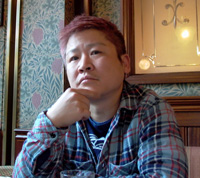
Japanese press advocates face 50 lawsuits, broken ribs
Kensuke Nishioka, 42, looked different from the other Japanese journalists I encountered in Tokyo during a February trip. Maybe it was the pink hair. “Don’t believe any journalist who says they’re at risk in Japan,” he declared, shrugging off the time, at age 32, when two members of a nationalist group cornered him in his office, broke his…
Senior Chinese editor forced out for controversial editorial
“Some have commented that this event should go down in media history.” So says Zhang Hong (in English translation on The Wall Street Journal’s China blog today), co-author of an unprecedented joint editorial published last week by 13 Chinese newspapers. The editorials, criticizing the hukou system, which registers individuals in their place of birth and limits their ability to find work and education…

Journalists fleeing Haiti in aftermath of quake
Thousands of Haitians, including many journalists, have fled the country since the January 12 earthquake. Ronald Leon, a veteran journalist who worked with Haiti’s National Television station, Radio Caraibes and Tropic FM, has now settled in Florida, leaving behind his family and his journalism training school, Ameritech, which was destroyed in the earthquake. Its last class had 15 students.
Tunisian airport officials confiscate CPJ publications
On Saturday, Tunis airport customs officials confiscated two copies of CPJ’s annual report, Attacks on the Press, as well as five copies of the Arabic-language translation of the Middle East and North Africa section of the book from Tunisian rights lawyer Mohamed Abbou and journalist Lotfi Hidouri on their return from Morocco, the two men told CPJ.
French weekly gives issue over to Haitian journalists
The French weekly Courrier International opened its columns on February 4 to Haitian print media journalists in a special edition being circulated worldwide. The paper’s managers did it to express solidarity with Haitian journalists following the earthquake, which completely paralyzed the publication of the country’s dailies. The two dailies in Haiti’s capital, Port-au-Prince, Le Nouvelliste and Le Matin, were honored in the special edition. Haiti Liberté,…
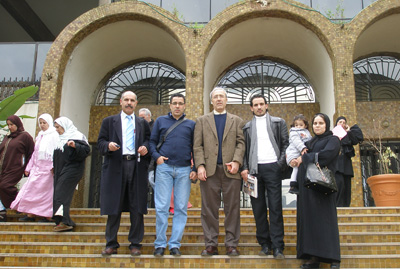
CPJ trip to Morocco reveals gap between rhetoric and reality
Two weeks ago, Mohamed Abdel Dayem, CPJ’s Middle East and North Africa Program Coordinator, and I were in Morocco to hold meetings with government officials as well as journalists. In some ways the trip was a success, but in other ways it left much to be desired from a country that claims to be “at the forefront of…
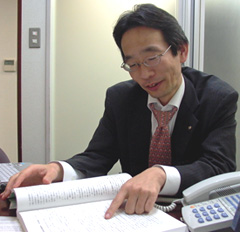
Japanese journalist-turned-lawyer fights media control
Kazuo Hizumi holds his hands up before him, shoulder-width apart. He is demonstrating the size of the blade he kept under his pillow when sleeping at the bureau in his days as a rookie reporter in Osaka in 1987. The journalism community was still reeling from a shooting attack on Asahi Shimbun’s Osaka bureau the month before, which had…
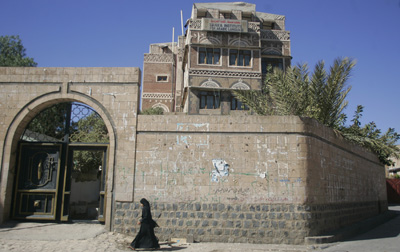
Foreign journalists have privileges locals don’t in Yemen
It is possible that so-called “Christmas Day bomber” Umar Farouk Abdulmutallab came to Yemen for Al-Qaeda terrorist training because it was out of the limelight. Until now, international media has sent in journalists intermittently to cover stories on Somali refugees or the Houthi rebellion in the North, but few foreign journalists are based here and the majority of coverage had come from local…
Latin America takes steps against criminal defamation
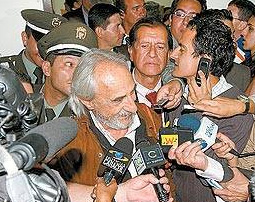
In an encouraging development, three courts in Colombia, Costa Rica, and Chile have recently followed the growing regional consensus against criminal defamation by dismissing criminal penalties against journalists accused of libel and slander.The newsweekly magazine Semana reported that a piece written by Alfredo Molano, at left, in the op-ed pages of the Bogota-based daily El Espectador in February 2007 described how…
Radio Lumière in Haiti loses three journalists in quake
Radio Lumière has officially published the names of three of its journalists who died in the January 12 earthquake in Haiti: Jude Marcellus, Marlene Joseph, and Ginord Desplumes. They died under the rubble of collapsed buildings. It took a month for Radio Lumière officials to decide to publish the names of the three victims.