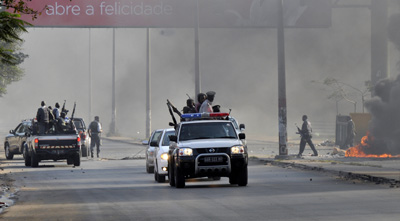
New media tools bring Mozambican crisis to the world
This week’s deadly unrest in Mozambique became a global news story in part because reporters and citizen journalists used new media and social networking tools. Clashes between security forces and people protesting rising prices in the capital, Maputo, left at least seven people dead and more than 200 people injured, according to the latest news…
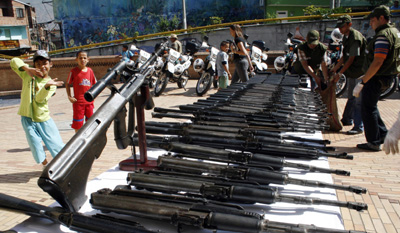
In Colombia, gang threats force reporter to flee
My chance encounter last year with Los Paisas, a criminal gang that operates in northern Colombia, began a nightmare that continues today. I was heading to an assignment in a tourist area south of Montería on July 9, 2009, when Los Paisas gang members blocked my car. The gang was meeting with local landowners nearby–and…

After outcry, Jordan rolls back repressive measures
Jordanian journalists succeeded this week in turning back some of the most repressive aspects of a new law on cyber crimes. The initial version of the law, approved by the cabinet of ministers on August 3, included broad restrictions on material deemed by the state to be defamatory or to involve national security. It also…

What should journalists know about BlackBerry fights?
The discussions between Research In Motion, maker of the BlackBerry, and governments such as the United Arab Emirates, Saudi Arabia, and India continue to hit the headlines. In each case, disagreements center on providing customer communications to security and law enforcement services. The rumblings from these nations over monitoring powers aren’t just limited to RIM:…

Global Voices Advocacy: Great Firewall of China Upgrade?
Oiwan Lam reports widespread disruption for users of Freegate, the popular circumvention software in China: According to the RFA report, users from several provinces across the country have encountered similar problem and they believe that it is due to the upgrade of Great Fire Wall. Apart from the Freegate, when running UltraSurf and FreeU the…
The Economist: The Invisible Regional Censorship of Russia
Russian federal law doesn’t include Internet censorship provisions, but there’s been a recent rash of cases of court-ordered blocking in individual Russian regions. Even though these are usually narrow blocks of particular sites and are quickly unblocked after media exposure, they can still cover a great deal of ground. The Republic of Ingushetia blocked the…
NYT: In Argentina, Google and Yahoo Not Liable
The New York Times reports on a new decision in the liability of internet intermediaries, this time in Argentia. It’s often hard to pick apart exactly what’s been going on in jurisdictions where this issue still evolving. Generally, you get a flurry of conflicting court decision in favour of absolute liability for Net middle-men, usually…
GPGMail – OpenPGP for Apple Mail
For that tiny subset of journalists who use PGP (or its free equivalent, GPG) and have a Mac and use Apple’s Mail client, good news! After a distinct lack of updates, new coding team has taken over, and has just shipped a version that’s compatible with the latest OS X.