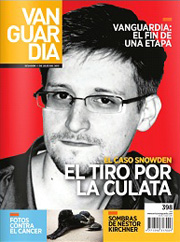
Ecuador loses investigative journal Vanguardia
Like the death of a loved one. That’s how Juan Carlos Calderón, editor of the newsmagazine Vanguardia, described the June 28 closing of the newsweekly that for eight years published hard-hitting investigations about public officials and faced frequent government harassment. Yet the final days of Vanguardia were almost as controversial as its stories.
Post-Snowden, time for journalists to get smart
Let’s be clear: Everything journalists do in the digital world is open to scrutiny by suspicious minds because that’s the way intelligence agencies work. If state eavesdroppers didn’t make use of this amazing opportunity they wouldn’t be very good at their job.
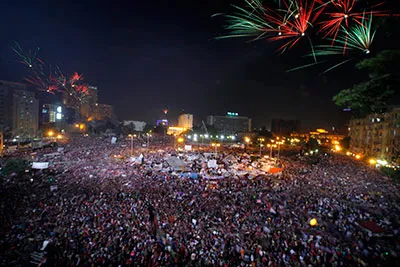
Attacks in Egypt highlight risk of covering protests
From São Paulo to Istanbul to Cairo, coverage of street demonstrations has re-emerged as an exceptionally dangerous assignment for journalists. Since June 1, CPJ has documented more than 120 attacks on the press amid the civil unrest in Brazil, Turkey, and Egypt–the biggest surge of attacks in such circumstances since the uprisings that swept the Arab world…
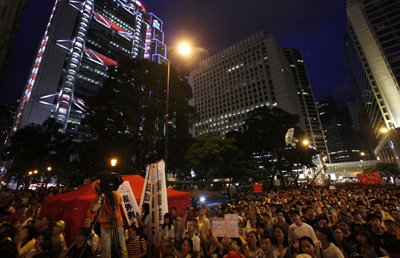
In Hong Kong law, privacy may trump public interest
Tens of thousands of residents demonstrated on the streets of Hong Kong on Monday, the 16th anniversary of the city’s return to Chinese rule. The protests have become an annual rite, but the demonstrators’ demands were quite specific this year. They wanted the resignation of Chief Executive Leung Chun-ying and they called for direct elections.…
In NSA surveillance debate, tech firms urge transparency
Some of the Internet companies at the heart of the outcry over U.S. government surveillance today joined with human rights and press freedom groups, including CPJ, in calling for greater government disclosure of electronic communications monitoring.
In Barroso-Aliyev talks, press freedom takes a back seat
“We in Europe are also not perfect,” José Manuel Barroso said last week while hosting a joint press conference in Brussels with Azerbaijan’s head of state, Ilham Aliyev. The president of the European Commission, who is supposed to defend the EU’s democratic values, seemed to prove his own point by deciding not to openly question…
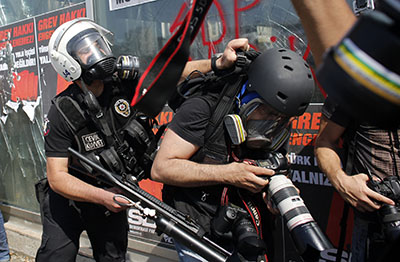
Danger on Turkey’s streets: Reporting on the civil unrest
It all changed so swiftly. The demand and price of gas masks, protective eyewear, and helmets rocketed in Istanbul. Not only protestors, but journalists, too, contributed to the rush. Hardware store clerks were quick studies, explaining to journalists which masks offer you a better line of sight when taking pictures, and describing the problem of…

Snowden travels trace a path of government hypocrisy
Edward Snowden’s global travels have highlighted the chasm between the political posturing and actual practices of governments when it comes to free expression. As is well known now, the former government contractor’s leaks exposed the widespread phone and digital surveillance being conducted by the U.S. National Security Agency, practices at odds with the Obama administration’s…
Colleagues call for Walsh’s return to Pakistan
In our report, “Roots of Impunity: Pakistan’s Endangered Press and the Perilous Web of Militancy, Security, and Politics,” we included a long list of recommendations for the new government of Prime Minister Nawaz Sharif to undertake to combat assaults on journalists and impunity in their murders. But there is a step Sharif could take immediately…
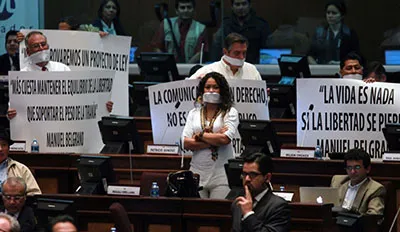
New Ecuadoran legislation seen as a gag on critics
After inspecting a hydroelectric project in northern Ecuador last year, President Rafael Correa complained about the scant press coverage of his visit and suggested it was part of a media blackout. “Did the Ecuadoran media conspire to ignore this important event? It seems like that is the case,” Correa told the crowd at a town…