Old issues, new debates on Internet freedom in India
Just how free should the Internet be in India? And whose job is it to police the Web? Two recent court cases turn on these questions and, more specifically, whether Internet companies have a responsibility to filter content. In a country where Internet usage is growing exponentially, but where the scars of communal violence, terrorism,…

India: Let us in!
In 2005, we deliberately violated the immigration laws of India. We broke the law by producing a documentary film even though we had entered the country on a tourist visa. We broke the law because we wanted to show that Scandinavian companies were in violation of many other laws in India.

In high-tech China, low-tech media control works too
China’s investment in high-tech Internet surveillance technology is well known, and the byzantine rules of its Central Propaganda Department have inspired books and academic treatises. But among the many tools in the box for media control, there’s one that’s very simple and low-tech: Keep journalists away.
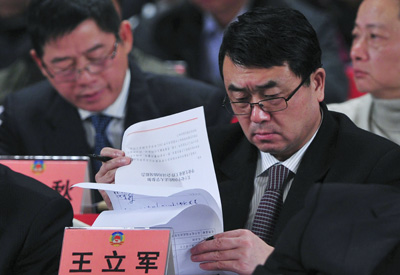
Chinese media little help with Chongqing mystery
The website of Xinhua News, China’s state media flagship, leads today with EU’s threats of sanctions against Syria. Elsewhere on their Chinese-language site, one can read about Wen Jiabao’s remarks to the visiting Canadian prime minister, or look at photos of pretty white ladies lounging around, if that’s your style.
What’s behind India’s Internet censorship?
We have been posting a lot about the challenges facing the Internet in India recently–see Mannika Chopra’s “India struggles to cope with growing Internet penetration.” On Tuesday, Angela Saini, a guest blogger on The Guardian’s Comment Is Free site, posted “Internet censorship could damage India’s democracy,” with the subhead “Google and Facebook have been asked…
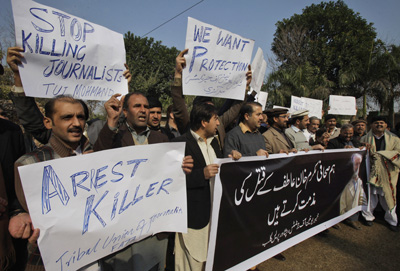
Pakistan’s Abbas: Journalists hostage to ‘power of gun’
CPJ award winner Mazhar Abbas penned a strong Sunday op-ed piece, “Death is the only news–Challenges of working in conflict zones,” for The News. It’s about conditions for journalists working in Pakistan’s Federally Administered Tribal Areas (FATA) and Baluchistan. As Abbas says, “The killing of one journalist is a message for another.” He goes on…
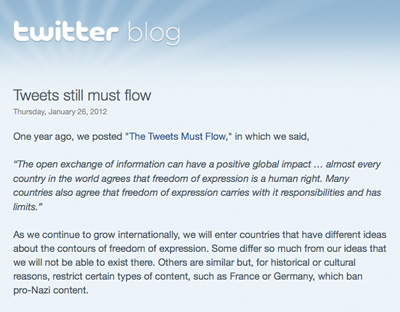
Can selective blocking pre-empt wider censorship?
Last week, Twitter provoked a fierce debate online when it announced a new capability–and related policy–to hide tweets on a country-specific basis. By building this feature into its website’s basic code, Twitter said it hoped to offer a more tailored response to legal demands to remove tweets globally. The company will inform users if any…
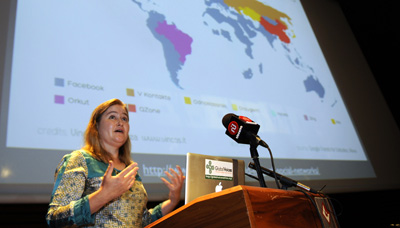
Does the Internet boost freedom? We decide, book says
The Internet doesn’t bring freedom. Not automatically, anyway. That’s one of the main messages of Rebecca MacKinnon’s new book, Consent of the Networked, which had its New York launch at the offices of the New America Foundation last night. In a conversation with CNN managing editor Mark Whitaker, MacKinnon, a CPJ board member, said it’s…
India’s challenge: Intolerance vs. intellectual freedom
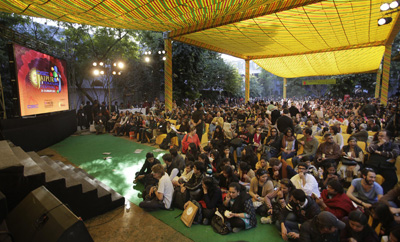
Because of criticism from Hindu fundamentalists, the showing of a documentary by filmmaker Sanjay Kak at the Symbiosis College of Arts and Commerce in Pune has been indefinitely postponed. The conservative student organization Akhil Bharatiya Vidyarthi Parisha protested Kak’s film, “Jashn-e-Azadi” (How we celebrate freedom), which is critical of the Indian army’s role in Kashmir.…