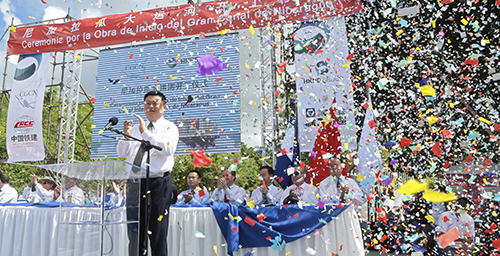
Reporters covering Nicaragua waterway project obstructed by lack of information
When Nicaragua began preliminary work on an interoceanic waterway designed to handle ships too big for the Panama Canal, some of the foreign correspondents who had flown in to cover the December groundbreaking were left high and dry.
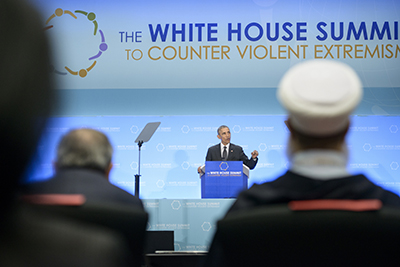
In fight against extremism, press freedom must not be compromised
In an effort to counter extremists and militant groups who use a mix of violence and social media to spread their message, a summit was held in Washington, D.C. this week to discuss how to counter violent extremism. While there is little denying that these groups must be tackled, an approach must be found that…
Video: Bob Simon recounts 1991 capture in Iraq
When I heard the news last week that Bob Simon had died, I immediately thought back to an interview I had done with him in 2010. It was at an event called the “Courage Forum.,” an ideas festival which took place the Museum of Modern Art hosted in New York City. It featured speakers who…
TrollBusters app takes on those seeking to silence women writers
Eight years ago Michelle Ferrier was forced to quit her job as a newspaper columnist and move to a different state after being targeted by racist hate mail. But Ferrier has managed to turn a traumatic experience into an empowering one by inspiring a team of tech-savvy media professionals and entrepreneurs to create TrollBusters, a…
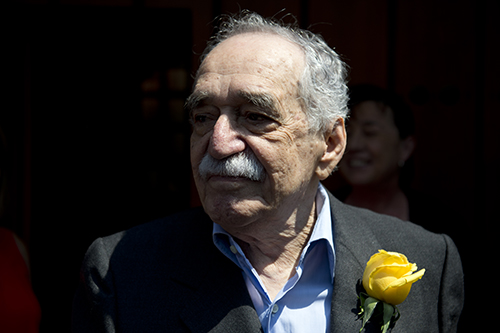
Why García Márquez’s work to improve press protection in Colombia is still vital
To coincide with Colombia’s national day for journalists the Colombian organization Foundation for Freedom of the Press (FLIP) has published its annual report on press freedom conditions. The review of challenges faced by the media in 2014 comes as we remember the loss last year of one of the great defenders and promoters of Colombian…
Uneasy alliance: State Department and journalists discuss rise in violence
Doug Frantz spent more than three decades in the journalistic trenches covering wars, overseeing investigative reporting, and directing national security coverage. He did stints at The New York Times, the Los Angeles Times, and The Washington Post. Today Frantz works for the State Department, serving as Assistant Secretary of State for Public Affairs. Alarmed by…
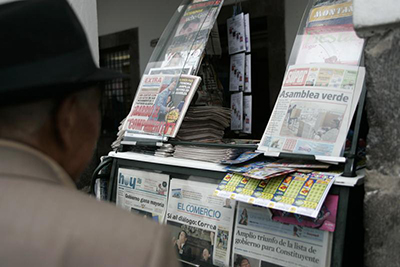
How Ecuador’s plans to make communications a public service is threat to free press
Attempts to amend Ecuador’s constitution to categorize communications as a “public service” has sparked a fierce debate, with one critic drawing comparisons to the way dictators such as Stalin and Hitler used the press as a propaganda tool, and supporters of President Rafael Correa’s government arguing that the proposed reforms will make journalism more accountable…
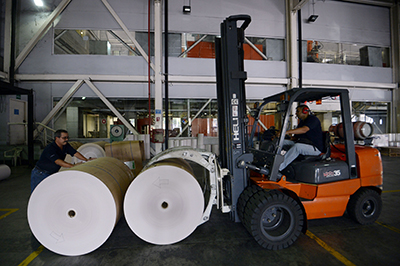
News rationed as Venezuela seeks to control newsprint imports
Venezuelan newspapers have traditionally handed out hundreds of courtesy copies in their lobbies and at hotels. But Correo del Caroní, an independent daily in the industrial city of Ciudad Guayana, treats every edition as if it were precious and now gives away just 14 copies, including one to the owner.
Slideshow: Journalists killed in 2014
In 2014, at least 60 journalists and 11 media workers were killed in relation to their work, according to CPJ research. Local and international journalists died covering conflicts, including in Syria, Iraq, and Ukraine, while many others were murdered reporting on corruption and organized crime in their own countries. Here, CPJ remembers some of the…