Greek far-right party casts shadow on Europe press freedom
The celebration Tuesday of the 50th anniversary of the Association of European Journalists (AEJ) should have been a joyful and lighthearted affair. Dozens of journalists from all parts of the European Union had traveled to Brussels to share memories, new projects, champagne, and petits fours.
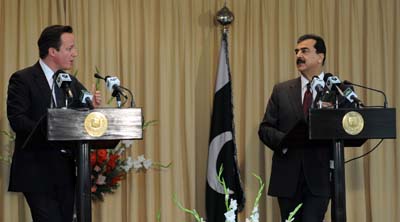
In UK talks, some practical solutions for Pakistani press
Amid political tumult in Islamabad, Pakistani Prime Minister Yousuf Raza Gilani and a team of six ministers are in London for far-ranging meetings today through May 13. The Pakistan-U.K. Enhanced Strategic Dialogue will review education, health, defense, security, and cultural cooperation. CPJ has written a letter to Prime Minister David Cameron to urge that press…
Cameron and Gilani should discuss journalist security
Dear Prime Minister Cameron: As you begin your meetings with Pakistani Prime Minister Yousuf Raza Gilani to review the Pakistan-U.K. Enhanced Strategic Dialogue, we would like to draw your attention to concerns regarding the protection of journalists in Pakistan. CPJ data show that the country has been ranked the deadliest in the world for journalists for two consecutive years. This year, Pakistan also placed 10th on CPJ’s Impunity Index, which spotlights countries where journalists are regularly murdered and their killers go free.
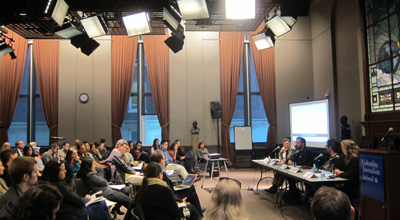
In digital security, knowledge and simplicity are keys
Governments and criminal organizations are stepping up digital surveillance of journalists, but the press is not keeping pace in meeting the challenge, a panel of experts said Wednesday at an event marking the launch of the CPJ Journalist Security Guide. Reporters are using unsecure consumer electronic products for sensitive tasks such as note-taking and source…
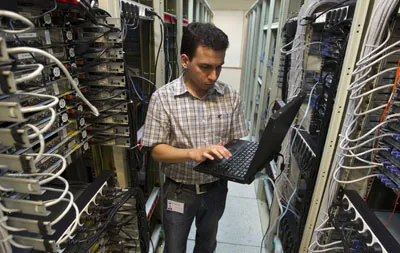
Most censored nations each distort the Net in own way
One big reason for the Internet’s success is its role as a universal standard, interoperable across the world. The data packets that leave your computer in Botswana are the same as those which arrive in Barbados. The same is increasingly true of modern mobile networks. Standards are converging: You can use your phone, access an…
Video: 10 Most Censored Countries
CPJ Deputy Director Robert Mahoney counts down the 10 countries where the press is most tightly restricted. How do leaders in these nations silence the media? And which country is the worst of all? (4:03) Read CPJ’s report on the 10 Most Censored countries for more detail on how censorship works, and which countries were…
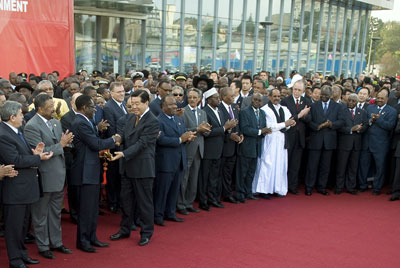
China not most censored, but may be most ambitious
China didn’t make the cut for our 10 most censored countries. While the Chinese Communist Party’s censorship apparatus is notorious, journalists and Internet users work hard to overcome the restrictions. Nations like Eritrea and North Korea lack that dynamism.

Safer mobile use is key issue for journalists
As the Internet and mobile communications become more integrated into reporters’ work, the digital threats to journalists’ work and safety have increased as well. While many press reports have documented Internet surveillance and censorship–and the efforts to combat them–mobile communications are the new frontline for journalist security.