Asia

  
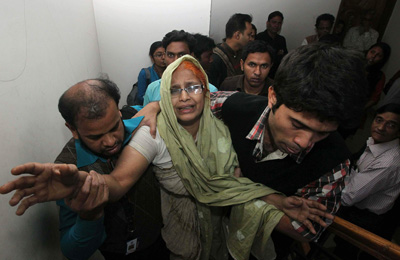
A relative mourns the killing of two journalists in Dhaka. (AP/Sazid Hossain)

In Bangladesh, no motive, arrests in double murder

New York, February 13, 2012–The Committee to Protect Journalists mourns the death of two TV journalists in Dhaka and calls on Bangladeshi authorities to act speedily to bring the perpetrators to justice.

Read More ›

CPJ calls for media reforms in China

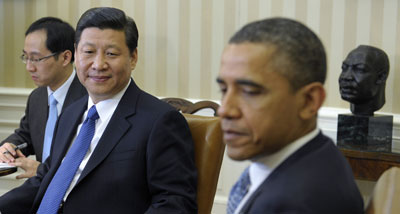
Dear President Obama: When you meet with Chinese Vice President Xi Jinping tomorrow at the White House, we urge you to raise concerns about media restrictions in China.

Read More ›

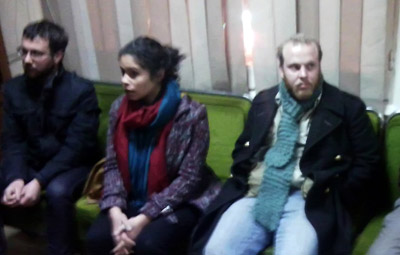
Ludovici, Alwi, and Mackell have been detained on suspicion of bribing Egyptians to stage protests. (AFP)

Australian journalist, translator detained in Egypt

New York, February 13, 2012–Egyptian authorities should immediately release detained Australian journalist Austin Mackell, his translator, and an American student traveling with them, the Committee to Protect Journalists said today.

Read More ›

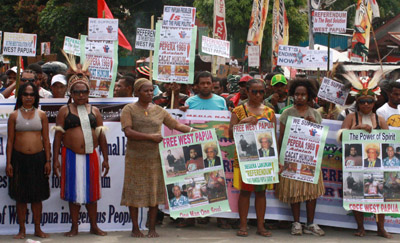
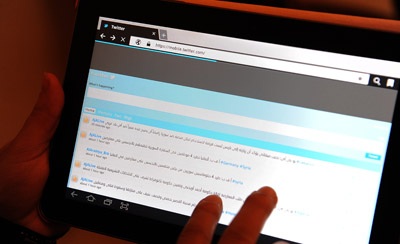
Brazil set to test Twitter’s selective blocking policy

I’ve been telling reporters that Twitter’s new national blocking policy was like Chekhov’s gun. Its recent appearance inevitably prefigured its future use.

Read More ›

Old issues, new debates on Internet freedom in India

Just how free should the Internet be in India? And whose job is it to police the Web? Two recent court cases turn on these questions and, more specifically, whether Internet companies have a responsibility to filter content. In a country where Internet usage is growing exponentially, but where the scars of communal violence, terrorism,…

Read More ›

Police chase supporters of former President Mohamed Nasheed, who resigned on Tuesday. (AP/Sinan Hussain)

In Maldives, political standoff threatens safety of press

New York, February 10, 2012–The Committee to Protect Journalists calls on all parties involved in the ongoing political dispute in Maldives to respect the role of the media in covering the protests and stop the attacks on journalists and news outlets. After political violence escalated in the wake of former President Mohamed Nasheed’s resignation on…

Read More ›

Tom Heinemann with his wife and camerawoman, Lotte la Cour (Paul Gomes)

India: Let us in!

In 2005, we deliberately violated the immigration laws of India. We broke the law by producing a documentary film even though we had entered the country on a tourist visa. We broke the law because we wanted to show that Scandinavian companies were in violation of many other laws in India.

Read More ›

Tibetan monks lead a prayer vigil outside the Chinese Embassy in London Wednesday. (AFP/Justin Tallis)

In high-tech China, low-tech media control works too

China’s investment in high-tech Internet surveillance technology is well known, and the byzantine rules of its Central Propaganda Department have inspired books and academic treatises. But among the many tools in the box for media control, there’s one that’s very simple and low-tech: Keep journalists away.

Read More ›

Wang Lijun, until recently a deputy mayor and police chief, has been put on a medical "vacation." (Reuters)

Chinese media little help with Chongqing mystery

The website of Xinhua News, China’s state media flagship, leads today with EU’s threats of sanctions against Syria. Elsewhere on their Chinese-language site, one can read about Wen Jiabao’s remarks to the visiting Canadian prime minister, or look at photos of pretty white ladies lounging around, if that’s your style. 

Read More ›

What’s behind India’s Internet censorship?

We have been posting a lot about the challenges facing the Internet in India recently–see Mannika Chopra’s “India struggles to cope with growing Internet penetration.” On Tuesday, Angela Saini, a guest blogger on The Guardian’s Comment Is Free site, posted “Internet censorship could damage India’s democracy,” with the subhead “Google and Facebook have been asked…

Read More ›