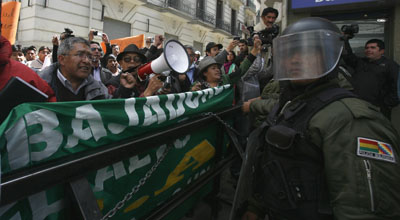
Bolivia charges news outlets with inciting racism
Bogotá, August 30, 2012–Bolivian authorities must immediately drop a criminal complaint filed against three media outlets in connection with their coverage of a speech by President Evo Morales, the Committee to Protect Journalists said today. The news outlets are being accused of inciting racism and discrimination, according to news reports.
Colombian Supreme Court drops suit against columnist
The Colombian Supreme Court announced on August 27, 2012, that it would drop a defamation complaint against prominent journalist Cecilia Orozco Tascón, according to news reports. Five days earlier, the court released a statement saying it would file charges against Orozco, who writes a widely read column in the Bogotá daily El Espectador. The court…
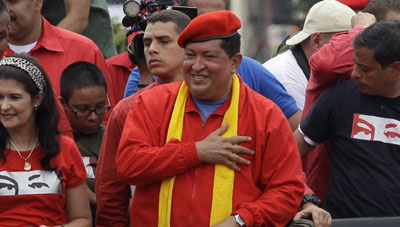
In Venezuela, a media landscape transformed
In more than a decade in power, President Hugo Chávez Frías has overseen the transformation of nearly every aspect of Venezuelan society, including the media. When Chávez came to office in 1999, he enjoyed the support of the country’s established private media. But the relationship soon soured, and in April 2002 he was briefly deposed…
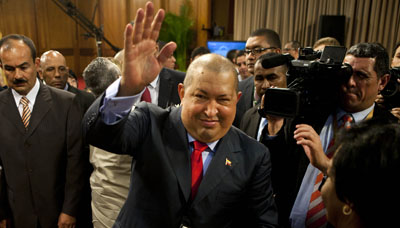
Venezuela’s private media wither under Chávez assault
The Chávez administration has used an array of legislation, threats, and regulatory measures to gradually break down Venezuela’s independent press while building up a state media empire—a complete reversal of the previous landscape. One result: Vital issues are going uncovered in an election year. A CPJ special report by Monica Campbell
State media focus on opposition, critics; stifle debate
Many state media in Latin American are used for political propaganda, but the Venezuelan government has built an unprecedented media empire that it uses to attack critics and independent journalists and obscure issues like crime and inflation. By Carlos Lauría
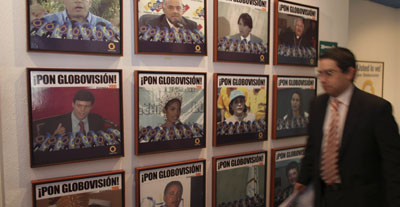
Globovisión besieged by investigations, fines, violence
The recent regulatory probe into coverage at Globovisión, the only TV broadcaster critical of the Chávez administration, is the latest in a long string of investigations and other harassment. The network is struggling to stay afloat. By Monica Campbell
Audio: Venezuela’s private media wither
Since President Hugo Chávez Frías took office more than a decade ago, legislation, threats, and regulatory measures have withered Venezuela’s independent press even as the state has built a huge media empire. Carlos Lauría, CPJ’s Americas Senior Program Coordinator, talks about the developments in this podcast. Listen on the player above, or right click here…
Colombian Supreme Court sues journalist for defamation
Bogotá, August 27, 2012–Colombia’s Supreme Court must immediately drop an unprecedented criminal defamation complaint against a prominent local columnist who questioned recent actions by the court, the Committee to Protect Journalists said today.
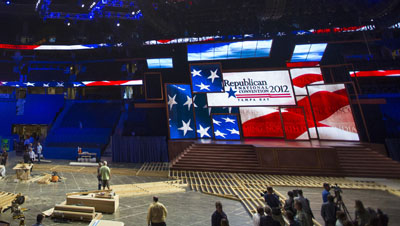
Resources, tips for journalists covering conventions
With up to 15,000 journalists expected in Tampa, Fla., for next week’s Republican National Convention, some reporters and photographers will undoubtedly encounter problems concerning access to news events and coverage of related protests. Several journalism organizations have compiled resource materials and tips for journalists headed to the GOP gathering, which starts August 27, and the…