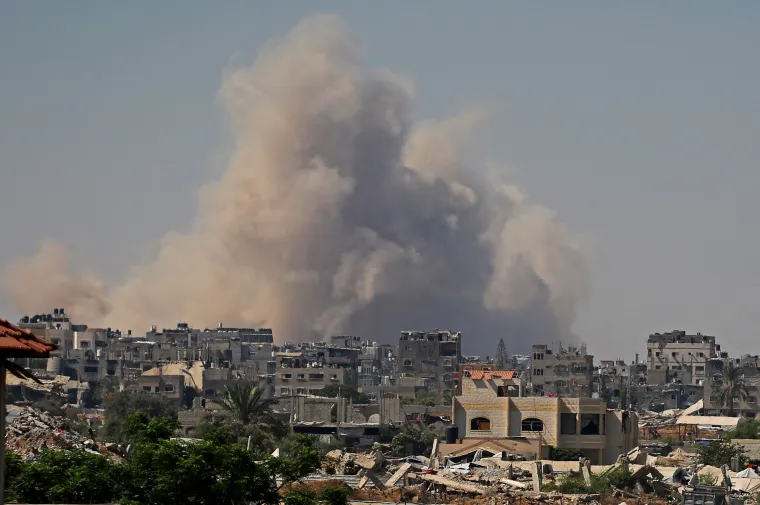
Amman, September 7, 2026 — The Committee to Protect Journalists is alarmed by the recent escalation in Israeli strikes on Gaza and Lebanon, which have injured at least four journalists, including three on Sunday, underscoring the fragility of the ceasefires in both locations.
On September 6, 2026, Lebanese correspondent for the local Hezbollah-affiliated Al-Manar TV Ali Chbib and camera operator Mohammed Barjawi both sustained cuts and bruises on their limbs from flying debris when an Israeli drone struck a parking lot in the southern Lebanese city of Nabatieh at around 6 pm. According to media reports, the team was on assignment to cover the recent Israeli strikes on southern Lebanon for the evening news. They have both been released from hospital, according to their channel.
Hours earlier, Palestinian journalist and producer Ali Jahjouh, who works for the Hezbollah-affiliated Al-Mayadeen, was injured while walking to an assignment near Al-Shati Refugee Camp in Gaza City. An Israeli drone strike hit near him, causing shrapnel to lodge into his body, according to Jahjouh, who spoke to CPJ.
Two weeks earlier, another Gaza journalist, Ezaldin Albtesh, a reporter for the Hamas-affiliated Al-Rai newspaper, told CPJ that he was injured in the Shuja’iyya neighborhood of Gaza City, when an Israeli drone dropped an explosive near him. He was taken to Al-Ahli Baptist Hospital and later transferred to Al-Shifa Medical Complex with bruises and wounds across his body.
“These attacks show that ceasefires have done little to protect journalists from the dangers of reporting in Gaza and Lebanon,” said CPJ Regional Director Sara Qudah. “Journalists must be allowed to do their jobs without fear of being targeted or killed. Israeli forces must immediately stop attacks that put journalists at risk and take concrete steps to ensure their safety.”
On April 22, 2026, just six days after the start of the ceasefire, Lebanese Al-Akhbar journalist Amal Khalil was killed and freelance journalist Zeinab Faraj was injured in an Israeli attack. Amnesty International has since found reasonable grounds to believe the strike was a direct attack on civilians and should be investigated as a war crime.
In response to CPJ’s request for comment, the Israeli Defense Forces’ (IDF) Situation Room said struck “terrorist infrastructure” in Nabatieh, “in response to Hezbollah’s launching of explosive drones towards IDF soldiers,” adding that it was “aware of reports that a journalist in the vicinity of the terrorist infrastructure was harmed during the strike.”
The military said the Sunday strike in Gaza targeted a Palestinian Islamic Jihad Operative named Sabhi Hadr Al-Atham Al-Batrihi and that “steps were taken to mitigate harm to civilians, including the use of precise munitions and aerial surveillance.” It added that it “does not target uninvolved individuals or journalists under any circumstances.”
Editor’s note: This alert has been updated to include the IDF’s response to CPJ’s request for comment after publication.