2012
Attacks on the Press in 2011: Iraq
Five journalists and a media worker were killed as Iraq maintained its position as one of the most dangerous countries for journalists. In August, the government adopted a law meant to offer journalists more protection, although its vague provisions did little initially to improve conditions. As demonstrations for economic and political reform spread with the…
Attacks on the Press in 2011: Iran
Two years after a contested presidential election, Tehran continued to use the mass imprisonment of journalists to silence dissent and quash critical news coverage. Imprisoned journalists suffered greatly amid the crowded and unsanitary conditions of notorious prisons such as Rajaee Shah and Evin. The health of many detainees severely deteriorated, while numerous others suffered abuse…
Attacks on the Press in 2011: France
France’s press freedom record continued a downward slide, in large part because authorities attempted to violate the confidentiality of journalists’ sources and interfere with editorial decisions. Most of the recent cases stemmed from the “Bettencourt affair,” the alleged illegal financing of the presidential party by the billionaire Liliane Bettencourt. In 2010, President Nicolas Sarkozy’s office…
Attacks on the Press in 2011: Egypt
During the 18-day uprising that led to Hosni Mubarak’s ouster, the government unleashed a systematic campaign to intimidate journalists and obstruct news coverage. Dozens of serious press freedom violations were recorded between January 25 and February 11, as police and government supporters assaulted journalists in the streets. One journalist was killed by sniper fire while…
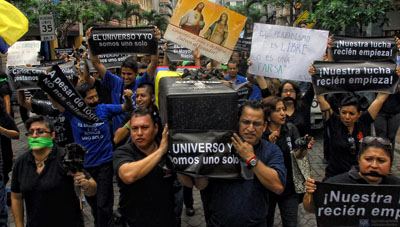
In Ecuador, a crushed and silenced democracy
The sentence against Ecuadoran newspaper El Universo, its opinion editor, Emilio Palacio Urrutia, and its three top executives, Carlos Eduardo Pérez Barriga, César Enrique Pérez Barriga, and Carlos Nicolás Pérez Lapentti, for supposed offenses against Ecuadoran President Rafael Correa in Palacio’s article “NO to lies,” is a worn-out manifestation of the perverse concept of public…
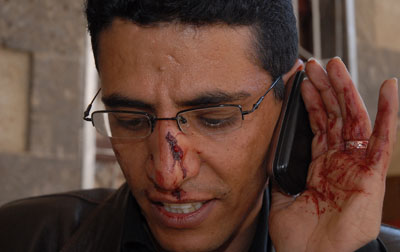
BBC reporter attacked in Yemen three times in past year
New York, February 17, 2012–Yemeni authorities must ensure the safety and protection of journalists covering protests in the country and allow them to carry out their work freely, the Committee to Protect Journalists said today after a BBC Arabic correspondent was attacked for the third time in a year.
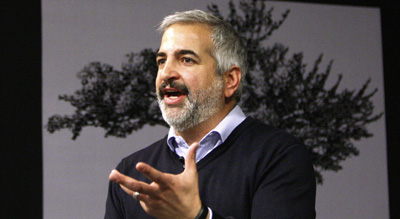
CPJ mourns the death of journalist Anthony Shadid
New York, February 16, 2012–The Committee to Protect Journalists is deeply saddened by the death of New York Times foreign correspondent Anthony Shadid, a towering figure in international crisis reporting. Shadid perished following an apparent asthma attack while on assignment in Syria.
In China, journalists attacked while covering land dispute
New York, February 16, 2012–The Committee to Protect Journalists is disturbed by a series of violent attacks on international journalists that appear aimed at suppressing coverage of land-related protests in Panhe, in eastern China’s Zhejiang province.
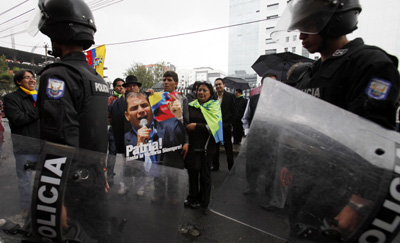
El Universo verdict bad precedent for free press in Americas
New York, February 16, 2012–Today’s decision by Ecuador’s highest court to uphold the criminal libel conviction brought by President Rafael Correa against El Universo represents a serious blow to freedom of expression and a setback for democracy, the Committee to Protect Journalists said.