By Ann Cooper
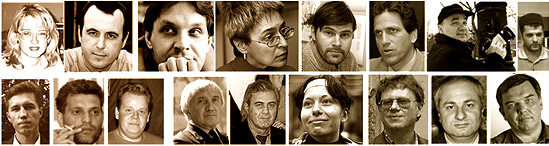
Anatomy of Injustice: The Unsolved Killings of Journalists in Russia
Togliatti is a divided city. Its Soviet fathers wanted it that way—the ultimate manufacturing metropolis, planned to a fare-thee-well, with a giant green zone plunked in between its industrial and residential areas. It might have made some sort of manufacturing sense, but for the people on the ground, it means driving, driving, driving—back and forth through that Soviet-developed forest linking the urban halves. Inevitably, wherever you are in Togliatti, the next place you need to be is an hour away, on the other side of the green zone where the two-lane roads are choked with thousands of Ladas manufactured at the city’s ancient AvtoVAZ plant.
I was instantly and acutely aware of the city’s physical division when I arrived in Togliatti in 2004 on a CPJ research mission. Less obvious at first was the city’s other, deeper divide—the one between the old, rigid, repressive Soviet system and the new Russian world of nascent democracy and free speech. It was the clash between these two worlds that had brought us to town.
Two editors from the same newspaper had been killed: Valery Ivanov in 2002; Aleksei Sidorov just 18 months later. The editors and their paper were very much of the new world: young, daring, bursting with post-Soviet optimism when they founded Tolyattinskoye Obozreniye in 1996. In a city paralyzed by mob-style violence, they shied away from nothing.
Along with Alex Lupis, then CPJ’s regional program coordinator, I spent many hours with people from the new world: Ivanov and Sidorov’s families and their colleagues, frightened but still at work putting out the newspaper. The paper had grown cautious; the families were bitter at the lack of justice. Those were sad meetings—almost therapy sessions—in which we did our best to find some words of comfort and hope.
When we left the newspaper offices and the homes of the editors’ families, we entered another Togliatti—the official world that was supposed to solve the murders, bring the killers to justice, and make Togliatti safe for watchdog journalism.
We never found a world that fit that description. Instead, we were confronted by officials who still seemed to be living in the Brezhnev-era Soviet Union. The mayor, Nikolai Utkin, agreed to meet, then sent word that he was “too busy,” the universal excuse of officials unwilling to speak about sensitive issues.
We did meet Sergei Korepin, the investigator in charge of the Sidorov murder. Korepin’s office had built a flimsy case against a factory worker, who was on trial during our visit on charges of fatally stabbing Sidorov with an ice pick. The murder happened, according to Korepin’s office, in a random street encounter between the two men. The purported motive: Sidorov refused the stranger’s entreaties for vodka.
Despite the preposterous plot line, Korepin assured us his office had the killer. It was just a “hooligan” murder, he said, nothing to do with Sidorov’s hard-hitting journalism. And no, he told us, he was not interested in interviewing two witnesses who had come forward with an alibi for the factory worker. Why, he asked, didn’t they come forward sooner?
We encountered a similar attitude when we met with Yevgeny Novozhilov, the region’s deputy prosecutor. Novozhilov had been a prosecutor for 32 years, meaning most of his experience was in the Soviet era. He acknowledged that he wasn’t used to talking with the press—and definitely not with advocates like us.
In Novozhilov’s view, journalists should not write about trials at all until a verdict is rendered; a story about the outcome, and a few details, would serve the public just fine. Novozhilov spent a lot of our talk offering opinions about the news media. In his view, journalists would do best just to wait for officials to hand out press releases, and then report them more or less verbatim—which is pretty much what journalists did in the Soviet era.
The divide could not have been more clear. If Ivanov and Sidorov embodied Russia’s new democratic hopes, Novozhilov represented the authoritarian system that still controlled the institutions of justice. We left uncertain that justice would ever be done in the Togliatti editors’ cases.
Four months later, a local judge acquitted the factory worker and called the prosecution’s case untenable. Korepin’s tidy solution in the Sidorov murder had been exposed as a sham. There was still no real justice. But at least those who tried to mock it were denied their own cynical victory.
Ann Cooper, former executive director of CPJ, is coordinator of the broadcast program at the Columbia University Graduate School of Journalism.