CPJ’s board of directors is comprised of journalists, media executives, and leaders from related professions. They provide strategic guidance to the organization, participate in advocacy missions, and facilitate meetings, including some with high-level government officials.


Jacob Weisberg is the executive chair of Pushkin Industries, an audio production company he co-founded with Malcolm Gladwell in 2018. Prior to Pushkin Industries, Weisberg served as chairman and editor-in-chief of The Slate Group, a unit of The Washington Post Company. At The Slate Group, he launched publications including The Root, Double X, and The Big Money, and managed Foreign Policy magazine and ForeignPolicy.com. He launched Slate’s podcasting program in 2005 and its membership program, Slate Plus, in 2014. Weisberg joined CPJ’s board of directors in 2011, was elected vice-chair of the board in 2018, and chair in 2023. A native of Chicago, Weisberg attended Yale University and New College, Oxford, as a Rhodes Scholar. From 1989 to 1994, he worked as a writer and editor at The New Republic. From 1994 to 1996, he covered politics for New York Magazine. In 1996, he joined the new internet magazine Slate, where he covered the 1996 and 2000 presidential campaigns as their chief political correspondent. Weisberg served as editor of Slate from 2002 until 2008. He has also been a contributing writer for The New York Times Magazine, a contributing editor of Vanity Fair, a reporter for Newseek in London and Washington, and an editorial page columnist for the Financial Times. Weisberg is the author of several books, including “The Bush Tragedy”, which was a New York Times bestseller in 2008, and “Ronald Reagan” (2016). With former Treasury Secretary Robert E. Rubin, he co-wrote “In an Uncertain World”, which was published in 2003. His first book, “In Defense of Government”, was published in 1996.
See all of our Board of Directors »
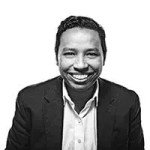

Lydia Polgreen became an opinion columnist for The New York Times in 2022. She previously served as managing director of Gimlet, a podcast studio at Spotify, and as editor-in-chief of HuffPost, leading a team of hundreds of journalists publishing 16 editions in nine languages across the globe.
Polgreen joined HuffPost in January 2017 after a 15-year career at The New York Times that included roles as associate masthead editor, deputy international editor, South Africa bureau chief, correspondent for the New Delhi bureau, and chief of the West Africa bureau. Before joining The Times, Polgreen was a staff writer for The Orlando Sentinel and The Albany Times Union.
Polgreen was a 2006 recipient of the George Polk Award for foreign reporting, in recognition of her travels deep into the war-torn western regions of Sudan to report on the carnage in Darfur. She received the 2008 Livingston Award for international reporting for her series “The Spoils,” an account of how the scramble for Africa’s mineral wealth has brought misery and exploitation. In 2011 she was awarded the Columbia University Medal for Excellence.
Polgreen joined HuffPost in January 2017 after a 15-year career at The New York Times that included roles as associate masthead editor, deputy international editor, South Africa bureau chief, correspondent for the New Delhi bureau, and chief of the West Africa bureau. Before joining The Times, Polgreen was a staff writer for The Orlando Sentinel and The Albany Times Union.
Polgreen was a 2006 recipient of the George Polk Award for foreign reporting, in recognition of her travels deep into the war-torn western regions of Sudan to report on the carnage in Darfur. She received the 2008 Livingston Award for international reporting for her series “The Spoils,” an account of how the scramble for Africa’s mineral wealth has brought misery and exploitation. In 2011 she was awarded the Columbia University Medal for Excellence.
See all of our Board of Directors »
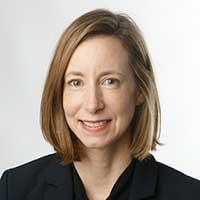
Diane Brayton became executive vice president and general counsel of The New York Times Company in January 2017. In her role, she provides legal counsel to the company’s board of directors and senior management and leads a legal team that advises on, among other areas, media and intellectual property law, corporate governance and securities matters, commercial transactions, employment and labor relations, and litigation management. In addition to her duties as general counsel, Brayton oversees the company’s information security, corporate security, and occupational health and safety functions. Brayton served as the Times Company’s corporate secretary from 2011 to 2023.
Prior to becoming general counsel, Brayton held a series of progressively senior roles in the company’s legal department, serving as deputy general counsel in 2016, assistant general counsel from 2009 to 2016, and senior counsel from 2007 to 2009. She joined the Times Company in 2004 as counsel. Prior to working at the Times Company, Brayton was vice president and counsel in the legal department of Credit Suisse First Boston from 2002 to 2004 and an associate at the law firm of Cleary, Gottlieb, Steen & Hamilton in New York, Moscow, and London from 1997 to 2002. From 1996 to 1997, she was a clerk for W. Eugene Davis of the United States Court of Appeals for the Fifth Circuit.
Brayton received a bachelor’s in journalism from the University of Nebraska and a J.D. from the University of Texas School of Law in 1996, where she graduated with honors. She joined CPJ’s board in 2019.
Prior to becoming general counsel, Brayton held a series of progressively senior roles in the company’s legal department, serving as deputy general counsel in 2016, assistant general counsel from 2009 to 2016, and senior counsel from 2007 to 2009. She joined the Times Company in 2004 as counsel. Prior to working at the Times Company, Brayton was vice president and counsel in the legal department of Credit Suisse First Boston from 2002 to 2004 and an associate at the law firm of Cleary, Gottlieb, Steen & Hamilton in New York, Moscow, and London from 1997 to 2002. From 1996 to 1997, she was a clerk for W. Eugene Davis of the United States Court of Appeals for the Fifth Circuit.
Brayton received a bachelor’s in journalism from the University of Nebraska and a J.D. from the University of Texas School of Law in 1996, where she graduated with honors. She joined CPJ’s board in 2019.
See all of our Board of Directors »
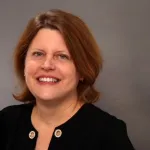

Sally Buzbee is a former executive editor of The Washington Post and was the first woman to lead the newsroom in the organization’s 144-year history.
After joining The Washington Post in June 2021, Buzbee made significant changes to newsroom leadership, naming the Post’s first senior managing editor, appointing a chief product officer and managing editor, and creating three new deputy managing editor roles. She also added 41 editor positions to support a growing 24/7 news operation.
Buzbee previously served as executive editor and senior vice president of The Associated Press. Based in New York, she oversaw the AP’s global news coverage in text, photos, video, and digital interactives from AP journalists based in more than 260 locations worldwide. Prior to that, Buzbee served as Washington bureau chief for six years, from late 2010 to late 2016, where she led AP’s coverage of the 2016 U.S. presidential campaign and election of Donald Trump and the 2012 election, including oversight of polling and investigative units, as well as coverage of the White House, Congress, and the Pentagon.
Buzbee joined AP in 1988 as a reporter in Kansas and also worked as a reporter in Los Angeles, San Diego, and Washington. In 1996 she became assistant bureau chief for news in Washington. For five years beginning in November 2004, Buzbee served as AP’s Middle East regional editor based in Cairo.
After joining The Washington Post in June 2021, Buzbee made significant changes to newsroom leadership, naming the Post’s first senior managing editor, appointing a chief product officer and managing editor, and creating three new deputy managing editor roles. She also added 41 editor positions to support a growing 24/7 news operation.
Buzbee previously served as executive editor and senior vice president of The Associated Press. Based in New York, she oversaw the AP’s global news coverage in text, photos, video, and digital interactives from AP journalists based in more than 260 locations worldwide. Prior to that, Buzbee served as Washington bureau chief for six years, from late 2010 to late 2016, where she led AP’s coverage of the 2016 U.S. presidential campaign and election of Donald Trump and the 2012 election, including oversight of polling and investigative units, as well as coverage of the White House, Congress, and the Pentagon.
Buzbee joined AP in 1988 as a reporter in Kansas and also worked as a reporter in Los Angeles, San Diego, and Washington. In 1996 she became assistant bureau chief for news in Washington. For five years beginning in November 2004, Buzbee served as AP’s Middle East regional editor based in Cairo.
See all of our Board of Directors »
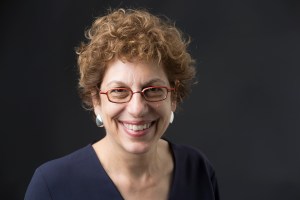
Susan Chira was the editor-in-chief of the Marshall Project. She previously wrote on gender issues for The New York Times, where, until 2016, she was a deputy executive editor. She has spent her career at the Times in a variety of editing and reporting positions. She joined CPJ’s board of directors in 2015. As foreign editor from 2004 through 2011, Chira directed coverage of the wars in Iraq and Afghanistan, the eruption of the Arab Spring, and the nuclear catastrophe in Japan. Coverage she oversaw as foreign editor earned the Times four Pulitzer Prizes and countless other awards. Along the way, she learned firsthand about threats to reporters’ safety and the need for rigorous security. Chira previously served as editor of the Times‘ Week in Review section, deputy foreign editor, editorial director of book development, national education correspondent, and Tokyo correspondent. She also worked as a reporter in the paper’s Metropolitan and Business Day sections. Chira is the author of “A Mother’s Place,” a book about working motherhood. She is married and the mother of two children.
See all of our Board of Directors »
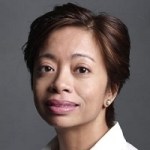

Sheila Coronel is the director of the Stabile Center for Investigative Journalism and is the Toni Stabile Professor of Professional Practice in Investigative Journalism at Columbia University. She began reporting in the Philippines during the twilight of the Marcos dictatorship, when she wrote for the underground opposition press and later for mainstream magazines and newspapers. As Marcos lost power and press restrictions eased, she reported on human rights abuses, the growing democratic movement, and the election of Corazon Aquino as president.
In 1989, Coronel and her colleagues founded the Philippine Center for Investigative Journalism. Under Coronel’s leadership, the center became the leading investigative reporting institution in the Philippines and Asia. In 2001, the center’s reporting led to the fall of President Joseph Estrada. In 2003, Coronel won Asia’s premier prize, the Ramon Magsaysay Award.
Coronel has written and edited more than a dozen books on the Philippines, freedom of information, and investigative journalism. She has trained journalists around the world and written investigative reporting textbooks for journalists in Southeast Asia and the Balkan region. She speaks frequently at international investigative reporting conferences and writes about global investigative journalism.
In 1989, Coronel and her colleagues founded the Philippine Center for Investigative Journalism. Under Coronel’s leadership, the center became the leading investigative reporting institution in the Philippines and Asia. In 2001, the center’s reporting led to the fall of President Joseph Estrada. In 2003, Coronel won Asia’s premier prize, the Ramon Magsaysay Award.
Coronel has written and edited more than a dozen books on the Philippines, freedom of information, and investigative journalism. She has trained journalists around the world and written investigative reporting textbooks for journalists in Southeast Asia and the Balkan region. She speaks frequently at international investigative reporting conferences and writes about global investigative journalism.
See all of our Board of Directors »
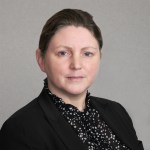

Caoilfhionn Gallagher KC is a barrister and human rights lawyer. She has acted in many landmark cases in the UK, before the European Court of Human Rights, United Nations human rights mechanisms, and international tribunals, and she is a Commissioner of the Irish Human Rights and Equality Commission and Ireland’s Special Rapporteur on Child Protection.
Caoilfhionn has expertise in arbitrary detention and she has acted for, and secured the freedom of, many imprisoned journalists, human rights defenders, lawyers, cartoonists and peaceful protesters in a number of nations, including Iran, Iraq, Saudi Arabia, UAE, Kuwait, Russia, Egypt, Equatorial Guinea, Pakistan and the Philippines.
She is an international expert in media freedom and accountability for killings of journalists and other crimes against the press. Her caseload includes leading the international legal teams for the bereaved family of journalist Daphne Caruana Galizia, assassinated in Malta in 2017; for publisher, writer, and pro-democracy activist Jimmy Lai, imprisoned in Hong Kong; for over 150 BBC News Persian journalists, and journalists at Iran International, targeted extraterritorially by Iran; (jointly with Amal Clooney) for Maria Ressa, the Nobel Peace Prize winning journalist in the Philippines; and for the family of Anton Hammerl, a photojournalist murdered in Libya.
Caoilfhionn was an expert witness before the Inter-American Court of Human Rights in the case of Jineth Bedoya Lima v. Colombia, on international law standards concerning gender-based violence and risks to female journalists. She has also given evidence on journalists’ safety and human rights issues to parliamentary inquiries in the Council of Europe, UK, Ireland, Canada and Australia, and UNESCO.
Caoilfhionn’s expertise also includes children’s rights, and she has acted in cases which have defined the law in these areas in Strasbourg, England, and Wales. Alongside her legal practice and her public appointments, Caoilfhionn is an Adjunct Full Professor at University College Dublin and sits part-time as a Coroner in England and Wales. She is a graduate of University College Dublin, the Honorable Society of the King’s Inns, and Cambridge University. She was called to the Bar of Ireland in 2001, the Bar of England and Wales in 2005, took silk in 2017, and has also been called in a number of other jurisdictions internationally. In 2017 she was appointed a Fellow of the Royal Society of Arts for her “outstanding commitment to enabling the Human Rights Act’s protections” for devising and founding a mass advertising campaign, ‘Act for the Act,’ to tell positive human rights stories. In January 2024 she was awarded the President of Ireland’s Distinguished Service Award for the Irish Abroad.
Caoilfhionn has expertise in arbitrary detention and she has acted for, and secured the freedom of, many imprisoned journalists, human rights defenders, lawyers, cartoonists and peaceful protesters in a number of nations, including Iran, Iraq, Saudi Arabia, UAE, Kuwait, Russia, Egypt, Equatorial Guinea, Pakistan and the Philippines.
She is an international expert in media freedom and accountability for killings of journalists and other crimes against the press. Her caseload includes leading the international legal teams for the bereaved family of journalist Daphne Caruana Galizia, assassinated in Malta in 2017; for publisher, writer, and pro-democracy activist Jimmy Lai, imprisoned in Hong Kong; for over 150 BBC News Persian journalists, and journalists at Iran International, targeted extraterritorially by Iran; (jointly with Amal Clooney) for Maria Ressa, the Nobel Peace Prize winning journalist in the Philippines; and for the family of Anton Hammerl, a photojournalist murdered in Libya.
Caoilfhionn was an expert witness before the Inter-American Court of Human Rights in the case of Jineth Bedoya Lima v. Colombia, on international law standards concerning gender-based violence and risks to female journalists. She has also given evidence on journalists’ safety and human rights issues to parliamentary inquiries in the Council of Europe, UK, Ireland, Canada and Australia, and UNESCO.
Caoilfhionn’s expertise also includes children’s rights, and she has acted in cases which have defined the law in these areas in Strasbourg, England, and Wales. Alongside her legal practice and her public appointments, Caoilfhionn is an Adjunct Full Professor at University College Dublin and sits part-time as a Coroner in England and Wales. She is a graduate of University College Dublin, the Honorable Society of the King’s Inns, and Cambridge University. She was called to the Bar of Ireland in 2001, the Bar of England and Wales in 2005, took silk in 2017, and has also been called in a number of other jurisdictions internationally. In 2017 she was appointed a Fellow of the Royal Society of Arts for her “outstanding commitment to enabling the Human Rights Act’s protections” for devising and founding a mass advertising campaign, ‘Act for the Act,’ to tell positive human rights stories. In January 2024 she was awarded the President of Ireland’s Distinguished Service Award for the Irish Abroad.
See all of our Board of Directors »
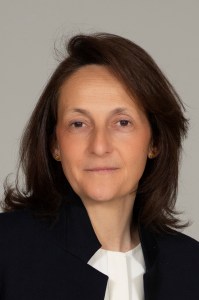
Alessandra Galloni became editor-in-chief of Reuters in April 2021. She oversees all editorial functions across video, text, pictures, and graphics. She is the first female editor-in-chief in the organization’s 172-year history.
Previously, Galloni was the global managing editor, overseeing news planning and creation, where she was responsible for managing the global dimensions of Reuters coverage and developing stories with a cross-regional focus. She first joined Reuters in 1996 for the Italian-language news service in Rome, later moving to the equities reporting team in London. She rejoined Reuters in September 2013 as editor of the Southern Europe bureau following 13 years at The Wall Street Journal, where she worked as a reporter, an economics and business writer, and editor in London, Paris, and Rome.
Galloni is the recipient of the 2020 Lawrence Minard Editor Award from the Gerald Loeb Foundation and the UCLA Anderson School of Management, one of the highest honors a business journalist can receive. She is also the recipient of an Overseas Press Club Award and a U.K. Business Journalist of the Year Award.
An Italian national, she is a graduate of Harvard University and has a master’s degree from the London School of Economics.
Previously, Galloni was the global managing editor, overseeing news planning and creation, where she was responsible for managing the global dimensions of Reuters coverage and developing stories with a cross-regional focus. She first joined Reuters in 1996 for the Italian-language news service in Rome, later moving to the equities reporting team in London. She rejoined Reuters in September 2013 as editor of the Southern Europe bureau following 13 years at The Wall Street Journal, where she worked as a reporter, an economics and business writer, and editor in London, Paris, and Rome.
Galloni is the recipient of the 2020 Lawrence Minard Editor Award from the Gerald Loeb Foundation and the UCLA Anderson School of Management, one of the highest honors a business journalist can receive. She is also the recipient of an Overseas Press Club Award and a U.K. Business Journalist of the Year Award.
An Italian national, she is a graduate of Harvard University and has a master’s degree from the London School of Economics.
See all of our Board of Directors »
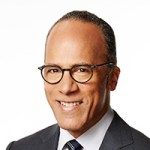

Lester Holt is an award-winning journalist and anchor of “NBC Nightly News with Lester Holt,” the network’s flagship broadcast. Holt also leads NBC News’ special reports, breaking news, prime-time political coverage, and anchors “Dateline NBC,” which is currently in its 27th season. Holt was named to the role of “NBC Nightly News” anchor in June 2015 after eight years as anchor of “NBC Nightly News” weekend editions and 12 years as co-anchor of “Weekend TODAY.” In addition, Holt has served as principal anchor of “Dateline NBC” since September 2011. Holt joined NBC News in 2000 as an anchor on MSNBC. Holt has spent his over four decades in journalism focused on the most important issues impacting Americans and their families. He has been one of the leaders in reporting on the criminal justice system and the efforts to reform it. In 2019, “NBC Nightly News” launched a series, “Justice for All,” which focuses on unjust sentencing and unreliable convictions, highlighting the stories of the wrongfully convicted and new ways of seeking justice. Most recently, Holt traveled to Hanoi, Vietnam to lead NBC News’ coverage of President Trump and North Korean leader Kim Jong Un’s second meeting. Holt was also on the ground in Singapore for the two leaders’ first meeting last year. Holt also traveled to London and Helsinki in July of 2018 to lead NBC News’ coverage of President Trump’s first trip to the United Kingdom and the president’s summit with President Putin in Finland. For the 2018 Winter Olympics, Holt travelled to PyeongChang where he anchored NBC News’ coverage of the games. He reported from Manchester, Brussels and Paris on the terrorist attacks that took place across Europe. Previously, Holt anchored from South Africa during the Nelson Mandela memorial service; reported from the streets of Cairo on the latest political and civil unrest in Egypt during the Arab Spring; covered the earthquake and nuclear crisis in Japan; and reported on the immediate aftermath and response to the devastating earthquake in Haiti. Holt was selected to moderate the first presidential debate of 2016, which was the most-watched debate in American history. Before becoming co-anchor of “Weekend TODAY” in 2003, Holt anchored “Lester Holt Live,” a daily news show on MSNBC. Holt served as a primary anchor for MSNBC’s coverage of major news events, including the U.S. invasion of Iraq and the war in Afghanistan, and he was the lead daytime anchor for MSNBC’s coverage of the 2000 presidential election. Holt came to MSNBC after 14 years at WBBM-TV in Chicago. Previously, Holt worked as a reporter at WCBS-TV in New York City and sister station KCBS-TV in Los Angeles as a reporter and weekend anchor. His work has been recognized with numerous honors, including multiple Emmy Awards and a Robert F. Kennedy Journalism award. In 2018, Holt was awarded the Los Angeles Press Club’s Joseph M. Quinn Award for Lifetime Achievement, the Poynter Medal for Lifetime Achievement in Journalism, and the Sol Taishoff Award for Excellence in Journalism from the National Press Foundation. The year prior, Holt was honored with Quinnipiac University’s Fred Friendly First Amendment Award. In April 2016, Holt received several notable designations: he was featured on TIME’s 100 Most Influential People list and The Hollywood Reporter’s Most Powerful People in New York list, and he was named “Journalist of the Year” by the National Association of Black Journalists. He was named to Variety’s New York Power List in September 2016. Holt studied government at California State University in Sacramento. He resides in New York City with his wife. Holt is on Twitter at @LesterHoltNBC.
See all of our Board of Directors »
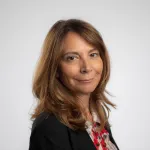

Roula Khalaf is Editor of the Financial Times. She was previously deputy editor from 2016 to 2020, overseeing a range of newsroom initiatives and award-winning editorial projects and leading a global network of over 100 foreign correspondents.
Before taking up the deputy editor role, Khalaf was the FT’s foreign editor and oversaw the FT’s operations in Europe, Africa, and the Middle East. In her previous FT role as Middle East editor she launched a Middle East edition and led coverage of the Arab Spring. Khalaf was named foreign commentator of the year at the Editorial Intelligence Comment Awards in 2016 and her series on Qatar won the Foreign Press Association’s Feature Story of the Year in 2013. Prior to joining the FT in 1995 as North Africa correspondent she was a staff writer for Forbes magazine in New York.
Before taking up the deputy editor role, Khalaf was the FT’s foreign editor and oversaw the FT’s operations in Europe, Africa, and the Middle East. In her previous FT role as Middle East editor she launched a Middle East edition and led coverage of the Arab Spring. Khalaf was named foreign commentator of the year at the Editorial Intelligence Comment Awards in 2016 and her series on Qatar won the Foreign Press Association’s Feature Story of the Year in 2013. Prior to joining the FT in 1995 as North Africa correspondent she was a staff writer for Forbes magazine in New York.
See all of our Board of Directors »
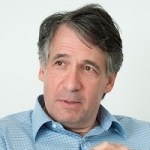
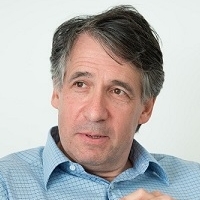
Jonathan Klein is the co-founder of the global digital media company Getty Images, the world’s premier creator and distributor of still imagery, video, and music, and served as the company’s CEO for 20 years from inception until 2015. His strategic vision has led the company’s growth from an analog image collection with transparencies, laboratories, and print catalogs in 1995 to the award-winning, multi-billion-dollar global e-commerce business it is today. He drove Getty Images’ launch into news, sports, and entertainment imagery, as well as video, music, digital asset management, rights services, and assignment photography. Under his direction, Getty Images built a network of exclusive partnerships with the world’s most prestigious media and entertainment companies and sports governing bodies. Klein also led the development of the company’s innovative API Connect and social listening tool, The Feed.
Klein is the recipient of numerous media, philanthropic, and corporate honors. Under his stewardship, Getty Images received the first International Center of Photography Trustees Award for its commitment to the field of photography through technology and philanthropy and its dedication to the power of photography to create change. Fast Company recognized Klein in its “Fast 50” as a business leader who “will change the way we work and live over the next ten years,” and he was named number one on American Photo‘s list of the “100 Most Important People in Photography.”
Klein also holds leadership roles in the fields of global health and international press freedom. He has served on the board of Grassroot Soccer; was chairman of Friends of the Global Fight Against AIDS, Tuberculosis, and Malaria for many years; and was president of the board of trustees of the Groton School. He joined CPJ’s board of directors in 2011. He currently serves on the boards of directors of Getty Images, Etsy, Squarespace, Jumia, and Bloom & Wild Limited. Born in Johannesburg, South Africa, Klein received a master’s degree in law from the University of Cambridge. He lives in the New York area with his wife. The Kleins have three adult sons.
Klein is the recipient of numerous media, philanthropic, and corporate honors. Under his stewardship, Getty Images received the first International Center of Photography Trustees Award for its commitment to the field of photography through technology and philanthropy and its dedication to the power of photography to create change. Fast Company recognized Klein in its “Fast 50” as a business leader who “will change the way we work and live over the next ten years,” and he was named number one on American Photo‘s list of the “100 Most Important People in Photography.”
Klein also holds leadership roles in the fields of global health and international press freedom. He has served on the board of Grassroot Soccer; was chairman of Friends of the Global Fight Against AIDS, Tuberculosis, and Malaria for many years; and was president of the board of trustees of the Groton School. He joined CPJ’s board of directors in 2011. He currently serves on the boards of directors of Getty Images, Etsy, Squarespace, Jumia, and Bloom & Wild Limited. Born in Johannesburg, South Africa, Klein received a master’s degree in law from the University of Cambridge. He lives in the New York area with his wife. The Kleins have three adult sons.
See all of our Board of Directors »
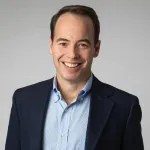
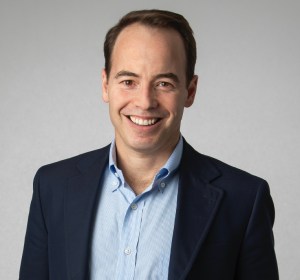
Peter Lattman is the managing director of media at Emerson Collective, the organization started and run by Laurene Powell Jobs. In that role, he oversees Emerson Collective’s investments in media and journalism, which includes The Atlantic, where he serves as Vice Chairman and a member of its board of directors. He also serves on the board of the American Journalism Project. Prior to joining Emerson, Peter worked as a journalist at The NewYork Times and The Wall Street Journal. He joined The Times in 2010 as a reporter for DealBook, covering Wall Street with a focus on white-collar crime and law firms. He then became an editor, serving as the deputy business editor and the media editor. Peter was previously a reporter with The Wall Street Journal, where he covered legal affairs and then the private-equity industry. Born in New York City, he grew up in Roslyn, on Long Island. He earned his undergraduate degree in History and Literature from Harvard and a law degree from Fordham. He lives on the Upper West Side of Manhattan with his wife, Isabel Gillies, and their three children.
See all of our Board of Directors »
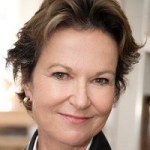

Born in Hungary, Kati Marton has combined a career as a reporter and writer with human rights advocacy. She served as CPJ’s board chair from 1993 to 1997 and has held prominent roles in other organizations as well. From 2003 to 2008, she chaired the International Women’s Health Coalition, a global leader in promoting and protecting the health and human rights of women and girls. From 2001 to 2002, she was chief advocate for the Office of the Special Representative for Children and Armed Conflict at the United Nations. Marton joined CPJ’s board in 1993. She also serves on the board of directors of the International Rescue Committee and the New America Foundation. She is a member of the Council on Foreign Relations, PEN International, and the Author’s Guild as well. Since 1980, Marton has published several books and contributed as a reporter to ABC News, PBS, and National Public Radio. Her work has been published in The New Yorker, Atlantic Monthly, The Times of London, The Washington Post, The Wall Street Journal, Newsweek, Vanity Fair, and The New Republic. Her first book, “Wallenberg,” a biography of Raoul Wallenberg, was published in 1982. From 1983 until 1984, she was a columnist for The Sunday Times in London. She published her second book, “An American Woman,” in 1987; her third, an investigative history called “The Polk Conspiracy: Murder and Cover-up in the Case of CBS News Correspondent George Polk,” in 1992; and her fourth, “A Death in Jerusalem: The Assassination by Extremists of the First Middle East Peacemaker,” in 1994. Her book, “Hidden Power: Presidential Marriages that Shaped History,” was published in September 2001 and was a New York Times bestseller. In 2006, Simon and Schuster released her book, “The Great Escape: Nine Jews Who Fled Hitler and Changed the World.” Her Cold War memoir, “Enemies of the People: My Family’s Journey to America,” was published in 2009 and was a 2010 finalist for the National Book Critics Circle Prize. From 1995 to 1997, Marton hosted NPR’s “America and the World,” a weekly half-hour broadcast on international affairs. She was also involved in the development of NPR’s program, “All Things Considered.” From 1972 to 1973, she was a reporter for NPR in Washington. From 1973 to 1977, she was a news writer/reporter at WCAU-TV, the CBS-owned-and-operated affiliate in Philadelphia. From 1977 to 1979, she served as ABC’s bureau chief in Germany, during which she reported from Poland, Hungary, Italy, Holland, Northern Ireland, East Germany, and the Middle East. Marton has been repeatedly honored for her writing, reporting, and human rights advocacy. She received a Peabody Award for a one-hour documentary on China, a Philadelphia Press Association Award for Best Television Feature Story, and a PBS Award for her reporting from China. In 1997, she received the Marc H. Tannenbaum Foundation Award for the Advancement of Interreligious Understanding and the Athens -based Kyriazis Foundation prize for the promotion of press freedom. In 2001, she was awarded the Rbekah Kohut Humanitarian Award by the National Council of Jewish Women. In 2002, she received a Matrix-Award for Women Who Change the World. In 2004, she was honored with the Citizen’s Committee of New York’s Marietta Tree Award for Public Service, the Edith Wharton Award for Journalism, and the Woodhull Institute’s Changemakers Award for Ethical Leadership in the Arts. In 2007, the YIVO Institute for Jewish Research honored her with its Special Cultural Award. In 2008, she was presented the Leadership Award for Media by the Merage Foundation for the American Dream. The president of the Republic of Hungary also awarded her the Commander’s Cross of the Order of Merit of The Republic of Hungary. Marton attended Wells College in New York, the Sorbonne, and the Institute des Etudes de Science Politiques in Paris. She earned a bachelor’s degree in Romance languages along with a master’s in international relations from George Washington University. In 1988, she was a Gannett Fellow at Columbia University’s School of Journalism. She has received honorary doctorates from both Roger Williams University in Rhode Island and Skidmore College in New York.
See all of our Board of Directors »
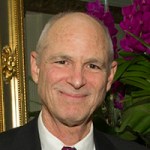
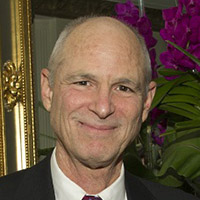
Michael Massing is the author of “The Fix” (1998), a critical study of the U.S. war on drugs; “Now They Tell Us” (2004), a collection of articles published in The New York Review of Books about the press coverage of the war in Iraq; and “Fatal Discord: Erasmus, Luther, and the Fight for the Western Mind” (2018).
He is a former executive editor of the Columbia Journalism Review and has served as an adjunct professor at the Columbia School of Journalism and the Columbia School for International and Public Affairs. Massing is a co-founder of CPJ as well as a member of the New York Institute for the Humanities.
He has a bachelor’s degree from Harvard and a master’s degree from the London School of Economics and Political Science. In 1989, he was awarded an Alicia Patterson Journalism Fellowship; in 1992, he was named a MacArthur Fellow; and in 2010, he was named a fellow at the Leon Levy Center for Biography at the CUNY Graduate Center. In 2005, Massing received the Mongerson Prize for Investigative Reporting on the News.
He is a former executive editor of the Columbia Journalism Review and has served as an adjunct professor at the Columbia School of Journalism and the Columbia School for International and Public Affairs. Massing is a co-founder of CPJ as well as a member of the New York Institute for the Humanities.
He has a bachelor’s degree from Harvard and a master’s degree from the London School of Economics and Political Science. In 1989, he was awarded an Alicia Patterson Journalism Fellowship; in 1992, he was named a MacArthur Fellow; and in 2010, he was named a fellow at the Leon Levy Center for Biography at the CUNY Graduate Center. In 2005, Massing received the Mongerson Prize for Investigative Reporting on the News.
See all of our Board of Directors »
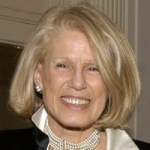

Geraldine Fabrikant Metz is a contract writer for The New York Times. She joined CPJ’s board of directors in 1999. Previously, Fabrikant was a senior writer for media and investing for the Times‘ Business Day section. Before joining the Times in 1985, she had been an editor and reporter for BusinessWeek, Variety, and The Hollywood Reporter. Fabrikant won the Loeb Award for deadline reporting in 1996. In 1999, she was named a Knight-Bagehot Fellow in economics and business journalism by the Columbia University Graduate School of Journalism. A New York native, Fabrikant attended Brandeis University and graduated from the University of Wisconsin in 1964.
See all of our Board of Directors »
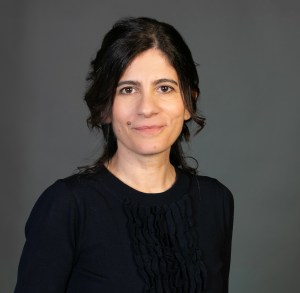
Graciela Mochkofsky was appointed dean of the Craig Newmark Graduate School of Journalism by the CUNY Board of Trustees in June 2022, becoming the third dean of the school since it opened in 2006.
Mochkofsky joined the Newmark J-School in 2016 to launch the nation’s first bilingual master’s journalism concentration in English and Spanish. Three years later, she added the Center for Community Media (CCM) to her portfolio, serving as executive director to an enterprise that supports hundreds of news outlets covering immigrants and communities of color across the country.
Under Mochkofsky’s leadership, the Newmark J-School trained bilingual journalists who are working in newsrooms across the country. She also hosted five Latino Media Summits, conceived and developed separate Latino, Black, and Asian media initiatives; and led a groundbreaking project that helped New York community media receive $25 million in city advertising in the first two years of the COVID-19 pandemic.
All the while, she has continued her journalistic work, as a writer for The Paris Review, The Atlantic, and The New Yorker, where she produces a monthly column on Latinx culture and politics.
A native of Argentina, she is a winner of the 2018 Maria Moors Cabot prize for outstanding reporting across Latin America and the Caribbean. She is the author of six nonfiction books in Spanish, two of them about the relationship between press and political power in her home country.
Mochkofsky has served as a Nieman Fellow at Harvard University, a Cullman fellow at the New York Public Library, a Prins Foundation fellow at the Center for Jewish History, a visiting scholar at the Arthur L. Carter Journalism Institute at New York University, and a visiting scholar at the Institute for Religion, Culture and Public Life at Columbia University.
She earned her bachelor’s in journalism and communications at Universidad del Salvador in Buenos Aires and has an M.S. in Journalism from the Columbia University’s Graduate School of Journalism.
Mochkofsky joined the Newmark J-School in 2016 to launch the nation’s first bilingual master’s journalism concentration in English and Spanish. Three years later, she added the Center for Community Media (CCM) to her portfolio, serving as executive director to an enterprise that supports hundreds of news outlets covering immigrants and communities of color across the country.
Under Mochkofsky’s leadership, the Newmark J-School trained bilingual journalists who are working in newsrooms across the country. She also hosted five Latino Media Summits, conceived and developed separate Latino, Black, and Asian media initiatives; and led a groundbreaking project that helped New York community media receive $25 million in city advertising in the first two years of the COVID-19 pandemic.
All the while, she has continued her journalistic work, as a writer for The Paris Review, The Atlantic, and The New Yorker, where she produces a monthly column on Latinx culture and politics.
A native of Argentina, she is a winner of the 2018 Maria Moors Cabot prize for outstanding reporting across Latin America and the Caribbean. She is the author of six nonfiction books in Spanish, two of them about the relationship between press and political power in her home country.
Mochkofsky has served as a Nieman Fellow at Harvard University, a Cullman fellow at the New York Public Library, a Prins Foundation fellow at the Center for Jewish History, a visiting scholar at the Arthur L. Carter Journalism Institute at New York University, and a visiting scholar at the Institute for Religion, Culture and Public Life at Columbia University.
She earned her bachelor’s in journalism and communications at Universidad del Salvador in Buenos Aires and has an M.S. in Journalism from the Columbia University’s Graduate School of Journalism.
See all of our Board of Directors »


Alan Murray is the former CEO of Fortune Media, where he oversaw all of the company’s operations. He wrote the Fortune CEO Daily newsletter and co-hosted a weekly podcast, Leadership Next. He is the author of five books, including most recently, “Tomorrow’s Capitalist: My Search for the Soul of Business.” Prior to joining Fortune in 2015, Murray was president of the Pew Research Center and spent almost two decades at The Wall Street Journal, serving as Deputy Managing Editor, Executive Editor Online, Washington Bureau Chief, and author of the Political Capital and Business columns. He has also served as Washington bureau chief of CNBC, and co-host of the network’s Capitol Report.
See all of our Board of Directors »

Julie Owono is the executive Director of Internet Sans Frontières, and the founder of the Content Policy & Society Lab, an organization first incubated at Stanford University, that helps make technology better for society. Owono is one of the inaugural members of the Meta Oversight Board, which oversees content moderation decisions on Facebook and Instagram. She is also a researcher affiliated with the Berkman Klein Center at Harvard University.
Inspired by her professional path, spanning civil society to Academia, Owono has an acute understanding of the importance of innovating while safeguarding the foundational principles of democratic societies. Owono is passionate about creating spaces for collaborations between tech companies, civil society organizations, academic institutions, and governments. She also helps find creative solutions to major governance and policy challenges posed by technology.
Owono advised the U.S. Department of State on democracy and content moderation. She frequently moderates important tech policy debates, recently serving as a moderator of Socrates dialogues on the Metaverse, and the Oversight of AI, both organized by the Aspen Institute.
Owono serves on the Board of WITNESS and the Dangerous Speech project. She is also a member of the Global Partnership on AI (GPAI) created by France and Canada, of the World Economic Forum’s Global Future Council on AI for Humanity, and of the WEF Council on the Connected World. She was one of UNESCO’s Ad Hoc Expert Group (AHEG) who drafted the first-ever global standard on the ethics of artificial intelligence.
She was named Business Personality of the Year 2022 by the French-American Chamber of Commerce in San Francisco. You may have spotted Owono debating current issues on various media, including NPR, CNBC, Al Jazeera, BBC, and France 24.
Owono graduated in International Law from the Sorbonne University in Paris and practiced as a lawyer at the Paris Bar.
Inspired by her professional path, spanning civil society to Academia, Owono has an acute understanding of the importance of innovating while safeguarding the foundational principles of democratic societies. Owono is passionate about creating spaces for collaborations between tech companies, civil society organizations, academic institutions, and governments. She also helps find creative solutions to major governance and policy challenges posed by technology.
Owono advised the U.S. Department of State on democracy and content moderation. She frequently moderates important tech policy debates, recently serving as a moderator of Socrates dialogues on the Metaverse, and the Oversight of AI, both organized by the Aspen Institute.
Owono serves on the Board of WITNESS and the Dangerous Speech project. She is also a member of the Global Partnership on AI (GPAI) created by France and Canada, of the World Economic Forum’s Global Future Council on AI for Humanity, and of the WEF Council on the Connected World. She was one of UNESCO’s Ad Hoc Expert Group (AHEG) who drafted the first-ever global standard on the ethics of artificial intelligence.
She was named Business Personality of the Year 2022 by the French-American Chamber of Commerce in San Francisco. You may have spotted Owono debating current issues on various media, including NPR, CNBC, Al Jazeera, BBC, and France 24.
Owono graduated in International Law from the Sorbonne University in Paris and practiced as a lawyer at the Paris Bar.
See all of our Board of Directors »

Julie Pace is senior vice president and executive editor of The Associated Press.
Previously, she was Washington bureau chief for AP, directing AP’s coverage of the presidency, politics, and the U.S. government. Before that, Pace was AP’s White House correspondent, contributing aggressive news reporting and sharp analysis to the AP news report. Pace won the White House Correspondents’ Association Merriman Smith award in 2013 for her work explaining the Obama campaign’s complex approach to voter turnout.
She joined AP in 2007 as a multimedia reporter, developing and executing AP’s plans for live video coverage of 2008′s Election Day and the inauguration of President Barack Obama.
A native of Buffalo, New York, Pace began her career as a reporter in 2003 at South Africa’s only independent television network, before spending two years reporting on politics and elections at the Tampa Tribune and its partner television station WFLA. She is a graduate of Northwestern University.
Previously, she was Washington bureau chief for AP, directing AP’s coverage of the presidency, politics, and the U.S. government. Before that, Pace was AP’s White House correspondent, contributing aggressive news reporting and sharp analysis to the AP news report. Pace won the White House Correspondents’ Association Merriman Smith award in 2013 for her work explaining the Obama campaign’s complex approach to voter turnout.
She joined AP in 2007 as a multimedia reporter, developing and executing AP’s plans for live video coverage of 2008′s Election Day and the inauguration of President Barack Obama.
A native of Buffalo, New York, Pace began her career as a reporter in 2003 at South Africa’s only independent television network, before spending two years reporting on politics and elections at the Tampa Tribune and its partner television station WFLA. She is a graduate of Northwestern University.
See all of our Board of Directors »
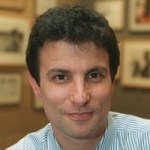

David Remnick has been editor of The New Yorker since 1998 and a staff writer at the magazine since 1992. He has written many pieces for the magazine, including reporting from Russia, the Middle East, and Europe, as well as profiles of Barack Obama, Bill Clinton, Katharine Graham, Mike Tyson, Ralph Ellison, Philip Roth, and Benjamin Netanyahu. He joined CPJ’s board of directors in 2015. Remnick began his reporting career as a staff writer at The Washington Postin 1982, where he covered stories for the Metro, Sports, and Style sections. In 1988, he started a four-year tenure as a Washington Post Moscow correspondent, an experience that formed the basis of his 1993 book on the former Soviet Union, “Lenin’s Tomb: The Last Days of the Soviet Empire.” In 1994, the book received both the Pulitzer Prize for nonfiction and a George Polk Award for excellence in journalism. Since Remnick became editor, The New Yorker has garnered 149 nominations for National Magazine Awards and, of those, won 37. In 2001 and again in 2005, the magazine won an unprecedented five National Magazine Awards; in 2014, the magazine won four awards. In 2000, Remnick was named Advertising Age‘s Editor of the Year. Remnick has written six books: “Lenin’s Tomb,” “Resurrection: The Struggle for a New Russia,” “King of the World” (a biography of Muhammad Ali), “The Bridge,” (a biography of U.S. President Barack Obama), “The Devil Problem,” and “Reporting,” collections of some of his pieces from the magazine. Remnick has also edited anthologies of New Yorker pieces, including “Life Stories,” “Wonderful Town,” “The New Gilded Age, “Fierce Pajamas,” “Secret Ingredients,” and “Disquiet, Please!” Remnick has contributed to The New York Review of Books, Vanity Fair, Esquire, and The New Republic. He has been a visiting fellow at the Council on Foreign Relations and has taught at Princeton, where he received his bachelor’s degree in 1981, and Columbia. He lives in New York with his wife, Esther Fein; they have three children, Alex, Noah, and Natasha.
See all of our Board of Directors »
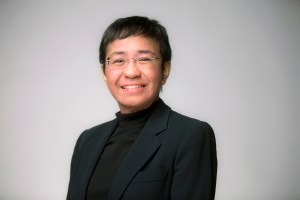
Maria Ressa co-founded Rappler, the Philippines’ leading digital-only news site. As Rappler’s CEO, Ressa faced political harassment and numerous arrests during the Rodrigo Duterte administration. She, along with Russian journalist Dmitry Muratov, was awarded the 2021 Nobel Peace Prize in recognition of her “efforts to safeguard freedom of expression, which is a precondition for democracy and lasting peace.”
She is also an inaugural Carnegie Distinguished Fellow at Columbia University’s newly launched Institute of Global Politics, where she leads projects related to artificial intelligence and democracy, and will join the faculty of Columbia University’s School of International and Public Affairs as a professor of professional practice in July 2024.
In 2022, the United Nations Secretary-General appointed her to the Leadership Panel of the Internet Governance Forum, where she serves as vice-chair.
Ressa’s most recent book, “How to Stand Up to a Dictator,” was released in November 2022 and had been translated into 20 languages by December 2023. She also wrote “Seeds of Terror: An Eyewitness Account of Al-Qaeda’s Newest Center of Operations in Southeast Asia” and “From Bin Laden to Facebook.” Her work focuses critical attention on the breakdown of our global information ecosystem and how interconnected communities of action can hold the line to protect democratic values.
She is also an inaugural Carnegie Distinguished Fellow at Columbia University’s newly launched Institute of Global Politics, where she leads projects related to artificial intelligence and democracy, and will join the faculty of Columbia University’s School of International and Public Affairs as a professor of professional practice in July 2024.
In 2022, the United Nations Secretary-General appointed her to the Leadership Panel of the Internet Governance Forum, where she serves as vice-chair.
Ressa’s most recent book, “How to Stand Up to a Dictator,” was released in November 2022 and had been translated into 20 languages by December 2023. She also wrote “Seeds of Terror: An Eyewitness Account of Al-Qaeda’s Newest Center of Operations in Southeast Asia” and “From Bin Laden to Facebook.” Her work focuses critical attention on the breakdown of our global information ecosystem and how interconnected communities of action can hold the line to protect democratic values.
See all of our Board of Directors »
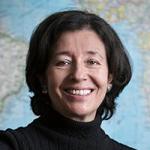
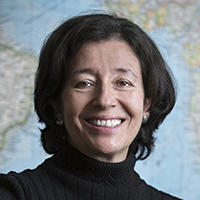
Maria Teresa Ronderos is a Colombian journalist and co-founder of the Center of Latin American Investigative Reporting (El CLIP), which she has directed since it started in June 2019. She is also a columnist for the Colombian daily El Espectador.
Previously, she was a director of the Open Society Foundation’s program on independent journalism. Together with the Ideas for Peace Foundation, she was the creator and editor-in-chief of VerdadAbierta, a website covering armed conflict in Colombia from 2008 to 2014. She also worked at Semana, Colombia’s leading news magazine, where she served in a range of senior editorial roles. She is the author of the bestselling book “Guerras Recicladas,” for which she was awarded the Simon Bolivar National Award for journalist of the year in 2014.
Ronderos serves on the board of Verdad Abierta Foundation and Media Defence and the advisory committee to Stanford’s Knight Fellowship Program for journalists. She has trained professional Latin American journalists and led workshops, online courses, and seminars on investigative journalism, politics, and economic issues. Ronderos received the Ortega & Gazette journalism award in 2020, the Columbia University Maria Moors Cabot Award, and the Simon Bolivar award for life and work achievements in 2021. She was a 2012 visiting fellow at Harvard University’s David Rockefeller Center for Latin American Studies. She joined CPJ’s board in 2019.
Previously, she was a director of the Open Society Foundation’s program on independent journalism. Together with the Ideas for Peace Foundation, she was the creator and editor-in-chief of VerdadAbierta, a website covering armed conflict in Colombia from 2008 to 2014. She also worked at Semana, Colombia’s leading news magazine, where she served in a range of senior editorial roles. She is the author of the bestselling book “Guerras Recicladas,” for which she was awarded the Simon Bolivar National Award for journalist of the year in 2014.
Ronderos serves on the board of Verdad Abierta Foundation and Media Defence and the advisory committee to Stanford’s Knight Fellowship Program for journalists. She has trained professional Latin American journalists and led workshops, online courses, and seminars on investigative journalism, politics, and economic issues. Ronderos received the Ortega & Gazette journalism award in 2020, the Columbia University Maria Moors Cabot Award, and the Simon Bolivar award for life and work achievements in 2021. She was a 2012 visiting fellow at Harvard University’s David Rockefeller Center for Latin American Studies. She joined CPJ’s board in 2019.
See all of our Board of Directors »

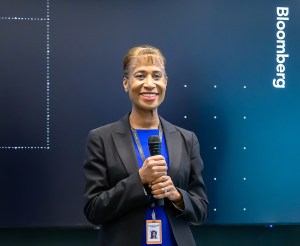
Jacqueline Simmons has held various news reporting and managerial roles at Bloomberg in Europe and the U.S. since starting at the organization in 1996 as a Paris-based finance and business reporter. In her current role as Editorial Lead for Europe, Middle East & Africa, she oversees the region’s 30-plus bureaus and news desk, which manages the newsroom’s multi-platform content strategy and planning. Before relocating to the UK in 2023, she was Editorial Lead for the Americas in Bloomberg’s New York headquarters. She also drove strategy for its Equality vertical, which was expanded in 2021 to elevate Bloomberg’s coverage of race, gender, diversity, and fairness in governments, corporations, and civil society organizations. Between 2015 and 2019, Simmons worked from London to oversee Bloomberg’s companies’ reporting by its global business team of more than 100 reporters and editors.
See all of our Board of Directors »


Nika Soon-Shiong is the founder and executive director of the Fund for Guaranteed Income (F4GI), which implements cash transfer programs in the United States by decoding complex bureaucracy and building community-designed technologies. She directs F4GI’s Compton Pledge and Long Beach Pledge and is completing her Ph.D. on cash transfer systems at Oxford University. Nika was the Public Safety Commissioner of West Hollywood, where she advocated for reallocating dollars away from the sheriff’s department towards social services.
Nika spent four years at the World Bank Group, where she supported an operation providing ID to 100 million West Africans and a social insurance platform for informal sector workers. She also supported the corporate disruptive technology strategy in the Office of President Jim Kim.
Nika was previously a movement researcher in South Africa, where she organized nationwide campaigns that changed the course of education and procurement policy.
Soon-Shiong has been outspoken on re-imagining the social contract at the World Bank, the United Nations, and academic institutions such as Oxford, Princeton, UCLA, and Stanford University. She is fluent in Spanish and Italian and is proficient in Xhosa and Hindi. Soon-Shiong earned her master’s in African Studies and bachelor’s in International Relations from Stanford University, where she graduated Phi Beta Kappa. You can follow her on X @nikasoonshiong.
Nika spent four years at the World Bank Group, where she supported an operation providing ID to 100 million West Africans and a social insurance platform for informal sector workers. She also supported the corporate disruptive technology strategy in the Office of President Jim Kim.
Nika was previously a movement researcher in South Africa, where she organized nationwide campaigns that changed the course of education and procurement policy.
Soon-Shiong has been outspoken on re-imagining the social contract at the World Bank, the United Nations, and academic institutions such as Oxford, Princeton, UCLA, and Stanford University. She is fluent in Spanish and Italian and is proficient in Xhosa and Hindi. Soon-Shiong earned her master’s in African Studies and bachelor’s in International Relations from Stanford University, where she graduated Phi Beta Kappa. You can follow her on X @nikasoonshiong.
See all of our Board of Directors »
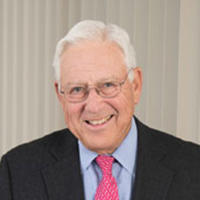
Roger M. Widmann was chairman of Cedar Realty Trust, a real estate investment trust in New York, until its sale in 2021. He joined CPJ’s board of directors in 2018 and was also a board member of Standard Motor Products, Inc., a leading supplier of automobile aftermarket parts.
Widmann began his career in 1964 as an SEC trial attorney. Later, as vice president of New Court Securities Corporation (now Rothschild, Inc.), he completed a series of venture capital and merger and acquisition transactions. He was also senior vice president at investment bank Donaldson, Lufkin & Jenrette, where he was responsible for the firm’s domestic and international investment banking business. From 1986 to 1995, Widmann was senior managing director at Chemical Securities Inc., a subsidiary of Chemical Banking Corporation (now JPMorgan Chase Corporation), where he established the bank’s fee-based corporate finance business and was responsible for projects from the U.S. and South America to Eastern Europe and the Middle East.
He was a senior moderator at the Aspen Institute’s Executive Seminars from 1988 to 2014 and president of the March of Dimes of Greater New York from 1987 to 1995. Widmann was a founder and CEO of First Reserve Corporation, the largest independent energy investing firm in the U.S. From 1996 to 2004, he was principal of the investment banking firm Tanner & Co., Inc., where he advised, negotiated, and evaluated corporations ranging from Fortune 200 companies to mid-size firms. He was chairman of Lydall, Inc., a manufacturer of thermal, acoustical, and filtration materials in Connecticut, from 1998 to 2004, and a board member since 1974. He was also a board member of Paxar Corporation, the largest manufacturer of labeling systems, until its sale in 2007. He was a director of both First Reserve Corporation in Connecticut from 1980 until 1995 and Weatherford Enterra in Texas from 1993 to 1998. From 2005 to 2016, Widmann was a director of Oxfam America, an affiliate of Oxfam International, the global anti-poverty and crisis relief organization.
He earned his bachelor’s degree, cum laude, from Brown University and a juris doctor from Columbia Law School.
Widmann began his career in 1964 as an SEC trial attorney. Later, as vice president of New Court Securities Corporation (now Rothschild, Inc.), he completed a series of venture capital and merger and acquisition transactions. He was also senior vice president at investment bank Donaldson, Lufkin & Jenrette, where he was responsible for the firm’s domestic and international investment banking business. From 1986 to 1995, Widmann was senior managing director at Chemical Securities Inc., a subsidiary of Chemical Banking Corporation (now JPMorgan Chase Corporation), where he established the bank’s fee-based corporate finance business and was responsible for projects from the U.S. and South America to Eastern Europe and the Middle East.
He was a senior moderator at the Aspen Institute’s Executive Seminars from 1988 to 2014 and president of the March of Dimes of Greater New York from 1987 to 1995. Widmann was a founder and CEO of First Reserve Corporation, the largest independent energy investing firm in the U.S. From 1996 to 2004, he was principal of the investment banking firm Tanner & Co., Inc., where he advised, negotiated, and evaluated corporations ranging from Fortune 200 companies to mid-size firms. He was chairman of Lydall, Inc., a manufacturer of thermal, acoustical, and filtration materials in Connecticut, from 1998 to 2004, and a board member since 1974. He was also a board member of Paxar Corporation, the largest manufacturer of labeling systems, until its sale in 2007. He was a director of both First Reserve Corporation in Connecticut from 1980 until 1995 and Weatherford Enterra in Texas from 1993 to 1998. From 2005 to 2016, Widmann was a director of Oxfam America, an affiliate of Oxfam International, the global anti-poverty and crisis relief organization.
He earned his bachelor’s degree, cum laude, from Brown University and a juris doctor from Columbia Law School.
See all of our Board of Directors »


Jon Williams is the executive director of the Rory Peck Trust, a UK-based nonprofit supporting freelance journalists around the world. In a three-decade long career in journalism, he has worked on both sides of the Atlantic, serving as the foreign editor of both the BBC and ABC News, and leading the digital transformation of Ireland’s public broadcaster as managing director of RTE News.
As world news editor, Williams directed the British broadcaster’s global news gathering, leading more than 200 journalists in more than 30 countries, winning two Emmy Awards for the BBC’s Middle East reporting. He led coverage of the wars in Iraq and Afghanistan and traveled extensively, including to Iran, Libya and North Korea. In 2013, he joined ABC News in New York as its international managing editor, winning a third Emmy for ABC’s reporting of the Syrian refugee crisis.
He joined CPJ’s board in 2017 after serving as an ex-officio member. Following the Taliban’s return to power in Afghanistan in 2021, Williams worked with the government of Ireland to rescue more than a dozen Afghan journalists and their families identified by CPJ as most in need of urgent assistance. All feared for their safety and were resettled in Ireland after being granted protection by Ireland’s International Protection Office. In addition to his work with CPJ and the Rory Peck Trust, Williams serves on the board of the United Kingdom for UNHCR, the British fundraising foundation for the United Nations Refugee Agency.
As world news editor, Williams directed the British broadcaster’s global news gathering, leading more than 200 journalists in more than 30 countries, winning two Emmy Awards for the BBC’s Middle East reporting. He led coverage of the wars in Iraq and Afghanistan and traveled extensively, including to Iran, Libya and North Korea. In 2013, he joined ABC News in New York as its international managing editor, winning a third Emmy for ABC’s reporting of the Syrian refugee crisis.
He joined CPJ’s board in 2017 after serving as an ex-officio member. Following the Taliban’s return to power in Afghanistan in 2021, Williams worked with the government of Ireland to rescue more than a dozen Afghan journalists and their families identified by CPJ as most in need of urgent assistance. All feared for their safety and were resettled in Ireland after being granted protection by Ireland’s International Protection Office. In addition to his work with CPJ and the Rory Peck Trust, Williams serves on the board of the United Kingdom for UNHCR, the British fundraising foundation for the United Nations Refugee Agency.
See all of our Board of Directors »
Senior Advisers
CPJ’s senior advisers include leading journalists and others whose advice and service greatly benefit the organization.
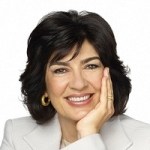

Christiane Amanpour is CNN’s chief international correspondent and anchor of the network’s award-winning, flagship global affairs program “Amanpour.” She joined CPJ’s board of directors in 2005 and later began serving the organization as a senior advisor. Her illustrious career in journalism spans three decades. When she became an international correspondent for CNN in 1990, her first major assignment was covering the Gulf War. She has since reported from the world’s major hot spots, including Afghanistan, Iraq, Iran, Pakistan, Somalia, Israel, the Palestinian territories, Asia, Rwanda, the Balkans, and the U.S. during Hurricane Katrina. She has also interviewed many world leaders over the past two decades, including securing the only interview with Hosni Mubarak and an exclusive with Muammar Qaddafi during the eruption of the Arab Spring. Amanpour has received every major broadcast award, including an inaugural Television Academy Award, nine News and Documentary Emmys, four Peabody Awards, two George Polk Awards, three duPont-Columbia Awards, the Courage in Journalism Award, an Edward R. Murrow Award, and nine honorary degrees. In 2011, she received a Giants in Broadcasting Award and was that year’s recipient of the Walter Cronkite Award for Excellence in Journalism from Arizona State University. She is a member of the American Academy of Arts and Sciences, a commander of the most excellent order of the British Empire, and an honorary citizen of Sarajevo. Amanpour was born in London and spent part of her childhood in Tehran, Iran. She graduated summa cum laude from the University of Rhode Island with a bachelor’s degree in journalism.
Photo credit: CNN
Photo credit: CNN
See all of our Board of Directors »
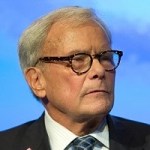

Tom Brokaw, one of the most trusted and respected figures in broadcast journalism, was a special correspondent for NBC News until 2021, in which role he produced long-form documentaries and provided expertise during election coverage and breaking news events for the program. He is a former anchor and managing editor of “NBC Nightly News.” Brokaw joined CPJ’s board of directors in 1993 and began serving the organization as a senior advisor in 2007. He began his journalism career in 1964 at KMTV in Omaha, Nebraska. He then anchored the late evening news on Atlanta’s WSB-TV in 1965 before joining Los Angeles’ KNBC-TV in 1966. That same year, Brokaw was hired by NBC News, later becoming the anchor of their “Today” program in 1976. In 1982, he became the co-anchor of “NBC Nightly News” alongside Roger Mudd, the next year becoming the sole anchor of the program. Brokaw would then hold this position for 21 years until stepping down in 2004. From June 2008 to December 2008, Brokaw served as interim moderator of NBC’s top-rated Sunday morning public affairs program, “Meet the Press,” after the untimely death of its moderator, Tim Russert. Over the years at NBC, Brokaw has reported in more than 30 documentaries on subjects ranging from race, AIDS, the war on terror, health care, Los Angeles gangs, Bill Gates, literacy, immigration, and the evangelical movement. He has collaborated with NBC’s Peacock Productions for Discovery’s Emmy-winning documentary “Global Warming: What You Need to Know with Tom Brokaw,” and History Channel’s two-hour documentaries, “1968 with Tom Brokaw” and “KING.” Brokaw has an impressive series of “firsts” as an anchor, including the first U.S. one-on-one with Russian President Mikhail Gorbachev. Brokaw was also the first and only anchor to report from the ground the night the Berlin Wall fell, and was the first American anchor to travel to Tibet to report on human-rights abuses and to conduct an interview with the Dalai Lama. In 2003, Brokaw was the first American anchor to report that the Iraq War had begun, and in April of that year, he landed the first television interview with President George W. Bush after he declared the end of major combat. Brokaw was the only network evening news anchor to report from Normandy, France, during the D-Day 60th Anniversary ceremonies in 2004. In so doing, he also secured exclusive interviews with French President Jacques Chirac in Paris and U.S. President George W. Bush at the American Cemetery Normandy Beach in Colleville-sur-Mer. Earlier that same year, Brokaw traveled to the Asian subcontinent to report on the challenges Pakistan and Afghanistan faced as they fought the war on terror. In addition to interviewing both Pakistan President Gen. Pervez Musharraf and Afghan President Hamid Karzai while there, Brokaw joined the Pakistani army in their hunt for Al-Qaeda in the mountainous terrain along nations’ shared border. He also reported from southeastern Afghanistan, at the base of the 10th Mountain Division, where U.S. soldiers were not only hunting for Al-Qaeda, but trying to win the hearts and minds of the Afghan people as well. Brokaw has a distinguished record as a U.S. political reporter. He has interviewed every president since Lyndon B. Johnson and covered every presidential election since 1968. He was NBC’s White House correspondent during the Watergate scandal (1973-1976), and from 1984 to 2004 anchored all of NBC’s political coverage, including primaries, national conventions, and election nights. He has moderated nine primary and/or general election debates. Complementing his distinguished broadcast journalism career, Brokaw has written articles, essays, and commentary for several publications including The New York Times, The Washington Post, the Los Angeles Times, Newsweek, Time, The New Yorker, Men’s Journal, Sports Illustrated, Life, National Geographic, Outside, and Interview. In 1998, Brokaw became a bestselling author with the publication of “The Greatest Generation.” Inspired by the mountain of mail he received from his first book, Brokaw wrote “The Greatest Generation Speaks” in 1999. His third book, “An Album of Memories,” was published in 2001. In November 2002, Brokaw’s fourth bestselling book “A Long Way from Home,” a reflective look at growing up in the American Heartland, was released. In his fifth bestselling book, “BOOM! Voices of the Sixties,” Brokaw shares memories and reflections of the time based on his experiences and over 50 interviews with a wide variety of both well-known and lesser-known people. He has received countless honors, including the Edward R. Murrow Lifetime Achievement Award, the Emmy Award for Lifetime Achievement, and an induction as a fellow into the prestigious American Academy of Arts and Sciences. Brokaw has also received the Records of Achievement Award from the Foundation for the National Archives; the Gorge Catlett Marshall Medal from the Association of the U.S. Army, its highest honor; and the West Point Sylvanus Thayer Award. He has earned a dozen Emmys and two Peabody and duPont awards for his journalistic achievements as well. From 2000 to 2003, “NBC Nightly News” won four consecutive Edward R. Murrow Awards for Best Newscast.
Photo credit: AP
Photo credit: AP
See all of our Board of Directors »
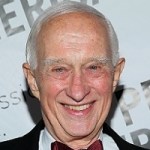
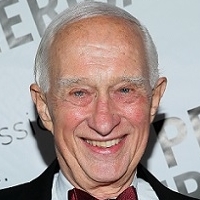
James C. Goodale, a leading First Amendment and communications lawyer, joined CPJ’s board of directors in 1989 and served as its board chair from then until 1994. During his tenure, he built CPJ into a significant international force to release imprisoned journalists. He substantially increased the organization’s budget and enlisted powerful members to join him on its board, including Tom Brokaw, Anthony Lewis, and Kati Marton. From 1967 to 1980, Goodale served as general counsel to and vice chairman of The New York Times. In 1971, he defended the Times in the Pentagon Papers Supreme Court case and won a resounding victory. The case’s outcome prevented the federal government from exercising prior restraint (censorship). Another of his cases, the landmark reporter’s privilege case to protect reporters’ sources, Branzburg v. Hayes, went to the Supreme Court the following year. Goodale’s article in Hastings Law Journal in 1975, an interpretation of Branzburg v. the U.S., spawned over 1,000 reported cases involving the recognition of such a privilege as well as the adoption by 39 states and D.C. of shield laws. He has accordingly been called the “Father of the Reporter’s Privilege.” Goodale brought reporter’s privilege and other First Amendment issues to the attention of lawyers and courts nationwide by means of his high-profile cases and creation of a “First Amendment Bar” through his chairmanship of a Communications Law Seminar at the Practising Law Institute in New York, which he ran for 40 years. The seminar became one of the largest of its kind in the U.S., coining the phrase “First Amendment lawyers.” In 1980, Goodale joined the law firm of Debevoise & Plimpton LLP, where he founded two legal practice groups which were innovative for their time: “Corporate Media and Communications,” and “First Amendment and Intellectual Property Litigation.” He has represented scores of celebrities such as Tina Brown, Harry Evans, and George Plimpton and media companies including Cablevision, Time Inc., and Hearst. From 1995 to 2010, he produced and hosted a television show in New York called “Digital Age,” about the influence of the digital revolution on media, society and politics. Ben Bradlee, Arthur O. Sulzberger Jr., Henry Kissinger, Tom Brokaw, Michael Bloomberg, and others appeared as guests on the show. He has taught First Amendment and communications law at Yale, New York University, and Fordham University law schools for over 30 years and published nearly 200 articles on the First Amendment as well as two books: “The New York Times v. The U.S.” and “All About Cable,” a reference book that has been cited twice in the U.S. Supreme Court. In 2001, the Columbia Journalism Review named Goodale one of the 200 leaders who shape the national media agenda. Born in Cambridge, Massachusetts, Goodale is a graduate of Yale and the University of Chicago Law School.
Photo credit: AFP
Photo credit: AFP
See all of our Board of Directors »
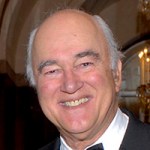
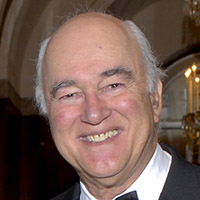
Steven L. Isenberg is a visiting professor of the humanities at the University of Texas at Austin. From 2009 to 2013, he was the executive director of the PEN American Center, the largest chapter of International PEN, the world’s oldest international literary and human rights organization. He has held important posts in journalism, government, law, and academia over the years. He was publisher of Newsday, The Stamford Advocate, and Greenwich Time, and the executive vice president of the Los Angeles Times. Isenberg joined CPJ’s board of directors in 2002 and became a senior advisor in 2008. He also serves on the board of Adelphi University on Long Island, New York, where he was interim president from 1999 to 2000. Isenberg teaches at the University of Texas at Austin. He previously taught at the University of California at Berkeley as a visiting professor of English and journalism; Yale as a visiting lecturer; Davidson College as the James K. Batten Professor of Public Policy; and the New School as a visiting scholar in media studies. He holds an honorary doctorate from Adelphi University. Prior to working in journalism, Isenberg had been chief of staff to New York City Mayor John V. Lindsay and a litigator at the firm of Breed, Abbott and Morgan. He also served as president of the executive advisory board of the College of Arts and Sciences at the University of California at Berkeley. Isenberg obtained a bachelor’s degree in English literature from the University of California at Berkeley in 1962; a second bachelor’s degree and a master’s degree (also in English literature) from Worcester College, Oxford University, England, in 1966; and a juris doctor from Yale Law School in 1975. He is also an honorary fellow of Worcester College, Oxford University, England.
Photo credit: CPJ/Barbara Nitke
Photo credit: CPJ/Barbara Nitke
See all of our Board of Directors »
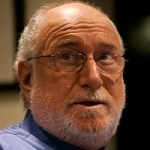

David Marash is a veteran broadcast journalist turned teacher and trainer of young journalists. He joined CPJ’s board in 1981 and has since become a senior advisor for the organization. Marash’s work has appeared on PBS/AARP’s “Inside E Street” and PBS’s “WorldFocus.” He was Al-Jazeera English’s Washington anchor from 2006 to 2008, and reported for ABC News “Nightline” from 1989 to 2005. His reporting of the wars in the former Yugoslavia earned an Emmy Award in 1994. Marash also received Emmys for his “Nightline” coverage of the Oklahoma City bombing, his coverage of the explosion of TWA Flight 800, and a 1980 ABC News “20/20” report on the Sandinistas in Nicaragua. Marash and “Nightline” producer Jay LaMonica’s three-part Nightline series on AIDS in Zimbabwe received an Alfred I. duPont Award as well. Marash filed numerous breaking news stories for “Nightline,” including coverage of the eruption of the Soufriere Hills volcano on the island of Montserrat, the siege of Sarajevo, suicide bombings in Tel Aviv, Hurricane Mitch in Honduras, and the Rwandan genocide. He filed investigative reports on topics as diverse as the failure of the General Motors’ minority dealership development program and the legal tactics of tobacco industry lawyers. Before beginning work for “Nightline” in 1989, Marash spent more than a decade in local news in New York and Washington, D.C. From 1973 to 1978 and 1981 to 1982, he anchored the news for WCBS-TV’s New York program. From 1983 to 1985, he was an investigative reporter for WNBC-TV’s New York program and a contributing reporter for NBC Weekend News and NBC Sports. From 1985 to 1989, he was an anchor for WRC-TV, Washington. Marash has published articles in The New York Times, The Christian Science Monitor, the Carnegie Foundation’s Reporter, Washington Monthly, The Washington Journalism Review, Ms. magazine, and TV Guide. He has won numerous broadcasting honors, including seven local Emmys in New York and Washington, New York and Long Island Press Club Awards, and an Overseas Press Club Award for his 1972 CBS Radio reports on the terrorist attack at the Munich Olympic Games. Marash graduated from Williams College in 1964 and did his first teaching there in 1971.
Photo credit: AP
Photo credit: AP
See all of our Board of Directors »

Charles L. Overby is chairman and chief executive officer of the Freedom Forum, an independent, nonpartisan foundation dedicated to First Amendment and media issues, and the Diversity Institute, which is dedicated to recruiting, training, mentoring, and retaining a diverse newsroom workforce. He joined CPJ’s board of directors in 2000 and later began serving the organization as a senior advisor. Overby is also chief executive officer of the Newseum, the interactive museum of news, which opened in 2008 in Washington, D.C. The Freedom Forum funds the operations of the Newseum and the Diversity Institute. He was named president and chief executive officer of the Gannett Foundation in 1989. (The foundation was renamed the Freedom Forum in 1991.) In 1997, he became chairman as well as CEO, traveling to six continents to promote free press values. Overby is a former editor of The Clarion-Ledger in Jackson, Mississippi. Under his leadership, the newspaper won the Pulitzer Prize for Public Service in 1983 for news and editorials on education reform in Mississippi. He also worked for 16 years as reporter, editor, and corporate executive for Gannett Co., the nation’s largest newspaper company. He was vice president of news and communications for Gannett and served on the management committees for Gannett and USA Today as well. As a reporter, Overby covered the White House, presidential campaigns, Congress, and the U.S. Supreme Court. He serves on the board of the Horatio Alger Association of Distinguished Americans, the foundation board of the University of Mississippi, his alma mater, and is a former member of the Board of Regents at Baylor University.
Photo credit: AP
Photo credit: AP
See all of our Board of Directors »
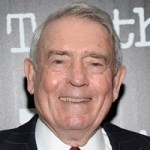

Dan Rather is a Hall of Fame television and radio correspondent and anchor, and one of the best known journalists in the world. He joined CPJ’s board in 1982 and has since served as a senior advisor for the organization. He currently hosts AXS TV’s “The Big Interview,” operates his own media company, News and Guts, and is anchor and managing editor for “Dan Rather Reports” on the HDNet cable and satellite network. The one-hour weekly news program premiered in 2006. It concentrates on investigative reports, international coverage, politics and on-scene field reporting. Rather was anchor and managing editor of “The CBS Evening News” for a record 24 years before stepping down in 2005. During his 44 years with CBS News, Rather held many prestigious positions, including co-editor of “60 Minutes;” bureau chief in New Orleans, London, and Saigon; and White House correspondent during the Johnson, Nixon, and Ford administrations. He has interviewed every U.S. president since Dwight Eisenhower and virtually every major international leader of the past 30 years. He also anchored and reported for CBS News’ “48 Hours” from its premiere in 1988 through 2002, a program he helped create. Rather joined CBS News in 1962 as chief of its Southwest bureau in Dallas. From November 22, 1963, when he reported on the assassination of John F. Kennedy in Dallas, Rather has covered most of the world’s major news stories. He reported on the civil rights movement in the South; the White House; the wars in Vietnam, Afghanistan, the Persian Gulf and Yugoslavia; and the quest for peace in South Africa and the Middle East. He was the first U.S. anchor on the ground in Belgrade during NATO’s bombing of Yugoslavia, reporting for several CBS News broadcasts. He also reported on the pope’s visit to Cuba in 1998; Hong Kong’s turnover to Chinese rule in 1997; from the front lines in Bosnia in 1995; and from Jerusalem on the assassination of Israeli Prime Minister Yitzhak Rabin–he was the only U.S. anchor at Rabin’s funeral. He was the first to interview President Bill Clinton following his impeachment by the House as well. The war on terrorism and the U.S.-led invasion of Iraq took Rather to Iraq, Kuwait, Afghanistan, Saudi Arabia, and Israel. In 2003, he secured a one-on-one interview with Saddam Hussein in Baghdad–the first the Iraqi leader had conducted with a U.S. journalist since 1991 (when Rather had scored the first interview with Saddam Hussein after the Iraqi invasion of Kuwait). In 2004, his all-media exclusive “60 Minutes II” investigative report that revealed abuses at the U.S. military’s Abu Ghraib prison drew worldwide attention and critical acclaim. Rather also reported from Kabul on the U.S. effort to oust the Taliban and from Jerusalem and the West Bank during the largest Israeli military action in two decades. Rather began his career in journalism in 1950 as an Associated Press reporter in Huntsville, Texas. Later, he was a reporter for United Press International (1950-52), KSAM Radio in Huntsville (1950-53), and KTRH Radio in Houston and the Houston Chronicle (1954-55). He became news director of KTRH Radio in 1956 and, from 1960 to 1963, he was news director at KHOU-TV, the CBS affiliate in Houston. His widely acclaimed coverage of Hurricane Carla for that station, some of which was broadcast nationwide, took him to CBS News. Rather authored or co-authored seven books, four of which have become New York Times bestsellers. He has received numerous Emmy and Peabody Awards, and citations from scholarly, professional and charitable organizations. Born in Wharton, Texas, Rather received his bachelor’s degree in journalism from Sam Houston State Teachers College.
Photo credit: AP
Photo credit: AP
See all of our Board of Directors »
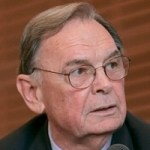

Gene Roberts has taught at the Philip Merrill College of Journalism at the University of Maryland since 1991, following 18 years as the executive editor of The Philadelphia Inquirer. The paper won 17 Pulitzer Prizes under his leadership. Roberts took a hiatus from his university work from 1994 to 1997 to serve as managing editor of The New York Times. In 1998, he returned to the college, where he teaches courses on writing the complex story, the press and the civil rights movement, and newsroom management. Roberts joined CPJ’s board of directors in 1994 and is a former chairman of the organization. He was instrumental in the creation of CPJ’s Journalist Assistance program. In 2014, CPJ’s assistance fund, which provides support to journalists at risk, was renamed the Gene Roberts Emergency Fund. Roberts has also served on the boards of the Pulitzer Prize, the World Press Freedom Committee, and the Center for Foreign Journalists. He has co-authored numerous books, including “Leaving Readers Behind: The Age of Corporate Newspaper,” “The Censors and the Schools,” and the Pulitzer Prize-winning “The Race Beat.” He was also editor-in-chief of the American Journalism Review‘s “State of the American Newspaper Project,” published in 2000. Roberts began his career as a farm reporter for The Goldsboro (N.C.) News-Argus. He later joined The New York Times where he led the paper’s coverage of the 1960s civil rights movement in the South and served as chief war correspondent in Vietnam. Roberts received the National Press Club’s Fourth Estate Award for Distinguished Contributions to Journalism in 1993.
Photo credit: AP
Photo credit: AP
See all of our Board of Directors »
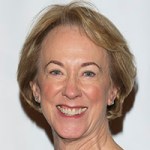

Sandra Mims Rowe served as chair of CPJ’s board from 2011 to 2017 after having joined the board in 2003. Rowe was editor of The Oregonian in Portland, Oregon, from 1993 to 2010. Under her leadership, the newspaper won five Pulitzer Prizes, including the Gold Medal for Public Service. She was also the Knight Shorenstein Fellow at Harvard University during the 2010-2011 academic year. From 1984 to 1993, Rowe was executive editor and vice president of The Virginian-Pilot, in Norfolk, Virginia, and The Ledger-Star, in Virginia Beach. She was with the two publications for 22 years. The Virginian-Pilot won the Pulitzer Prize for general news reporting, its first in 25 years, under her leadership. Rowe has been recognized often for her contributions to journalism and her excellence in leadership. In 2003, the National Press Foundation named her editor of the year, and in 2008, Editor & Publisher magazine awarded her the same title. In 2010, she received the American Society of Newspaper Editors’ National Leadership Award, and the University of Missouri School of Journalism’s Medal of Honor for Distinguished Service to Journalism. In 2011, the Livingston Foundation recognized her mentoring of scores of young journalists with the Richard Clurman Award. Rowe also chairs the board of visitors for the Knight Journalism Fellowships at Stanford University. She is a member of Willamette University’s board of trustees and Northwestern University Medill School of Journalism’s board of visitors as well. From 1994 to 2003, Rowe served on the Pulitzer Prize’s board and was its chair from 2002 to 2003. She is a past president of the American Society of Newspaper Editors. She is married to Gerard P. Rowe, a lawyer, and is the mother of two daughters, Mims and Sarah.
Photo credit: CPJ/Barbara Nitke
Photo credit: CPJ/Barbara Nitke
See all of our Board of Directors »
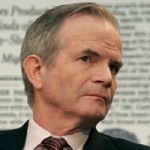
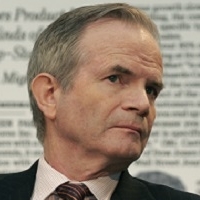
Paul Steiger is executive chairman of the board of directors of ProPublica, a New York-based non-profit newsroom focused on investigative journalism. He was the founding editor-in-chief, CEO, and president of the outlet from 2008 to 2012. Steiger was previously editor-at-large at The Wall Street Journal, having stepped down in 2007 from a 15-year stint as managing editor and vice president of Dow Jones & Co., the Journal‘s parent company. Steiger joined the Journal in 1966 as a reporter in the San Francisco bureau. In 1968, he moved to the Los Angeles Times as a staff writer and in 1971 he transferred to the paper’s Washington, D.C. bureau as an economic correspondent. He returned to Los Angeles in 1978 to serve as the Times‘ business editor. In 1983, Steiger rejoined the Journal as an assistant managing editor in New York and became deputy managing editor in 1985. He was appointed managing editor in 1991 and became a vice president in 1992. Editors and news staffs of the European and Asian Journals began reporting to him in 2002. Under his leadership, the Journal‘s reporters and editors won numerous Pulitzer Prizes. Steiger joined CPJ’s board of directors in 2003 and was elected CPJ chairman in 2005. That same year, he was honored with the Decade of Excellence Award from the World Leadership Forum. He now serves CPJ as a senior advisor. In 2002, Steiger was selected as the first recipient of the American Society of Newspaper Editors’ Leadership Award, honoring more than a decade of leadership at The Wall Street Journal. Later that year, the John E. Anderson Graduate School of Management at UCLA honored him with the Gerald Loeb Award for lifetime achievement. Also in 2002, Steiger was awarded the Columbia Journalism Award, given to honor a “singular journalistic performance in the public interest,” and the highest honor awarded by the Columbia University School of Journalism. He was also named a 2001-2002 Poynter Fellow by Yale University. In 2007, the National Press Club awarded Steiger the Fourth Estate Award, its highest honor, for “a lifetime of contributions to American journalism.” In 2001, The National Press Foundation awarded Steiger the George Beveridge Editor of the Year Award for qualities that produce excellence in media. He also won three Gerald Loeb Awards and two John Hancock awards for his economics and business coverage. In 1999, he was elected to the Pulitzer Prize’s board. In 1970, he co-authored the book, “The ’70s Crash and How to Survive It.” Born in New York City, Steiger graduated from Yale University with a bachelor’s degree in economics.
Photo credit: AP
Photo credit: AP
See all of our Board of Directors »
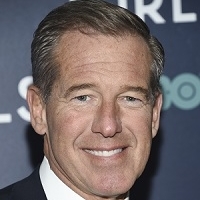
Brian Williams was the anchor and managing editor of “NBC Nightly News” from 2004 to 2015. His work covering Hurricane Katrina and its aftermath garnered numerous awards including an Emmy, a DuPont, four Edward R. Murrow Awards, and a Peabody. He was assigned to breaking news and special events coverage for MSNBC before stepping down in December 2021. Williams joined CPJ’s board of directors in 2007 and later began serving the organization as a senior advisor. Williams has traveled extensively around the world to cover breaking news since joining NBC News in 1993. He is a veteran of political campaigns and elections and has reported numerous times from the Middle East, including several trips to Iraq to cover the war. Beginning in 1996, he was anchor and managing editor of “The News with Brian Williams,” a nightly news program broadcast on MSNBC and CNBC. Before this, he was anchor and managing editor of the Saturday edition of “NBC Nightly News” for six years. Williams’ career in broadcast journalism began in 1981 at KOAM-TV in Pittsburg, Kansas. After serving as an intern in the Carter administration, he worked for WTTG-TV in Washington, D.C. Before joining NBC, Williams was anchor and correspondent for CBS’ Television Stations Division in Philadelphia and New York for seven years.
Photo credit: AP
Photo credit: AP