Ecuador
2013
CPJ testifies on challenges to democracy in the Americas
Carlos Lauría’s testimony starts at 1:10 in the video. Carlos Lauría, CPJ’s Americas senior program coordinator, provided testimony before the Subcommittee on the Western Hemisphere of US House of Representatives on Tuesday. Lauría emphasized that violence and government harassment are the main emerging trends that illustrate the major challenges facing the press in the Western…
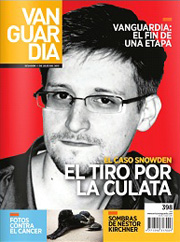
Ecuador loses investigative journal Vanguardia
Like the death of a loved one. That’s how Juan Carlos Calderón, editor of the newsmagazine Vanguardia, described the June 28 closing of the newsweekly that for eight years published hard-hitting investigations about public officials and faced frequent government harassment. Yet the final days of Vanguardia were almost as controversial as its stories.

Snowden travels trace a path of government hypocrisy
Edward Snowden’s global travels have highlighted the chasm between the political posturing and actual practices of governments when it comes to free expression. As is well known now, the former government contractor’s leaks exposed the widespread phone and digital surveillance being conducted by the U.S. National Security Agency, practices at odds with the Obama administration’s…
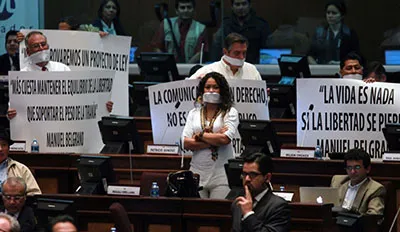
New Ecuadoran legislation seen as a gag on critics
After inspecting a hydroelectric project in northern Ecuador last year, President Rafael Correa complained about the scant press coverage of his visit and suggested it was part of a media blackout. “Did the Ecuadoran media conspire to ignore this important event? It seems like that is the case,” Correa told the crowd at a town…

At OAS, a victory for human rights and free expression
By reaffirming the autonomy and independence of the regional human rights system and rejecting attempts to neutralize the work of the Inter-American Commission on Human Rights (IACHR) and its special rapporteur for freedom of expression, the Organization of American States (OAS) chose last week to discard proposals that would have made citizens throughout the hemisphere…
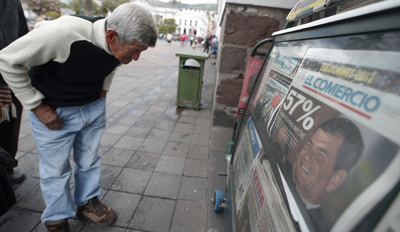
Battle between Correa, Ecuadoran press to wage on
In the wake of President Rafael Correa’s landslide re-election on Sunday, many Ecuadoran reporters are bracing for another four years of conflict with his left-leaning government. Neither side claims to relish the prospect, but continued clashes seem inevitable given the bad blood that has developed between them.
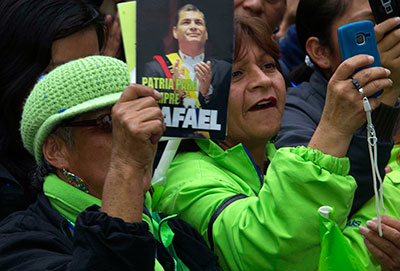
Electoral law dulls reporting as Correa nears re-election
It’s by far the dullest space in the newspaper: Every day in El Universo, Ecuador’s leading daily, readers can find eight small photos and news blurbs summing up the activities of the eight presidential candidates. The articles are the same size and blocked together in a layout that resembles a tic-tac-toe game, minus the ninth…
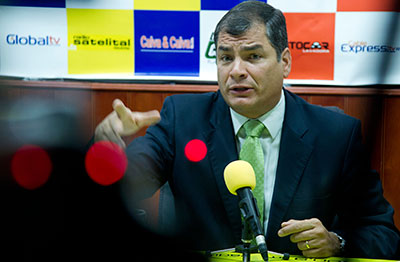
In Correa’s Ecuador, a bulletin on breakfast is routine
On September 11, 2012, the Ecuadoran government interrupted a morning newscast on the Teleamazonas TV station for an official bulletin. What could be so urgent? A coup d’etat? An earthquake? A cholera outbreak? It turned out the government sought to clarify what President Rafael Correa had for breakfast.
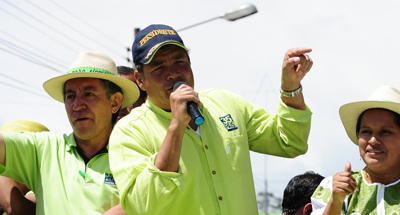
Repression deepens as Correa heads to new term
One result of President Rafael Correa’s high-profile campaign to demonize the country’s private media can be seen on the desk of José Velásquez, news manager at Teleamazonas, a private Quito television station often critical of the government. Among the documents piled high on his desk are lawsuits, which used to be a rare thing. Encouraged by…