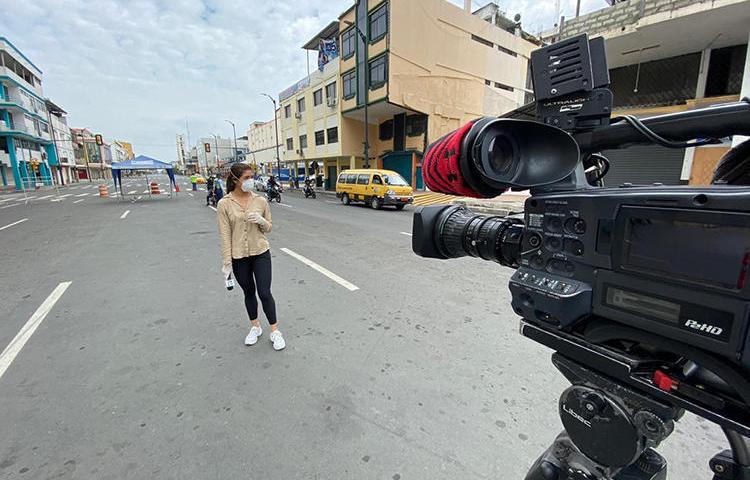
Journalist Dayanna Monroy on covering the COVID-19 crisis in Ecuador
Dayanna Monroy reports for the Teleamazonas television station in the port city of Guayaquil, the epicenter of Ecuador’s COVID-19 outbreak. She and her colleagues have recently reported on bodies piling up in morgues and being left for days in the streets and in people’s homes, the results of overwhelmed hospitals, funeral homes, and cemeteries.
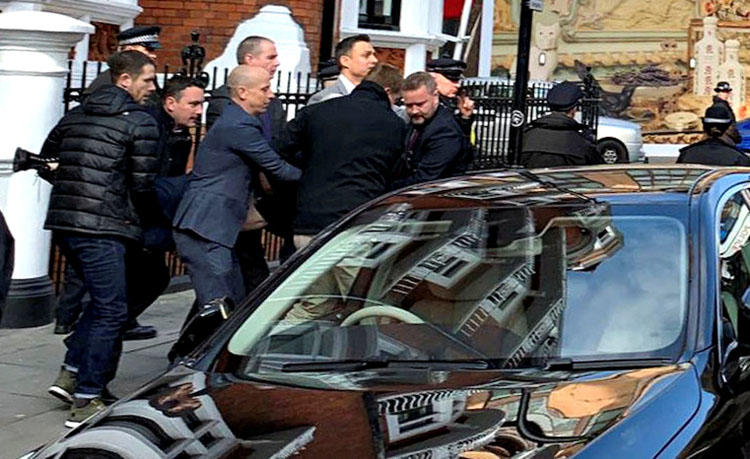
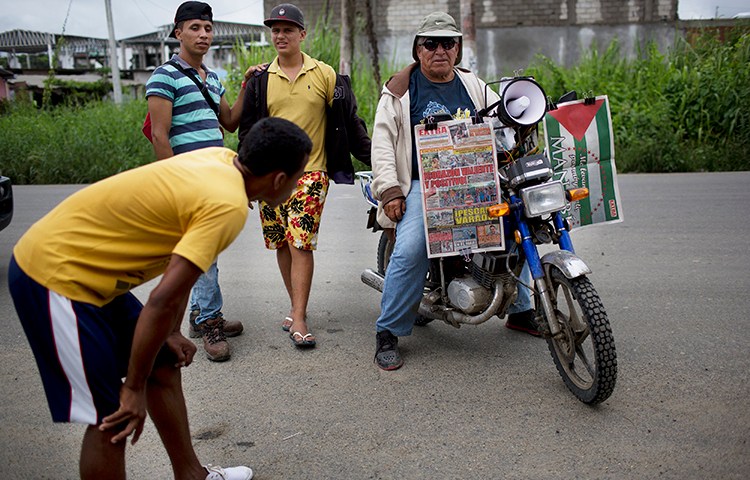
Correa’s legacy leaves a long road to recovery for Ecuador’s journalists
Since taking office in May, Ecuadoran President Lenín Moreno has pledged to end a decade-long battle between the government and the media. But several reporters and editors with whom CPJ spoke said that the anti-press campaign carried out by Moreno’s predecessor, former President Rafael Correa, has caused lasting damage to journalism in Ecuador.
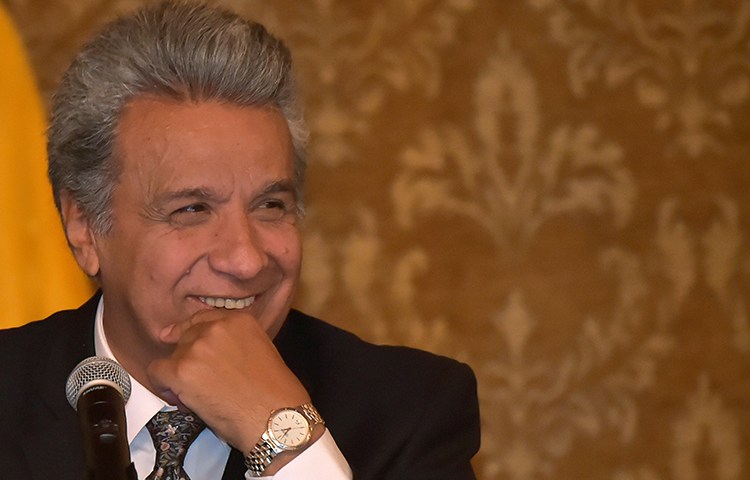
Ecuador’s Moreno opens new era in relations with media
Less than a month after taking office, Ecuadoran President Lenín Moreno engineered a ceasefire in the decade-long battle between the government and the nation’s independent news media by inviting a group of radio, TV, and newspaper editors to the Carondelet presidential palace in Quito.
How U.S. copyright law is being used to take down Correa’s critics in Ecuador
On December 30, César Ricaurte, the executive director of Fundamedios, received a copyright complaint with the potential to close his entire website. The complaint, filed on behalf of Ecuador’s communications regulator SECOM by a company called Ares Rights, ordered the independent press freedom group to remove an image of President Rafael Correa from its website,…
Inter-American Human Rights System, campaigns against defamation laws keep journalists from jail in Americas
When a prison guard told Ángel Santiesteban Prats that he would be released from jail on a scorching summer day in July, the Cuban independent writer and blogger decided to ignore him, brushing off the news as a cruel joke. By then, Santiesteban had already spent two years and five months in prison, half of…
Firing of critical newspaper editor raises concern in Ecuador
When the Quito daily El Comercio was sold in December to a Latin America media tycoon known for avoiding editorial conflict, press freedom advocates feared the newspaper would soften its coverage of the Ecuadoran government. Those concerns have now increased with last month’s firing of Martín Pallares, one of El Comercio’s most prominent journalists and…
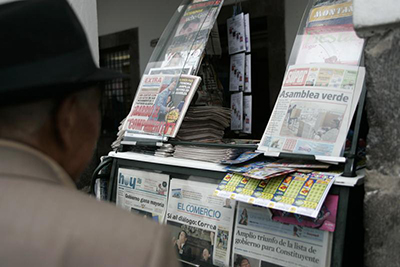
How Ecuador’s plans to make communications a public service is threat to free press
Attempts to amend Ecuador’s constitution to categorize communications as a “public service” has sparked a fierce debate, with one critic drawing comparisons to the way dictators such as Stalin and Hitler used the press as a propaganda tool, and supporters of President Rafael Correa’s government arguing that the proposed reforms will make journalism more accountable…
Life on the run in Amazon jungle for journalist charged with defaming president
For Ecuadoran journalist and political activist Fernando Villavicencio, life on the lam has meant wading through jungle rivers to avoid police checkpoints, dining on crocodile and monkey meat, and penning his latest book from a series of safe houses.
Pressured by government, Ecuadoran cartoonist is forced to adjust
Called to testify before a government media oversight commission, editorial cartoonist Xavier Bonilla–known by his penname Bonil–showed up with a pair of four-foot-long mock pencils. But rather than having a small eraser on the tip, one of Bonil’s giant pencils was nearly all eraser.