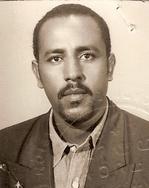
Feleke Tibebu, deputy editor of private Ethiopian newspaper Hadar, was arrested in a 2005 government-led crackdown on dissidents and the private media. Tibebu (right) and 13 other journalists were charged with “outrages against the constitution or constitutional order,” “impairment of the defensive power of the state,” and “attempted genocide,” after the publication of editorials critical of the government’s conduct surrounding the May 2005 parliamentary elections. According to international news reports at the time, more than 190 people were killed when the government crushed post-election protests after the opposition contested the victory of the ruling party.

After nearly 17 months in prison, Tibebu and seven other journalists were acquitted and released in April 2007. Facing more harassment, he fled to

He is one of more than 340 journalists forced into in exile whose cases CPJ has documented since 2001.
Tibebu was interviewed in Amharic last week by Voice of America Amharic service reporter Henok Fente, who is based in Washington:
Henok Fente: What are your feelings, observations, and impressions upon arriving in the U.S.?
Feleke Tibebu: I have mixed feelings about coming to America. I am sad because I was forced to flee my country, and it is not easy for someone to leave family, friends, and one’s career to build a new one in new country. I was forced by the Ethiopian government to flee. However, I am glad to be in America. I am glad I am not in prison or in a refugee camp. I am alive, and that is what matters.
HF: When is the last time you were in Ethiopia and what drove you out?
FT: I was in Ethiopia until the 2005 elections. I covered the election and the dispute in the aftermath. The government accused me, along with other colleagues, of genocide and crimes against humanity. What we did was report extrajudicial killings by government security forces and that is why we were sent to prison. I was acquitted by the high court and was released. But government security forces kept harassing me and my family. Eventually, I decided to flee to Kenya.
HF: What were some of the conditions you faced in prison?
FT: I was in jail for 17 months. The conditions were terrible. I was in the Meakelawi interrogation center for two months. A colleague and myself were locked in a dark room. Then we were transferred to a Kaliti correction facility. There were 430 inmates in one room. The cell had four latrines, two showers. It was hot and dirty.
CPJ gave me hope and support. I knew organizations like CPJ were fighting for our rights when they visited us. When the authorities heard that CPJ and others were coming, they built a new cell and they moved us there. That cut the suffering by half. CPJ also helped my family–giving cash–and helped me in Kenya, where I was a refugee. This encourages journalists. It helps the cause of free press in Ethiopia.
HF: What would have to change in Ethiopia for you to consider returning?
FT: Ethiopians should have the right to fully and freely express their thoughts and opinions. People should be free to write, say, or use whatever means they want to express themselves. Such rights have to be exercised fully–there is no middle ground here–it has to be fully free. Electoral processes and other institutions have to function independently. Unfortunately that is not the case in Ethiopia. The role of the free press has been significantly undermined by arrests and abuses and now [the government has] come up with a new press law that is even more suppressive. Honestly, the situation in Ethiopia is gloomy.