Go »
  Go »

Afghanistan

2012


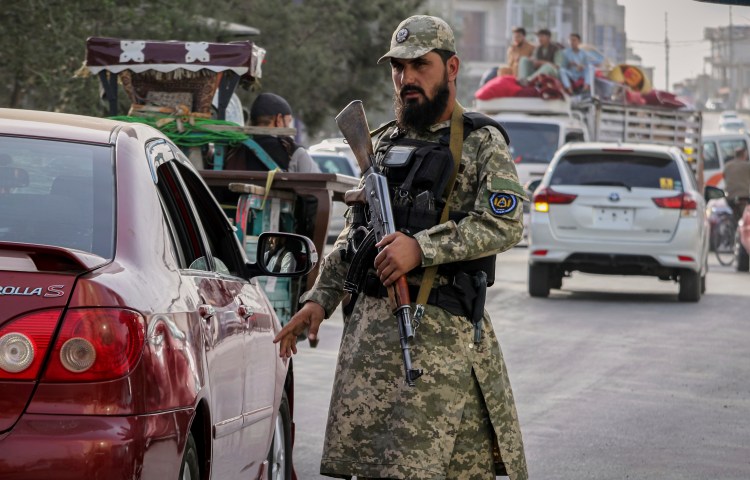
(AFP/Pedro Pardo)

Almost half of the 67 journalists killed worldwide in 2012 were targeted and murdered for their work, research by the Committee to Protect Journalists shows. The vast majority covered politics. Many also reported on war, human rights, and crime. In almost half of these cases, political groups are the suspected source of fire. There has been no justice in a single one of these deaths.

Time to reassess U.S. military counterinsurgency tactics

A memorial for Afghan journalist Ahmad Omaid Khpalwak in Kabul. (AFP/Shah Marai)

One year ago, on July 28, 2011, Ahmad Omaid Khpalwak, 25, was killed by American troops during a brutal close-quarters battle with a Taliban suicide squad backed by gunmen. Khpalwak was one of 22 people killed in the hours-long siege on government buildings that included the governor's office and police headquarters in Tarin Kot, capital of Uruzgan province. A reporter for the BBC, Pajhwok Afghan News, and several other organizations, Khpalwak died with 11 bullet wounds in his body. He was shot in a government-run newsroom while waving his press card and declaring in English that he was a journalist. It's fair to ask, one year after Khpalwak died, if any lessons have been learned. The odds that a journalist could be killed by U.S. forces' fire seem, unfortunately, to be as high as ever.

For now, the Afghan government's apparent attempt at railroading through a less-than-media-friendly new Mass Media Law without consultation seems to have been sidelined, though not derailed. On Sunday in Kabul, representatives of the Ministry of Information and Culture received recommendations from civil society workers and journalists, including some from the provinces, which were drawn up at a June 27 meeting organized by Internews's Nai Media Institute in Afghanistan.

Afghan President Hamid Karzai, left, is welcomed by Japan's Emperor Akihito in Tokyo in 2010. Japan is one of Afghanistan's biggest donors. (AP/Koji Sasahara)

One thing that had better be high on the agenda this weekend at the meeting of 70 or so international aid donors for Afghanistan in Tokyo is the recently released official draft version of the Mass Media Law (a copy of the draft can be found here). I mentioned the new draft in a June blog, "Afghan media is under political and economic pressure." The real thing is even worse than expected. 

Danish Karokhel (AP/Stuart Ramson)

Danish Karokhel, who won a CPJ International Press Freedom Award in 2008, messaged this morning concerned that the news agency he runs, Pajhwok Afghan News, and some other media outlets have been referred to the Attorney General's Office by the Ministry of Information and Culture for reporting on an alleged bribery scandal involving a member of Parliament. The action was taken by the ministry's Media Monitoring Commission, and could lead to criminal charges.

Why journalists need new ways to stay safe

Gang members at a prison in Izalco shortly after a government-brokered truce. (Reuters/Ulises Rodriguez)

After the Salvadoran online newsmagazine El Faro exposed a secret government deal with criminal gangs last month, its staff faced repercussions that illustrate the new and complicated risks facing journalists worldwide. El Faro's report, which said the government provided more lenient treatment of imprisoned gangsters in exchange for the groups' agreement to slow down their murderous practices, addressed one of the most sensitive topics facing journalists today--crime and its many interconnections with government.

Wednesday, the Afghanistan Analysts Network (AAN) released its report, "Death of an Uruzgan Journalist: Command Errors and Collateral Damage," by Kate Clark on the July 2011 shooting death of journalist Omaid Khpalwak. Clark's details on how Khpalwak died corroborate and then go beyond the investigation already conducted by the U.S.-led NATO forces who were responsible. Her report was important to write, and is important to read.

Hervé Ghesquière (AFP/Miguel Medina)

"Of course you have to go to Afghanistan or to Syria," said French TV reporter Hervé Ghesquière, who was held hostage for 547 days in Afghanistan together with his cameraman, Stéphane Taponier, between December 2010 and June 2011.


CPJ's María Salazar-Ferro names the 12 countries where journalists are murdered regularly and governments fail to solve the crimes. Where are leaders failing to uphold the law? Where are conditions getting better? And where is free expression in danger? (4:46)

Read CPJ's 2012 Impunity Index. And visit our Global Campaign Against Impunity and see how you can help.

CPJ’s 2012 Impunity Index spotlights countries
where journalists are slain and killers go free

At Columbia University on Monday evening, CPJ board member Ahmed Rashid held forth to a full house in a conversation with Steve Coll about U.S. foreign policy in Afghanistan and Pakistan. If you're reading this blog, there's most likely no need to explain who Rashid is--or Coll, for that matter. The earliest reference I could find on cpj.org to Rashid dated back to 2000, about events in 1999, when he was the Islamabad bureau chief for the now-defunct Far Eastern Economic Review. His latest book, Pakistan on the Brink: The Future of America, Pakistan, and Afghanistan, is the most recent installment in a steady stream of trenchant, reliable, reality-based analysis of geopolitical affairs in Central and South Asia. If you need to be convinced, check out Foreign Policy's list of Top 100 Global Thinkers.

A video of the event, which was co-sponsored by CPJ, is now available here.

March 13, 2012

President Hamid Karzai
Islamic Republic of Afghanistan
C/o The Embassy of Afghanistan
2341 Wyoming Avenue, NW
Washington, D.C. 20008

Via facsimile: 202-483-6487

Dear President Karzai:

We are deeply concerned by the potential repercussions of a March 10 statement released by Ministry of Defense spokesman Gen. Zahir Azimi over an article written by The Wall Street Journal reporter Maria Abi-Habib. The statement, which personally attacks the journalist, sends a chilling message to other reporters who write about alleged government misconduct. We call on you to publicly address Azimi's statement and ask all government officials to refrain from attacks on journalists. We also ask you to uphold your commitment to a free press in Afghanistan that you have made many times in the past.

Abi-Habib's March 8 article reported on accusations that Afghan Air Force personnel were involved in drug and weapons trafficking while using AAF aircraft. The story cited officials from the International Security Assistance Force openly saying they were investigating misconduct within the AAF. The article also said a separate investigation was being carried out by the U.S. Drug Enforcement Administration.

The article also quoted several high-ranking Afghan government officials, including AAF spokesman Lt. Col. Mohammed Bahadur and Minister of Defense Gen. Abdul Rahim Wardak. But Azimi's statement, released two days later, contained personal attacks on the journalist in a seeming attempt to discredit her:

Miss Maria Habib, a journalist of The Wall Street Journal deals with these matters with ultimate obsession; her untruthful reports are well-known amongst national and international media.

Perhaps even worse, the statement ended on a threatening note:

In reviewing this story by The Wall Street Journal it appears that political groups from different countries pay certain journalists such as Miss Habib who are seeking fame to broadcast such baseless and untruthful reports.

Stating that someone is being paid by "political groups from different countries" is a serious charge, one that puts any reporter in serious danger. The accusation is even more dangerous in a country like Afghanistan, where rule of law is relatively weak and threats, attacks, and murders take place with near-complete impunity.

In addition, these barely veiled threats send a chilling message to all other reporters, local or foreign, who dare to write critically of the government.

As an organization dedicated to the protection of journalists around the world, we urge you to uphold your commitment to a free press in Afghanistan. We call on you to publicly address Azimi's statement and also ask all government officials to refrain from such potentially lethal attacks on local and foreign reporters.

Thank you for your attention to this matter.

Joel Simon
Executive Director

New York, February 23, 2012--The Committee to Protect Journalists calls on Afghan authorities to thoroughly investigate the murder of radio journalist Samid Khan Bahadarzai and swiftly bring the perpetrators to justice.

At a demonstration in Kabul, a photo of the slain Afghan journalist Ajmal Naqshbandi. (AP/Musadeq Sadeq)

Local "fixers" have been essential to foreign reporters covering the Afghan war. While they often do the same work as their international counterparts, they run greater risk and face a far more uncertain future. By Monica Campbell

Murders decline, but fatalities rise during coverage of protests. Photographers and freelancers pay an especially high price. Pakistan is the world's most dangerous nation.

As NATO and Afghan military forces faced off with militant groups, the news media worked in a hostile and uncertain environment. Two journalists were killed for their work, both during major insurgent attacks. Accusations of widespread fraud marred the second post-Taliban parliamentary elections, which were resolved only by a presidential decree that ousted several apparent winners. International aid organizations continued to pump resources into developing local media, although many Afghan outlets faced severe challenges in sustaining their work. In May, diplomatic missions circulated a memo to international journalists warning of possible kidnappings, though the threat never materialized. Three France 3 television crew members were released in June after 18 months in Taliban captivity. Abductions, which had spiked in 2009 and continued into 2010, appeared to decline during the year. Afghanistan's mass media law, introduced in Parliament in 2003, had yet to be enacted because of a political stalemate. Under discussion were several draft versions, most of which threatened to be more restrictive.

« Previous Year: 2011 | Next Year: 2013 »

  Go »
Text Size
A   A   A
Killed in Afghanistan

24 journalists killed since 1992

12 journalists murdered

8 murdered with impunity

Attacks on the Press 2012

7th On CPJ's Impunity Index, making it one of the worst at combating anti-press violence.

Country data, analysis »

Contact

Asia

Program Coordinator:
Bob Dietz

bdietz@cpj.org

Tel: 212-465-1004
ext. 140, 115
Fax: 212-465-9568

330 7th Avenue, 11th Floor
New York, NY, 10001 USA

Twitter: @cpjasia
Facebook: CPJ Asia Desk

Blog: Bob Dietz