For most of its almost-150-year history, the meetings of the International Telecommunication Union (ITU), the United Nations' communications standards body, have been rather predictable affairs.


For most of its almost-150-year history, the meetings of the International Telecommunication Union (ITU), the United Nations' communications standards body, have been rather predictable affairs.
The Maria Moors Cabot Prizes, administered by Columbia University Graduate School of Journalism in recognition of journalistic contributions to Inter-American understanding, are the oldest international prizes in journalism. But Josh Friedman, director of the prizes, said this year marked the first time he remembered arriving at the awards ceremony to be greeted by protesters screaming from behind barricades. The tuxedo and gown-clad guests last night shot confused glances across the street from Columbia's Italian Academy building, where about 20 protesters brandishing Ecuadoran flags and pictures of President Rafael Correa yelled slogans like "Down the with corrupt press!" and "Long live President Correa!" One sign identified a long list of alleged "enemies of Latin American democracy" that managed to include the leading dailies of South America, the United States, Spain, the Ecuadoran press freedom group Fundamedios and the Committee to Protect Journalists.

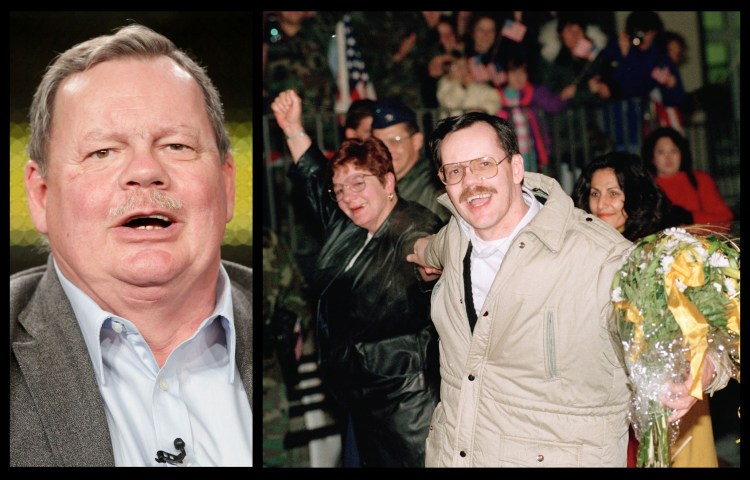
Few cases better underscore the need for digital security among journalists. On Tuesday, ex-CIA officer John Kiriakou pleaded guilty to leaking the identity of another CIA operative to Matthew Cole, a journalist formerly with an ABC News investigative team. In a 2007 interview with ABC, Kiriakou became the first CIA official to confirm that waterboarding had been used on Al-Qaeda suspects.
Violence and legal harassment: the two greatest obstacles to press freedom in Latin America today. That's the message that CPJ Executive Director Joel Simon is delivering this morning in Washington, D.C., at a briefing hosted by Congressman Sam Farr. Farr, a California Democrat, hosts a monthly series looking at emerging trends in the Western Hemisphere. The panel today also includes Commissioner Dinah Shelton of the Inter-American Commission on Human Rights and Delphine Halgand of Reporters Without Borders.
Writer, journalist, blogger, and free speech activist Eskinder Nega, the 2012 recipient of PEN American Center's Freedom to Write Award, lived in Washington, D.C., before returning to his native Ethiopia to start one of the country's first-ever independent newspapers. On Friday, Eskinder was back in D.C.--not physically, but as the subject of a candlelight vigil at the African American Civil War Memorial that commemorated the first anniversary of the blogger's arrest and sent the message that those jailed for peacefully exercising their right to freedom of speech are never forgotten.
Denmark's Prime Minister Helle Thorning-Schmidt is in China this week to meet with top leaders, according to international news reports. CPJ's Advocacy and Communications Associate Magnus Ag and Senior Asia Program Researcher Madeline Earp co-wrote an op-ed calling on Thorning--as she is called in the Danish press--to raise the issue of press freedom. An edited version ran in the Danish newspaper Politiken today.
Speaking truthfully to China on its repression of human rights can be a tricky endeavor in diplomatic affairs, but Helle Thorning-Schmidt has a prime opportunity to raise press freedom on her trip to China. Germany's Chancellor Angela Merkel and U.S. Secretary of State Hillary Clinton did not give the issue public priority during their visits earlier this month, but as Thorning meets with top Communist Party leaders and addresses a World Economic Forum meeting in Tianjin, the opportunity must not be wasted.
New York, September 4, 2012--U.S. Secretary of State Hillary Clinton should press Chinese officials in meetings this week to allow international journalists based in China greater access to news events and fewer restrictions of their coverage, the Committee to Protect Journalists said today.

With up to 15,000 journalists expected in Tampa, Fla., for next week's Republican National Convention, some reporters and photographers will undoubtedly encounter problems concerning access to news events and coverage of related protests. Several journalism organizations have compiled resource materials and tips for journalists headed to the GOP gathering, which starts August 27, and the Democratic convention that begins September 3. Here are some of those resources:

Using guns, grenades, explosives, and other deadly means, criminals
have assaulted
four Mexican newsrooms in less than six weeks. One of the country's top
journalists, Lydia Cacho, was the target of a chilling
death threat last month. Journalists in Veracruz have gone missing
or been killed
this year. Press fatalities
in Mexico remain among the highest in the world, leading to vast
self-censorship. And the perpetrators? They are not only well organized and heavily
armed, they enjoy
near-complete impunity for their attacks on the press. Mexican lawmakers
began to address the crisis this year, but now they risk losing the momentum.
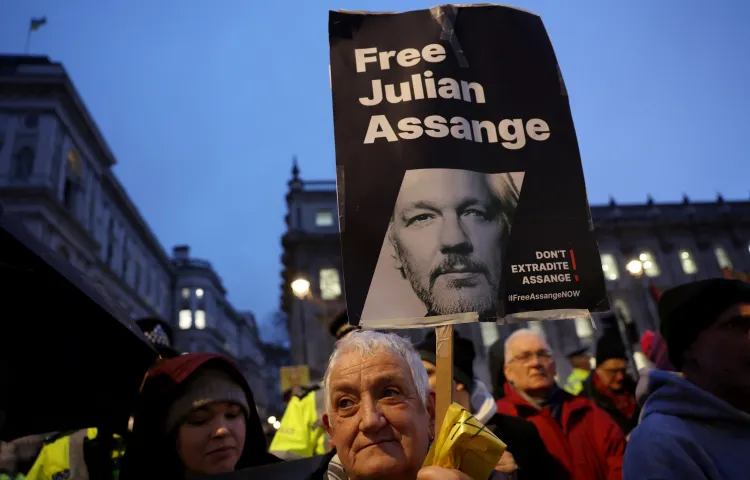
The Quito government's decision to grant Julian Assange political asylum comes at a time when freedom of expression is under siege in Ecuador. President Rafael Correa's press freedom record is among the very worst in the Americas, and providing asylum to the WikiLeaks founder won't change the repressive conditions facing Ecuadoran journalists who want to report critically about government policies and practices.

As a follow-up to my previous "What
to know about covering the conventions," the National Press Photographers
Association (NPPA) has been working with a number of organizations in order to
provide support for journalists covering the U.S. national political
conventions in Tampa, Fla., and Charlotte, N.C., this month and next. Some
things for those journalists to keep in mind:
For more than five months, the Ramallah-based private television broadcaster Wattan TV has been without key equipment, including transmitters, computers, files, and archives. On February 29, Israeli soldiers and officials from the Ministry of Communications raided the station without a warrant, saying it was broadcasting illegally and interfering with aircraft transmissions.
The Syrian civil war is also a propaganda war. With the
Assad regime and the rebels both attempting to assure their supporters and the
world that they are on the brink of victory, how the facts are reported has
become central to the struggle. Hackers working in support of Assad loyalists
this week decided to take a shortcut, attacking the Reuters news agency's blogging
platform and one of its Twitter
accounts, and planting
false stories about the vanquishing of rebel leaders and wavering support
for them from abroad.
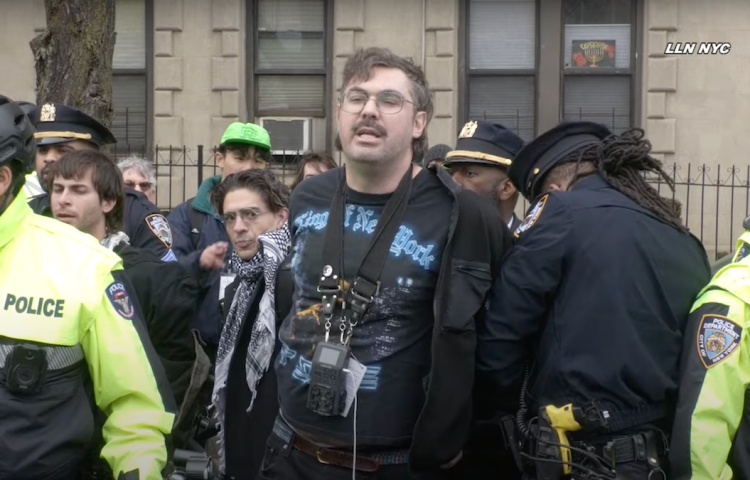
New York, August 6, 2012--The Committee to Protect Journalists is concerned by the arrest and alleged beating of a New York Times photographer while he was on assignment Saturday evening in New York City.
"The report by The New York Times on the arrest of its photographer, Robert Stolarik, raises questions about police tactics of blocking reporters covering street unrest and protests," said CPJ Deputy Director Robert Mahoney. "The New York City Police Department must investigate this disturbing incident and ensure that officers allow all journalists to do their job freely."

The rampage inside a Colorado movie theater that killed 12
people and injured dozens more is the most recent reminder that a journalist
anywhere can face sudden, great emotional
stress. Any story involving tragedy--from domestic violence to natural
disasters--can inflict an emotional toll on field journalists. The very empathy that
makes a journalist a good storyteller puts him or her at risk.
This week, YouTube
announced a feature that should catch the eye of video journalists and bloggers
working in dangerous conditions. After uploading a video to YouTube, you can
now deploy a "blur faces" post-production tool that, in theory,
should disguise the visual identity of everyone on the screen. The Hindu
newspaper has an excellent how-to guide for their
readers.

If May's NATO Summit in Chicago is any indication, journalists covering events outside the national political conventions in Tampa, Fla., and Charlotte, N.C., later this summer can expect that everyone--mainstream media, bloggers, citizen journalists, protesters, and bystanders--will have a camera of one kind or another. With the widespread proliferation of cellphone cameras, capable of recording high-quality images along with audio and video, it seemed like everybody was documenting everything and everyone.
Well, that didn't take long. Just days after The New York Times' soft launch of its Chinese-language edition and accompanying microblog accounts, Berkeley-based China Digital Times website reports that the @nytchinese Sina Weibo feed is no longer accessible in China, along with two accounts hosted by Netease and Sohu. We couldn't pull them up this morning from New York, either.
A week before Sunday's crucial presidential elections in Mexico, CPJ participated on a panel with filmmaker Bernardo Ruíz and Mexican journalist Sergio Haro about the perilous conditions for journalists in that country, where CPJ research shows 48 journalists have been murdered or disappeared since outgoing President Felipe Calderón took office in December 2006.
When Thomas Peele came into the CPJ offices last week to discuss Killing the Messenger, his book about the murder of journalist Chauncey Bailey, he described a story that was layered with scandal, including a polygamous cult, bankruptcy, kidnapping, rape, a flawed confession, leaked evidence, and secret alliances--not to mention the aggressive attack on a free press. Peele, motivated in part by the blatant demonstration of corruption in the investigation into Bailey's death, intended to reveal the truth about the circumstances surrounding the case. Accompanying Peele at CPJ was our own senior adviser for journalist security, Frank Smyth, who became involved in the case as a CPJ representative.
The Committee to Protect Journalists is watching with concern the progress of H.R. 2899, the Chinese Media Reciprocity Act of 2011, which is under discussion Wednesday in front of the Subcommittee on Immigration Policy and Enforcement. The bill seeks to reduce the number of visas available to journalists (and their families) working in the United States for 13 Chinese state-controlled publications. The aim is to pressure Beijing into allowing more Voice of America reporters into China; VOA staffers tell us that they are allowed only two China visas to cover a country of more than 1.3 billion people.
The Russian manufacturer promises
results. The software can be used to control your own or, say, a customer's
computer by making it a remote software client. Or it could be used for spying
on others.
On Wednesday, the same day the White House announced a strategic plan committing the United States to elevating its efforts in "challenging leaders whose actions threaten the credibility of democratic processes" in sub-Saharan Africa, a senior member of the U.S. Congress challenged the erosion of press freedom in a key U.S. strategic partner in the Horn of Africa: Ethiopia.
On the frontlines of global reporting, knowledge is safety. CPJ's
event series to promote our new Journalist Security Guide continued Wednesday in Washington,
D.C. where we teamed up with Internews for
a panel discussion on journalist security on-site and online.
The last few weeks have offered the strongest indications
yet that nation-states are using customized software to exploit security flaws
on personal computers and consumer Internet services to spy on their users. The
countries suspected include the United States, Israel, and China. Journalists
should pay attention--not only because this is a growing story, but because if
anyone is a vulnerable target, it's reporters.
World leaders must hold Central Asian regimes responsible for denying global access to information by throwing critical reporters behind bars, CPJ Eurasia researcher Muzaffar Suleymanov told the U.S. Commission on Security and Cooperation in Europe at a briefing Tuesday on political prisoners in Central Asia.
Freelance photographer Anton Hammerl was killed in Libya on April 5, 2011. Friends of Hammerl are holding an auction May 15 to raise funds for his three children. James Foley elaborates.

The guidance is hardly clear. At a Columbia University event
last week pegged to the release of the new CPJ
Journalist Security Guide, one journalism student said he and his classmates
are getting contradictory advice. Many J-school professors, he said, have encouraged
him and others to just get up, go overseas, and try to make it as a freelancer.
But the experienced journalists speaking at the event advised caution.

Governments and criminal organizations are stepping up digital surveillance of journalists, but the press is not keeping pace in meeting the challenge, a panel of experts said Wednesday at an event marking the launch of the CPJ Journalist Security Guide. Reporters are using unsecure consumer electronic products for sensitive tasks such as note-taking and source management, the experts said, without sufficiently assessing the risks.
The battle over blind Chinese activist Chen Guangcheng's freedom and well-being is a battle over information. Both Chinese and U.S. officials are trying to spin the story their way. A few activists and media claim to speak for Chen, and in China's anti-press environment they are putting themselves at risk. Direct interviews with the man himself are hard to come by.
"High Tech, Low Life," a new documentary about Chinese bloggers directed by Stephen Maing, debuted at the 2012 Tribeca Film Festival in New York on April 19. It documents the lives of Zola (Zhou Shuguang) and Tiger Temple (Zhang Shihe), as they blur the lines of citizen journalism and activism though their reporting on evictions, pollution, and official cover-ups in China. Zola was in town for the premiere, and he and the director fielded questions from the audience after the film's showing.
After the Salvadoran online newsmagazine El Faro exposed a secret government deal with criminal gangs last month, its staff faced repercussions that illustrate the new and complicated risks facing journalists worldwide. El Faro's report, which said the government provided more lenient treatment of imprisoned gangsters in exchange for the groups' agreement to slow down their murderous practices, addressed one of the most sensitive topics facing journalists today--crime and its many interconnections with government.
Wednesday, the Afghanistan Analysts Network (AAN) released its report, "Death of an Uruzgan Journalist: Command Errors and Collateral Damage," by Kate Clark on the July 2011 shooting death of journalist Omaid Khpalwak. Clark's details on how Khpalwak died corroborate and then go beyond the investigation already conducted by the U.S.-led NATO forces who were responsible. Her report was important to write, and is important to read.
Wattan TV bills itself as the voice of the voiceless. But since the Israeli army gutted its Ramallah headquarters in a predawn raid two months ago, that voice has been reduced to a whisper.
In December 2002, the U.N. Tribunal charged with prosecuting war crimes in the former Yugoslavia ruled that Washington Post reporter Jonathan Randal could not be compelled to provide testimony in the case of a Bosnian Serb official accused of carrying out a campaign of ethnic cleansing."If war correspondents were to be perceived as potential witnesses for the Prosecution," the Tribunal noted, they "may shift from being observers of those committing human rights violations to being their targets." As a result of that ruling, war correspondents enjoy some immunity against compelled testimony at the international level. But this is not necessarily the case in the United States.
At Columbia University on Monday evening, CPJ board member Ahmed Rashid held forth to a full house in a conversation with Steve Coll about U.S. foreign policy in Afghanistan and Pakistan. If you're reading this blog, there's most likely no need to explain who Rashid is--or Coll, for that matter. The earliest reference I could find on cpj.org to Rashid dated back to 2000, about events in 1999, when he was the Islamabad bureau chief for the now-defunct Far Eastern Economic Review. His latest book, Pakistan on the Brink: The Future of America, Pakistan, and Afghanistan, is the most recent installment in a steady stream of trenchant, reliable, reality-based analysis of geopolitical affairs in Central and South Asia. If you need to be convinced, check out Foreign Policy's list of Top 100 Global Thinkers.
A video of the event, which was co-sponsored by CPJ, is now available here.
Journalists and technologists often speak different languages. But a Portland, Oregon-based nonprofit, Small World News, is bridging the gap with a new guide on the safe use of satellite phones. It comes at a critical time.
The group's Guide to Safely Using Satphones just went online, less than three weeks after the deaths of international journalists Marie Colvin and Rémi Ochlik in Homs, Syria. Several journalists who worked in Homs suspected the Syrian government targeted the building where Colvin, Ochlik, and other journalists were working. If government forces indeed targeted the building, they could have relied on several forms of intelligence, including the tracking of journalists' satellite signals.
As a former entertainer better known as "Sweet Micky," it is perhaps unsurprising that Haitian President Michel Martelly has been theatrical at times in his dealings with the press. At one media event in October, the President answered a critical question posed by a journalist by telling him, "I curse your mother," according to press reports. On another occasion in late December, Martelly was so elated by a supporter's sign that instructed the press to "give the president a chance," that he told the citizen, "You deserve US$100,000." The man received a free motorcycle instead, Radio Kiskeya reported.
In her final hours, Marie Colvin gave this damning report to CNN's Anderson Cooper.
Bravery, generosity, and commitment: These are the three characteristics of Marie Colvin that have surfaced, again and again, in the many tributes spoken and published since the veteran Sunday Times reporter was killed Wednesday in the besieged city of Homs by Syrian forces.
Not since the worst period of the Iraq war, or in the Balkans the decade before, have so many storied journalists been killed or seriously injured in such a short period of time. Inevitably, the spate of deaths leaves many journalists asking questions about whether and how much they are willing to risk their own lives, and possibly the lives of others. Many experienced journalists might agree on one thing: the decisions one makes about risk are among the most intimate decisions they will ever make.
The world lost one of the only direct windows into the carnage in Homs, Syria, when Rami al-Sayed's video live stream went dark Tuesday. A citizen journalist, al-Sayed was live streaming the Assad regime's bombardment of Baba Amr and the brutal after-effects when he was struck by shrapnel and bled to death soon after, according to news reports. When outlets including the BBC World, SkyNews, and Al Jazeera aired his live footage, they highlighted how important this medium has become to journalism. And when the Syrian army took his life they proved how vulnerable it is.
Last night at London's Frontline Club, CPJ launched its global survey of press freedom conditions, Attacks on the Press. The topic of discussion was the safety of journalists covering conflict and the panel consisted of journalist and documentarian Jenny Kleeman, ITN safety guru Colin Pereira, and journalist and filmmaker Maziar Bahari, who was imprisoned in Iran following the disputed 2009 presidential elections.
A federal judge ruled in favor of reporter James Risen, who invoked his First Amendment rights to protect a confidential source. The Reporters Committee for Freedom of the Press and other groups called the ruling an important victory for the press. The Department of Justice, which appealed the decision, continued to take an aggressive approach in filing criminal charges against people who leak classified information. U.S. journalist groups were also troubled that increasing numbers of case documents were being sealed by the Supreme Court. CPJ reported that the State Department fell short in its first year of implementing the Daniel Pearl Freedom of the Press Act, which requires that press freedom issues be incorporated into the agency's annual country reports on human rights. WikiLeaks was in the headlines again when it disclosed thousands of classified, unredacted U.S. diplomatic cables. An Ethiopian journalist was forced to flee his country after he was cited in a cable. Police in five cities arrested reporters and photographers covering Occupy Wall Street demonstrations, often claiming the journalists did not have sufficient accreditation. At least three other journalists covering Occupy events were attacked by protesters or police officers.
New York, February 16, 2012--The Committee to Protect Journalists is deeply saddened by the death of New York Times foreign correspondent Anthony Shadid, a towering figure in international crisis reporting. Shadid perished following an apparent asthma attack while on assignment in Syria.
President Obama has promised to raise issues of human rights when he and his administration meet with Chinese Vice President Xi Jinping in the next day. After that, Xi, billed as China's next leader, is expected to make some speeches, visit a few factories, stop at the Pentagon, sign some contracts that will strengthen economic ties between the two countries, and then head home.
I've been telling reporters that Twitter's new national blocking policy was like Chekhov's gun. Its recent appearance inevitably prefigured its future use.
The issue of press accreditation continues to reverberate. In November, when the Occupy movement came into conflict with law enforcement across the country and at least 20 journalists covering the events were arrested, CPJ reported that disputes over press accreditation were at the center of many of those arrests. Last week, credentials played a role in the arrests of journalists not only at tumultuous Occupy demonstrations in Oakland but also inside the more hushed chambers of Capitol Hill.
Last week, Twitter provoked a fierce debate online when it announced a new capability--and related policy--to hide tweets on a country-specific basis. By building this feature into its website's basic code, Twitter said it hoped to offer a more tailored response to legal demands to remove tweets globally. The company will inform users if any tweet they see has been obscured, and provide a record of all demands to remove content with the U.S.-based site chillingeffects.org.
The Internet doesn't bring freedom. Not automatically, anyway.
That's one of the main messages of Rebecca MacKinnon's new book, Consent of the Networked, which had its New York launch at the offices of the New America Foundation last night. In a conversation with CNN managing editor Mark Whitaker, MacKinnon, a CPJ board member, said it's up to concerned citizens, governments, and corporations to make decisions about how the Internet is used. She contrasted the Twitter-powered revolt in Egypt last year with the "networked authoritarianism" of China, where corporations are collaborators in a system designed to preserve Communist Party rule.
For centuries, journalists have been willing to go to prison to protect their sources. Back in 1848, New York Herald correspondent John Nugent spent a month in jail for refusing to tell a U.S. Senate committee his source for a leak exposing the secret approval of a treaty with Mexico. In a digital age, however, journalists need more than steadfast conviction to keep themselves and their sources safe. Government intelligence agencies, terrorist groups, and criminal syndicates are using electronic surveillance to learn what journalists are doing and who their sources are. It seems many journalists are not keeping pace.