February 2006


New York, February 28, 2006—Nosir Zokirov, a correspondent for the Uzbek service of the U.S. government-funded Radio Free Europe/Radio Liberty (RFE/RL), was released from prison on Sunday after serving a six-month sentence for insulting a security officer, the broadcaster reported.

Zokirov, 55, a veteran RFE/RL correspondent in the eastern city of Namangan, was detained, tried without counsel or witnesses, sentenced, and imprisoned all on August 26, 2005. He was tried under Article 140 of Uzbekistan's criminal code, which makes insulting a member of the security services punishable by prison.
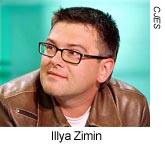
New York, February 28, 2006—A laptop computer and cell phone were stolen from the Moscow apartment of slain NTV correspondent Ilya Zimin, and a bloody fingerprint belonging to someone other than the victim was found on a light switch, local news outlets reported today.

Authorities continued to say that the weekend killing was probably not related to Zimin's work at NTV. The 33-year-old reporter's heavily beaten body was found on Monday, and authorities believe he was killed the day before. Moscow prosecutor Anatoly Zuyev said the murder was most likely a common crime resulting from an argument. He said there was no sign of forced entry, suggesting that Zimin knew his assailant, according to press reports.
New York, February 28, 2006—The Committee to Protect Journalists condemns harassment and death threats by Burmese security officials against Maung Maung Kyaw Win, a senior reporter and editor at the Burmese-language Myanmar Dana economics magazine. The threats have prompted the journalist to flee the country, and he is now seeking political asylum.

Maung Maung Kyaw Win, 57, told CPJ that he was apprehended by military intelligence officials at a restaurant on December 2, 2005. He said agents questioned him about the help he provided a U.S. journalist in meeting with a political dissident recently released from prison.
New York, February 28, 2006—Police detained three journalists with the independent East African Standard for questioning today in connection with a story of political intrigue that ran in Saturday's edition, the paper's chief executive officer, Tom Mshindi, told the Committee to Protect Journalists. The weekend edition's managing director, Chaacha Mwita, sub-editor Dennis Onyango, and reporter Ayub Savula were still in police custody at the end of the day, although no formal complaint had been brought against the paper or charges filed against the journalists, Mshindi said.
FEBRUARY 7, 2006

Mario Vallejo, Univisión Channel 23

ATTACKED, HARASSED
Osvaldo Duarte, Univisión Channel
Alberto Tavares, Telemundo Channel 51
Lázaro Abreu, Telemundo Channel 51

HARASSED

A guard at an immigration jail in Nassau attacked Vallejo, and police detained Abreu, Duarte, and Tavares as the four Miami-based journalists were covering the story of seven Cubans rescued from an uninhabited Bahamian island by the U.S. Coast Guard. The Cuban refugees were found in the tiny Elbow Cay after surviving a journey that killed six others. They were being held at the Carmichael Detention Center in Nassau.
February 28, 2006
Original Alert: February 16, 2006

Elham Afroutan and six other journalists, Tammadon-e Hormozgan

IMPRISONED

Elham Afroutan, one of seven journalists jailed after publishing a satirical article that criticized the Ayatollah Ruhollah Khomeini, has been transferred from prison in Bandar Abbas to Tehran's Evin Prison after she attempted suicide in custody, according to the Iranian Committee for the Defense of Freedom of the Press.
New York, February 27, 2006—The Committee to Protect Journalists is troubled by the National Communications Council's decision last Wednesday to suspend the private bimonthly Les Echos for two months and ban two of the newspaper's journalists from working during that time.

The decision by the government-controlled council cited "the publication of false news and an attack on the honor and dignity" of a government minister, Kiridi Bangoura. Bangoura brought a complaint against the newspaper after it published an article in the February 20 edition accusing him of "becoming rich off the back of Guineans."

Your Excellency: The Committee to Protect Journalists views with alarm the threat to press freedom in the Philippines during the state of emergency you declared on February 24. Your administration's tactics--raiding a newspaper, stationing troops in front of television and radio stations, and threatening to issue government editorial guidelines--jeopardize the democratic advances of the last 20 years.

New York, February 27, 2006—The Committee to Protect Journalists welcomes Sunday's release of Tunisian journalist Hamadi Jebali but calls again for Tunisian authorities to release writer and human rights lawyer Mohamed Abbou, who has been jailed solely for expressing his views.

Jebali, the longest-serving imprisoned journalist in the Arab world, was among 1,600 of prisoners granted pardons by President Zine El-Abidine Ben Ali on Saturday. Several dozen of those released belong to the banned Islamist party Al-Nahda.
New York, February 27, 2006—The Committee to Protect Journalists called on China today to release Li Yuanlong, a reporter with the daily Bijie Ribao, who was charged with "inciting subversion of state authority" for articles he posted online. Li was charged on February 9 but news of the indictment has only recently emerged.

"Chinese authorities recently asserted that no one has been jailed for writing their views online," said CPJ Executive Director Ann Cooper. "But Li Yuanlong is in prison for doing just that. We call on authorities to release him in accordance with their own publicly stated policies, the Chinese constitution and international law."
New York, February 27, 2006—The Committee to Protect Journalists today called for a thorough investigation into the killing of Ilya Zimin, a 33-year-old correspondent for the national television station NTV, who was found murdered in his Moscow apartment.

Several of Zimin's colleagues from NTV—which is owned by the state oil giant Gazprom—went to his apartment today after he failed to show up for work or answer his phone, according to local press reports. They found his heavily beaten corpse lying face down in a pool of blood and much of the furniture overturned in what appeared to be a sign of a violent struggle, according to local and international press reports.

APRIL 18, 2006
Posted: April 25, 2006

Arthur Tshimanga Kaputu, Lubilanji Expansion
IMPRISONED

Kaputu, director of the small private newspaper Lubilanji Expansion was detained for three days without charge by the public prosecutor in the capital, Kinshasa. According to the Kinshasa-based press freedom organization, Journaliste en Danger (JED), which sent a representative to meet with the journalist in prison, Kaputu was arrested following a complaint from the Protestant University of Congo.

By Carlos Lauria and Sauro Gonzalez Rodriguez 

New York, February 24, 2006—The Committee to Protect Journalists condemns Cuban authorities for continuing to harass independent journalists and failing to provide adequate medical treatment for those in prison.

Independent journalist Jorge Olivera Castillo, who was released from jail in December 2004 on medical parole, was ordered by a Havana municipal court on February 21 to work at a state-controlled office that the court would select. Olivera told CPJ he was barred from attending public gatherings and leaving Havana.
New York, February 24, 2006—The Monitor Group said today its news Web site and radio station were being blocked within Uganda to prevent them from publishing early results from polling stations in Thursday's crucial presidential election.

Readers were unable to access the Web site of Uganda's leading independent daily, The Monitor, and broadcasts of station KFM were jammed, Monitor Group Managing Director Conrad Nkutu told the Committee to Protect Journalists. The Web site was accessible outside Uganda.

Your Excellency: The Committee to Protect Journalists wishes to express its grave concern about the criminal prosecution of Jihad Momani, former editor-in-chief of the weekly Shihan, and Hashem al-Khalidi, editor-in-chief of the weekly Al-Mehwar. The two editors face lengthy prison terms if convicted under Jordan's penal code for publishing controversial cartoons depicting the Prophet Muhammad.

Your Excellency: The Committee to Protect Journalists urges you to fulfill the commitment you made two years ago today to initiate legislation to eliminate prison sentences for what journalists report and thus narrow the gap between Egyptian law and international press freedom standards.

Your Excellency: The Committee to Protect Journalists wishes to express its grave concern about the arrest of two Algerian editors and the closure of their weeklies for publishing controversial cartoons depicting the Prophet Muhammad on February 2. Kamel Bousaad, editor of pro-Islamist weekly Errissala, was arrested on February 8 and Berkane Bouderbala, managing editor of the weekly Essafir, was arrested on February 11, according to news reports.

FEBRUARY 23, 2006
Posted: June 16, 2006

Vladimir Voronov, Novoye Vremya

ATTACKED

Voronov, an investigative reporter for the Moscow weeklies Novoye Vremya and Ezhenedelny Zhurnal, was attacked near his Moscow home in the early hours by two unidentified assailants who escaped, according Russian press reports.

Your Excellency: The Committee to Protect Journalists wishes to express its grave concern about the criminal prosecution of four Yemeni journalists facing lengthy prison terms if convicted under Yemen's press law for publishing controversial cartoons depicting the Prophet Muhammad. Their newspapers have all been ordered closed.

New York, February 23, 2006—The Committee to Protect Journalists is alarmed by the decision of a Cairo criminal appeals court today to uphold the conviction and one-year prison sentence of journalist Abdel Nasser al-Zuheiry for defamation.

Al-Zuheiry, a reporter for the independent daily Al Masry al-Youm (The Egyptian Today), had lodged the appeal along with two colleagues at the paper, Alaa al-Ghatrifi, and Youssef al-Oumi, who had been convicted of the same offense and also sentenced to a year in jail. The court overturned their convictions. It upheld fines of E£10,001 (US$1,743) for all three journalists.
New York, February 23, 2006—A British reporter who recently recounted alleged human rights abuses in Ethiopia was denied press accreditation on Tuesday to work in the African country. Inigo Gilmore, whose report appeared in the London weekly TheObserver, told the Committee to Protect Journalists that he left the country the same day after Ethiopian authorities made it clear he was unwelcome.

Ethiopian authorities had complained to The Observer following a December 4 article by Gilmore based on a reporting trip to Ethiopia. The story, headlined "Ethiopian leader accused over human rights," included accounts of alleged human rights abuses in the wake of election protests. Gilmore provided a similar report to the independent British television station Channel Four the same day. His report included an account from one man who said he endured 19 days of beatings while being held in a crowded, unsafe detention camp.
New York, February 23, 2006—Controversy over the publication of drawings of the Prophet Muhammed continued to grow as an international press freedom crisis on Thursday as Indian authorities imprisoned a magazine editor and Belarusian prosecutors opened a criminal probe into a weekly newspaper. In each case, the publications said they printed one or more cartoons to provide context for the worldwide furor that has now claimed at least 48 lives.
New York, February 23, 2006—The Committee to Protect Journalists is alarmed by attacks and threats against ethnic Chinese journalists based in or near the U.S. cities of Atlanta, San Francisco, and New York. Journalists for the Falun Gong-affiliated newspaper and Web site Epoch Times told CPJ that they believe they have been targeted in retaliation for reporting and commentary that is critical of the Chinese government.
New York, February 23, 2006—The Committee to Protect Journalists condemns in the strongest terms the murder of three journalists on assignment in Samarra for the Dubai-based satellite news channel Al-Arabiya.

The bodies of correspondent Atwar Bahjat, cameraman Khaled Mahmoud al-Falahi, and engineer Adnan Khairallah were found today near Samarra, a day after the station lost contact with the crew, editors at Al-Arabiya told CPJ. Bahjat, 30, was a well-known on-air figure. In a statement, Al-Arabiya said she recently joined the channel after working as a correspondent for the Arabic satellite channel Al-Jazeera.

Gentlemen: As you resume negotiations in Geneva today to establish a just and lasting peace in Sri Lanka, we call your attention to the urgent issue of journalist security. The free flow of information, a vital ingredient in establishing the peace, is jeopardized by ongoing violence against the press.

New York, February 22, 2006—The Committee to Protect Journalists is concerned that the Ugandan government has blocked internal access to a critical Web site, Radio Katwe, in the run-up to Thursday's hotly contested presidential election. The site has been blocked in Uganda for more than a week, according to news reports and local journalists.

The state-owned daily New Vision and the independent daily The Monitor reported this week that the government-controlled Uganda Communications Commission had directed Uganda's leading telecommunications company, MTN, to block the site. An MTN statement, quoted by The Monitor, defended the decision to block the site, saying that Ugandan law "empowers the commission to direct any telecoms operator to operate networks in such a manner that is appropriate to national and public interest."
New York, February 22, 2006—The Committee to Protect Journalists welcomes the release from house arrest of Internet journalist Ahmed Didi, who was pardoned today, four years after receiving a life sentence because of his work. Dissident Naushad Waheed was also pardoned.

"The release of our colleague Ahmed Didi is welcome but long overdue," CPJ Executive Director Ann Cooper said. "Didi, like other independent voices in the Maldives, has suffered greatly for the right to transmit news and opinion, which is still not fully realized in the country."
New York, February 22, 2006—Prosecutors in the eastern city of Focsani today indicted journalist Sebastian Oancea for possessing classified military documents about Western forces in Afghanistan and Iraq, the second such arrest in less than week, according to local and international press reports.

Oancea, Focsani correspondent for the national daily Ziua, faces up to seven years in prison, the prosecutor general's office told The Associated Press. Authorities searched Oancea's home and seized his computer last week; they questioned again him on Tuesday before charging him, AP said.
New York, February 21, 2006—The Committee to Protect Journalists is alarmed by the closure of a second Russian newspaper that published religious cartoons related to the controversy over Danish drawings of the Prophet Muhammad.

The weekly Nash Region in the city of Vologda ran a montage of the Danish cartoons on February 15, with some doctored or printed only partially, international and local media reported. The montage illustrated an article titled "The cartoon war: opinions," which gave the views of religious and human rights experts on the controversy.
New York, February 21, 2006—The Committee to Protect Journalists condemns the expulsion of a Polish journalist after he legally entered Belarus to report on presidential elections next month.

Border guards detained Gazeta Wyborcza correspondent Waclaw Radziwinowicz on Sunday at the train station in the Western city of Grodno as he was traveling to the capital Minsk. They ordered him to return to Poland saying his name was on a government list of people barred from entering. Radziwinowicz said he had a valid Belarusian visa and accreditation from the Foreign Ministry.
New York, February 21, 2006—The Committee to Protect Journalists welcomes the release of newspaper director Ibrahim Manzo, who spent 18 days in preventive detention awaiting the outcome of a defamation case. A court in Niamey, capital of Niger, handed Manzo a suspended one-month prison sentence on Monday and ordered his release, local journalists told CPJ.

The court also fined him 50,000 CFA francs (US$91) and ordered him to pay symbolic damages of 1 CFA franc (less than 1 US cent) to a local businessman.
New York, February 21, 2006—Police in Kenya raided two tabloid newspapers on Monday, confiscating equipment and documents and arresting several journalists in the capital, Nairobi. Police also detained news vendors selling the so-called "alternative press" publications, which are known for provocative reporting on sex and political scandals.

Local journalists told the Committee to Protect Journalists that the raid on the privately owned Weekly Citizen stemmed from a front-page story in this week's edition titled "Kibaki Senile," which alleged that President Mwai Kibaki was not in control of the government.
New York, February 21, 2006—The Committee to Protect Journalists condemns Saturday's deportation of writer, columnist and historian José Ignacio García Hamilton by Cuban authorities at Havana's José Martí International Airport.

Immigration authorities barred the Argentine writer from entering Cuba, saying that they were following government orders but could not provide further explanation, the Argentine press reported. García Hamilton and his wife held tourist visas approved on Thursday by the Cuban Embassy in Buenos Aires.
New York, February 17, 2006— The Committee to Protect Journalists today called for investigations into two incidents in which journalists have been shot dead in Ecuador this week. In both cases it is unclear whether the journalists were killed for their work.

On Monday, radio reporter José Luis Léon Desiderio was killed in the coastal city of Guayaquil. León, host of a daily news program “Opinión” on local Radio Minutera, often denounced gang violence and police inaction in the city, Alejandro Alvarez, a reporter for the daily El Universo told CPJ.
New York, February 17, 2006—The Committee to Protect Journalists today condemned the imprisonment of two Ethiopian journalists for failing to pay hefty fines imposed in court cases stemming from their work. Both journalists were released after the Ethiopian Free Press Journalists’ Association (EFJA) raised the money to pay the fines, EFJA president Kifle Mulat told CPJ today from Uganda, where he is in exile following a crackdown on the Ethiopian press.
New York, February 17, 2006— The Committee to Protect Journalists calls on Bangladeshi authorities to fully investigate the bomb attack on Mahfuz Mamun and Babul Ahmed, writers for the daily Dainik Mathabhanga. Media reports in Bangladesh said the two men had written stories on drug trafficking for their paper a few weeks before the February 15 attack.

The two men were riding together on a bicycle when an unidentified assailant hurled an explosive device at them in Chuadanga town, 95 miles (150 kilometers) west of the capital Dhaka. Both men needed surgery to remove shrapnel from their legs.
New York, February 17, 2006—A Romanian court today remanded journalist Marian Garleanu of newspaper Romania Libera to 10 days in custody for possessing classified military documents about Western troops in Afghanistan and Iraq which he did not publish. Garleanu was arrested Thursday in the eastern city of Focsani as part of a broader investigation of a former Romanian soldier who leaked classified documents to several newspapers, The Associated Press reported. He has not been charged.
New York, February 17, 2006—The Committee to Protect Journalists condemns the closure of a newspaper in the Russian city of Volgograd for publishing a cartoon of leading figures of Judaism, Buddhism, Christianity and Islam. Daily Gorodskiye Vesti (City News), which is partly owned by the Volgograd city administration, ran a cartoon on February 9 depicting Moses, Buddha, Jesus and Muhammad.

Acting Mayor Andrei Doronin told a news conference today those responsible for publishing the cartoon would be fired and the rest of the staff transferred to a new publication. Doronin said the closure of the paper was an attempt to prevent incitement based on religious or ethnic grounds, the business daily Kommersant reported
New York, February 17, 2006—The Committee to Protect Journalists is deeply concerned by the record damages awarded by a Moroccan court against the independent weekly Le Journal Hebdomadaire in a defamation suit brought by a Belgian think tank. The magazine, which has been harassed by the government since its founding in the late 1990s, said it was barred from mounting a proper defense.

“These unfair trial proceedings fuel our suspicions that this is a politically-motivated judgment,” said CPJ Executive Director Ann Cooper. “Such punitive damages seem intended to put Le Journal Hebdomadaire out of business and rob the Moroccan public of an independent voice. We hope that this verdict will be overturned on appeal.”
CPJ Update
Committee to Protect Journalists
February 17, 2006


CPJ's Attacks on the Press released in four cities worldwide


FEBRUARY 16, 2006
Posted March 20, 2006

Gift Phiri, formerly of The Zimbabwe Independent

ATTACKED, THREATENED

Phiri, a former reporter for the private weekly The Zimbabwe Independent, was attacked by unidentified assailants who accused him of working for foreign media, including the U.S. government-funded Voice of America. Local sources told CPJ that Phiri believed that his assailants were acting on orders from Zimbabwe’s feared Central Intelligence Organization.
New York, February 16, 2006—The Committee to Protect Journalists is alarmed by Mexican press reports of a plot by Mexican businessmen and state officials to imprison and assault journalist and human rights activist Lydia Cacho Ribeiro. Tapes of telephone conversations between several people, two of whom are said by the media to be the governor of the state of Puebla, Mario Marín, and a local businessman, were delivered to the Mexico City offices of the daily La Jornada and W Radio on Monday, the reports said.
New York, February 16, 2006—The Committee to Protect Journalists condemns the arrest of seven Iranian journalists over a satirical article and is deeply concerned by an unconfirmed report that one of them has died in jail.

Elham Afroutan and six other journalists of the weekly newspaper Tammadon-e Hormozgan were detained in the southern city of Bandar Abbas on January 29, according to CPJ sources and Amnesty International. A spokesperson for the Iranian Committee for the Defense of Freedom of the Press said the organization had received unconfirmed reports that Afroutan had died in custody. CPJ is investigating the report.
New York, February 16, 2006— The Committee to Protect Journalists is troubled by an official decision to remove two prominent editors as a condition to allow the reopening of the China Youth Daily weekly supplement Bing Dian (Freezing Point).

Editors Li Datong and Lu Yuegang told international reporters that Bing Dian, which was shuttered in late January for publishing an essay criticizing the 19th century Chinese history taught in textbooks, would re-open on March 1. But the two editors have been transferred to the News Research Institute, another department of the daily newspaper. The supplement will also be required to print an article criticizing the January 11 essay.

New York, February 16, 2006—A bomb threat halted the trial today of two Chechens charged with killing Forbes-Russia Editor Paul Klebnikov. The hearing, which is closed to the public, will resume February 20, local media reported.


Bailiffs cleared the Moscow City Court after the threat which police are investigating. The trial of Kazbek Dukuzov and Musa Vakhayev had resumed on Wednesday with a new judge after the previous judge fell ill.

By Paul E. Steiger

For 24 years, the Committee to Protect Journalists has remained steadfast in its mission to defend the press around the world. But in 2005, that mission meant paying unusual attention to what was happening at home.

By Ann Cooper

On May 2, when the Committee to Protect Journalists identified the Philippines as the world's most murderous country for journalists, the reaction was swift. "Exaggerated," huffed presidential spokesman Ignacio Bunye, who was practiced at dismissing the mounting evidence. He had called an earlier CPJ analysis of the dangers to Philippine journalists "grossly misplaced and misleading."

Lessons in Democracy, Pressure, and the Press
By Julia Crawford

Zimbabwe and Burundi, countries with very different histories, were among the dozen states in sub-Saharan Africa that held elections this year. In Burundi, the local media played a significant role in informing the public about the democratic process and signaling abuses by those in power. In Zimbabwe, however, the independent media have been so restricted by an increasingly repressive government that elections were no victory for democracy.

All the News That Can't Be Printed
By Carlos Lauría

Good investigative reporters know more than they can write. The problem in some Latin American countries is that good reporters are barely writing anything. From Brazil to the U.S.-Mexico border, journalists are looking over their shoulders before sitting down at their computers or going on the air. Most reporters in the region's big cities can still take on corruption and criticize the authorities without fearing for their lives. But in isolated rural areas where the power of the central government is either weak or nonexistent, journalists are at the mercy of anyone with a gun.

As Radio Grows Powerful, Challenges Emerge
By Abi Wright

At home, in the car, and even in the fields, more people across Asia are getting their news on the radio than ever before. Increasingly, this accessible and affordable medium is bringing real-time information to remote areas of Indonesia, Nepal, the Philippines, Afghanistan, and Thailand, parts of which were previously days or even weeks behind the news cycle. In Afghanistan, 83 percent of the population say they tune in to radio news, the Afghan consulting firm Altai found in 2005. In the Philippines, the audience is even larger, with 87 percent reporting that they listen to news on the radio, according to a poll by the national broadcast regulator KBP.

Free Expression Takes a Back Seat
By Alex Lupis 

To gain military footing and access to energy resources in the former Soviet empire, the United States has diverted its attention from human rights and press freedom issues in Eurasia. The U.S. policy of close cooperation with the region's authoritarian leaders has undermined free and independent reporting in several Eurasian nations--from Russia, where coverage of the Chechen rebels is itself likened to terrorism, to Kazakhstan, where the government has waged a vast campaign to censor critical news reporting.

In the Crosshairs, Journalists Face New Threat 
By Joel Campagna 

The bomb that ripped through Samir Qassir's white Alfa Romeo on June 2, 2005, silenced Lebanon's most fearless journalist. For years, Qassir's outspoken columns in the daily Al-Nahar took on the Syrian government and its Lebanese allies when few reporters dared do so. The assassination sent shockwaves across the region, and reminded the media of the perils of being an independent journalist in the Middle East.

AFGHANISTAN

The number of news outlets grew yet again, continuing an expansion of the media that began with the fall of the Taliban regime in December 2001. With journalism's higher profile, however, came increases in threats, attacks, and detentions targeting the press. These cases had a chilling effect on the news media, leading to greater self-censorship and creating a more complex press freedom landscape.
ALGERIA

Authorities continued to use legal harassment as the primary means
of intimidating the private press, wielding a penal code that criminalizes defaming the president, the judiciary, Parliament, and the military. Emboldened by his re-election in 2004, President Abdelaziz Bouteflika, together with his political and business allies, registered hundreds of legal complaints against private newspapers critical of the government. Criminal defamation cases against the press were heard routinely in Algiers courtrooms.

Attacks and developments throughout the region

ARGENTINA

The Argentine press continued to work freely and largely without fear
of physical attacks. But several provincial administrations and the national government have manipulated the allocation of state advertising to punish critical reporting and reward supportive media. Two new studies determined that the politically based distribution of government advertising undermines the free press in Argentina.

Attacks and developments throughout the region


AZERBAIJAN

The murder of a prominent editor, detentions of other journalists, police abuses, and bureaucratic obstruction curtailed independent reporting in the run-up to a November 6 parliamentary election that saw President Ilham Aliyev's ruling Yeni Azerbaijan Party and its allies sweep to victory. International observers said the vote was neither fair nor free, citing improper vote counting and unfair campaign restrictions, but Aliyev and his backers nonetheless maintained their grip on the country's enormous oil wealth. The completion in May of an oil pipeline linking the Caspian Sea to the Mediterranean Sea opened billions of dollars in new oil revenue for Aliyev's secretive and highly centralized government.
BANGLADESH

Bangladesh was mired in a political crisis heightened by the wide-scale August 17 attacks by Islamic militants involving hundreds of small, near-simultaneous bombings throughout the nation. Journalists covering the bombings and their aftermath said they were more vulnerable than ever to violent reprisals.

Bangladesh was already one of the most dangerous countries for the press in Asia, according to CPJ research. Even by that poor standard, death threats and physical attacks against journalists spiked in 2005. Traditional enemies of the press such as criminal gangs, underground leftist groups, police, politicians, and student activists continued to lash out at journalists. The newer and potentially graver threat from radical Islamist groups exacerbated the treacherous landscape.
BELARUS

Belarusian dictator Aleksandr Lukashenko continued a systematic crackdown on independent media and nongovernmental organizations, further tightening control over domestic news ahead of the 2006 presidential election. Lukashenko consolidated internal power after a rigged October 2004 parliamentary election and accompanying referendum that eliminated presidential term limits, but he was still left looking nervously over his shoulder at political change happening elsewhere in the region.
BRAZIL

Brazil's constitution guarantees free expression and prohibits censorship.
But in practice, the news media are impeded by defamation lawsuits so common they're known as the "industry of compensation" and by lower court judges who routinely interpret Brazilian law in ways that restrict press freedom.

Authorities won important convictions in the recent murders of two journalists, although Brazil remains a dangerous country for the press. Four journalists have been killed for their work in five years. As in much of Latin America, journalists who work in large government and business centers such as Brasília, São Paulo, and Rio de Janeiro often enjoy more protection than their colleagues in impoverished, isolated regions of the Amazon and the northeast. In the country's vast interior—where the influence of government is weak and that of drug trafficking and corruption, strong—journalists censor themselves for fear of retaliation.
BURMA

International pressure goaded Burma's ruling military junta into releasing several journalists and hundreds of political prisoners in 2005. But five journalists were among the more than 1,300 remaining detainees, and Nobel Peace Prize–winner Aung San Suu Kyi was still under house arrest.

On January 3, the junta released journalists Thein Tan and Ohn Kyaing, who had both served long terms in atrocious prison conditions, and editor Zaw Thet Htway, who had been sentenced to death. Thein Tan, a freelance writer with ties to the opposition National League for Democracy, served more than 14 years. Ohn Kyaing served more than 15 years on charges of "writing and distributing seditious pamphlets" and "threatening state security." Zaw Thet Htway, editor of the popular sports magazine First Eleven, had been jailed since 2003 for "high treason."
CAMBODIA

The jailing of a prominent radio journalist in Phnom Penh and assaults
on journalists in remote, lawless regions raised concerns about Cambodia's commitment to press freedom guarantees enshrined in its 1993 Constitution and 1994 Press Law.

On October 11, police arrested Mam Sonando for an interview he conducted on Radio Sambok Khmum (Beehive Radio) FM 105 about territorial concessions that the government of Prime Minister Hun Sen planned to make to Vietnam to secure a border demarcation treaty. Journalists Sok Pov Khemara of Voice of America and Ath Bunny of Radio Free Asia fled to Thailand later in the month, fearing that they might be arrested for related reports that were rebroadcast over Beehive Radio. Both the European Union and the United Nations condemned Sonando's detention. Several trade union activists were also imprisoned for discussing the concessions.
CAMEROON

President Paul Biya, one of Africa's longest-serving leaders, retained a tight grip on power in his 23rd year in office. While Cameroon boasts diverse media, local independent journalists complain of sophisticated government intimidation, resulting in widespread self-censorship. Local journalists point to a complex web of financial pressures—including the withholding of advertising revenue by government agencies, and the Communications Ministry's policy of providing yearly financial aid to some private media—that can be used to influence coverage. Authorities remained reluctant to repeal harsh criminal defamation laws.
CHAD

President Idriss Déby's government jailed several journalists and closed a community radio station in an unprecedented assault on the media. Equally unprecedented was the response of journalists, who organized protests, a one-week newspaper strike, and a blackout of all radio news bulletins. The protests, together with international pressure, kept the spotlight on the imprisoned journalists, most of whom were freed in September, when an appeals court ruled in their favor.
CHINA

President Hu Jintao consolidated his leadership in March during a legislative session that formalized the transition of power from Jiang Zemin. Hu's administration distinguished itself by its hard-line stance against dissidents, intellectuals, and activists, intensifying a far-reaching and severe crackdown on the media. Central authorities arrested and prosecuted journalists under broad national security legislation, while simultaneously ramping up the regulations that undermine the right to express opinions and transmit information in China.
COLOMBIA

In May, CPJ identified Colombia as one the world's five most murderous countries for journalists, a notoriety earned by 12 work-connected slayings in the country since 2000. Over the past decade, 28 journalists in Colombia have been killed for their work.

Still, deadly violence tapered off for the second consecutive year, with only one journalist slain in 2005. The government claimed credit for the decline, but many journalists assert that pervasive self-censorship has now replaced widespread murder. An October investigative report by CPJ found that threats, assaults, and intimidation continue from all sides in the ongoing civil war, causing the press to severely limit its coverage of armed conflict, human rights abuses, organized crime, drug trafficking, and corruption.
CUBA

Cuba remained one of the world's leading jailers of journalists,
second only to China. Two journalists were imprisoned during the year, joining 22 others who have been jailed since a massive crackdown on the independent press in March 2003. On the second anniversary of that notorious sweep, more than 100 prominent Latin American writers—including Tomás Eloy Martínez, Sergio Ramírez, Carlos Fuentes, Elena Poniatowska, Daniel Santoro, and Antonio Caballero—joined CPJ in signing a letter to President Fidel Castro Ruz calling for the immediate, unconditional release of the imprisoned journalists.
The murder and attempted murder of journalists in 2005 sent a chill through the independent press in the Democratic Republic of Congo (DRC). Journalists operated in a tense pre-electoral climate, enduring threats and harassment from government officials and other powerful figures. Rampant corruption and a weak judiciary in a country still bearing the scars of civil war gave them little recourse to justice. The situation worsened after President Joseph Kabila postponed June elections for up to a year.
EGYPT

Press freedom was dealt a triple blow in 2005—in Parliament, in court, and on the street. President Hosni Mubarak failed to honor promises made in 2004 to introduce legislation that would decriminalize press offenses. A criminal court handed jail terms to three journalists from one of the country's few independent newspapers for defaming a minister. Security forces and thugs believed to have been hired by the ruling party assaulted reporters covering antigovernment protests and parliamentary elections.

ETHIOPIA The government unleashed a sudden and far-reaching crackdown on the independent press in November following clashes between police and antigovernment protesters that left more than 40 people dead. Authorities detained more than a dozen journalists, issued a wanted list of editors and publishers, and threatened to charge journalists with treason, an offense punishable by death in Ethiopia. Dozens of journalists went into hiding during the crackdown, virtually silencing the local private press.

Attacks and developments throughout the region

THE GAMBIA The tightening of repressive media laws and the failure to solve
the December 2004 murder of veteran journalist Deyda Hydara added to the climate of violence and intimidation faced by private media in 2005. President Yahya Jammeh said that the Gambia allowed "too much freedom of expression," and local journalists feared that government repression could worsen in the run-up to presidential elections in 2006.

GEORGIA

Two years after the Rose Revolution toppled the corrupt regime of Eduard Shevardnadze and ushered in the promise of media reform, independent journalists feared the emergence of a new, subtler wave of repression. Several media owners have close ties to political leaders, journalists said, enabling authorities to exert behind-the-scenes pressure on front-line reporters and editors. President Mikhail Saakashvili and his cabinet directly targeted one critical news outlet, claiming they were fighting media corruption.
HAITI

Amid civil unrest, political turmoil, and spiraling violence, the poorest country in the Western hemisphere remained a very dangerous place for journalists. The fall of former President Jean-Bertrand Aristide in 2004 created a political vacuum; street gangs, drug traffickers, corrupt police, ex-soldiers from the disbanded military, and the ousted leader's supporters sought violently to fill it. Journalists found themselves targeted from several directions.
IRAN

Hard-liners in government and the judiciary continued a crackdown on the independent media in general and on Internet journalists in particular. In the course of the year, authorities jailed Web bloggers, banned four newspapers for publishing a letter by a reformist cleric, and closed the Tehran bureau of the Arabic-language satellite-TV channel Al-Jazeera.
IRAQ

Iraq was an assignment of unending danger for the hundreds of journalists covering the world's biggest news story. Journalist murders, deaths in crossfire, abductions, and detentions continued apace, reinforcing Iraq's distinction as the most dangerous place in the world to work as a journalist and as one of the deadliest conflicts for media in modern history.
ISRAEL and the OCCUPIED PALESTINIAN TERRITORY

In August, Israel facilitated access to hundreds of foreign journalists
to witness its withdrawal from the Gaza Strip, even providing shuttle buses to the Jewish settlements that were being dismantled. Such cooperation with the press by the Israel Defense Forces (IDF) was rare the rest of the year. Journalists working in the Occupied Palestinian Territory faced dangerous and unpredictable conditions daily. While no journalists were killed there, the Israeli army and security services continued to commit abuses against journalists, including beatings, arrests, destruction of equipment, and restrictions on freedom of movement. Palestinian journalists bore the brunt of the attacks.
IVORY COAST

In a climate of violence and political tension, journalists were frequently threatened, assaulted, and censored. The country has been divided since a 2002 uprising into a rebel-held north and government-held south. Some 10,000 French and United Nations peacekeepers oversee a fragile cease-fire. The rebels kept the press in their areas on a tight leash, but pro-government forces carried out the majority of the attacks on the media reported in 2005.
KAZAKHSTAN

President Nursultan Nazarbayev took few chances with his political fortunes as December presidential elections approached, using state-controlled media to burnish his image and employing the many levers of his authoritarian government to crack down on opposition and independent news media. His government blocked the printing of several independent and opposition newspapers, seized entire press runs of publications that carried critical articles, shuttered a leading opposition weekly, and repeatedly blocked an opposition Web site. Nazarbayev, who has ruled Kazakhstan for 16 years, gained a third term in the December 4 vote. The national election commission said Nazarbayev took 91 percent of the vote; international observers said the election was marred by media and vote manipulation.
KYRGYZSTAN

In a dramatic turnaround, public outrage over fraudulent parliamentary elections forced President Askar Akayev out of office after 14 years of authoritarian rule in this Central Asian nation.

The Akayev administration's aggressively repressive media policies gave way in midyear to a more tolerant press freedom climate under Kurmanbek Bakiyev and his new government. A former prime minister, Bakiyev promised to transform the state broadcaster into an independent outlet, and he pledged to improve overall press conditions. Still, journalists continued to face ongoing political pressures and sporadic physical attacks. Bakiyev, considered an ally of Akayev, was criticized for not moving forward swiftly with some promised reforms.
LEBANON

n the popular uproar that followed the assassination of former
Prime Minister Rafiq al-Hariri in February 2005, Lebanon's press, already among the most vibrant in the Arab world, hoped for greater freedom. But a series of bomb attacks on journalists who dared criticize Syria and its Lebanese allies quickly demonstrated that the old order had not been overthrown.
MEXICO

Journalists working along the U.S.-Mexico border were under siege
from organized criminals targeting them for coverage of drug trafficking. One reporter was killed for her work and another went missing, making northern Mexico one of the most dangerous spots for journalists in Latin America. Facing intimidation and attack, journalists in the northern states reported greater self-censorship.

Attacks and developments throughout the region

MOROCCO

Morocco's independent press has grown bigger and bolder in recent years, challenging taboos against criticizing the monarchy and questioning Morocco's claim to Western Sahara. In March, journalists welcomed a promise by Minister of Communications Nabil Benabdallah to end imprisonment as a punishment for offenses under the kingdom's stringent press laws. The minister's pledge, however, did not translate into immediate progress. In fact, the media were quickly disabused of the idea that the country might increase press freedom when, shortly after Benabdallah's announcement, authorities filed a string of criminal defamation suits against journalists. One editor was handed an unprecedented 10-year ban on practicing journalism as a result of a defamation prosecution.
NEPAL

King Gyanendra Bir Bikram Shah Dev seized direct power on February 1, dealing an unprecedented blow to press freedom. He cut all telephone lines, blocked Internet service, and sent the army to major media outlets to censor the news line by line. Hundreds of political leaders, civil activists, and journalists were detained. The king dismissed his multiparty government and declared a state of emergency, which lasted three months.
PANAMA

Panama took steps to improve press freedom, lifting broad deterrents
against criticism of public officials and repealing laws that gave authorities vast censorship powers. The National Assembly approved a bill with wide-ranging reforms in May, and it was signed by President Martín Torrijos two months later.

Panamanian journalists said the changes were encouraging given the country's history of institutionalized harassment of the press. But they also noted that some of the changes were cosmetic, eliminating provisions that had already fallen into disuse. Criminal defamation statutes remain on the books, they said, and pose a serious, ongoing threat to journalists.
PERU

Attacks and threats against the press, particularly in Peru's interior,
continued a disturbing upward trend that began in 2004. After lessening in frequency and severity after President Alberto Fujimori fled office in 2000, assaults on journalists were reported regularly in 2005. The Lima-based press freedom organization Instituto Prensa y Sociedad, considered the authoritative local source, documented 19 attacks in the first nine months of 2005 alone. CPJ's analysis found that most of these were carried out by peasant and worker groups, protesters, security guards, businessmen, and relatives of government officials whose actions were scrutinized by the press. The threat was fundamentally different from the government-sponsored attacks that marked the Fujimori era.
PAKISTAN

Striking contradictions emerged during the sixth year of Gen. Pervez Musharraf's rule. Baton-wielding police attacked journalists in several high-profile incidents, including two on World Press Freedom Day in May, even as the administration publicly proclaimed its commitment to press freedom. Journalists faced new threats of imprisonment for defamation and programming deemed "vulgar," while the broadcast sector blossomed with the launch of numerous commercial television and radio stations.
PHILIPPINES

The epidemic of murderous attacks on the Philippine press corps finally forced the government to reverse its longtime denial of the problem and to step up efforts to combat the violence. Some limited progress in law enforcement, a landmark conviction in one murder case, and growing support for broadcast reforms could signal a change for the better for the Philippine press.
| Russia
RUSSIA

President Vladimir Putin and his allies continued to expand control
over the media, using methods that critics called reminiscent of the Soviet era. Journalists who took on powerful political or business interests sometimes paid with their lives. Two journalists were killed in 2005 for their reporting. In the five years since Putin took power, 12 journalists have been killed in contract-style slayings. None of the killers have been brought to justice.

RWANDA

The arrival of private radio stations did little to improve the climate for media in Rwanda, where repression by the government of President Paul Kagame and self-censorship by journalists all but stifled critical coverage. Local media and human rights groups often failed to speak out against intimidation and attacks on the press. Previous acts of violence against journalists remained unpunished.

SAUDI ARABIA

Responding to international critics who linked Saudi terrorism to the lack
of basic liberties in the kingdom, the government has loosened its shackles on the domestic press since the September 11, 2001, attacks, with local journalists seizing the initiative to produce more daring reports.

Saudi newspapers now publish news accounts that would have been unthinkable five years ago. Stories on crime, drug trafficking, and the security forces' battles with armed extremists have become regular fare. Saudi columnists publish probing articles about extremists' use of religious summer camps to indoctrinate Saudi youth and authorities' tolerance of extremists in schools. They write essays arguing for the right of women to drive cars.

SOMALIA A Transitional Federal Government (TFG) was mandated by a peace conference of warlords and political leaders to restore order to Somalia, which has been without an effective central government since 1991. But the TFG split and political rivalries sparked violence, especially in the capital, Mogadishu.

Amid ongoing lawlessness, impunity, and increased political tension, journalists faced threats, censorship, arbitrary detentions, and murder. Two journalists were killed and one narrowly escaped assassination. Attacks came from "warlords, regional administrations, independent militias, clan-built Islamic courts, armed business groups, and bands of soldiers," according to the National Union of Somali Journalists (NUSOJ).

SRI LANKA

The slow unraveling of a cease-fire between the government and the separatist Liberation Tigers of Tamil Eelam (LTTE) complicated Sri Lanka's efforts to recover from the December 2004 tsunami and hindered the media's ability to cover the disaster and other important stories. Two Tamil journalists were murdered in 2005 and others were threatened. Independent journalists were not only caught in the feuding between the government and the rebels, known as the Tamil Tigers, but also in the conflict between Tamil factions.
TAJIKISTAN

Popular uprisings elsewhere in Central Asia spurred Tajikistan to
further crack down on already-limited dissent. Repressive actions flowed from four domestic and regional events: a February 27 parliamentary vote; the Tulip Revolution in neighboring Kyrgyzstan in March; violent unrest in the eastern Uzbek city of Andijan in May; and the prospect of presidential elections in 2006. Timed to each, President Imomali Rakhmonov and his administration censored independent and opposition media, and they harassed and jailed critical journalists.
THAILAND

Press conditions worsened markedly, reflecting the fourth year of deterioration since Prime Minister Thaksin Shinawatra took office in 2001. Most worrisome was the frequent use of litigation that sought criminal penalties and disproportionate monetary damages. The cases echo the repressive practices of neighboring Malaysia and Singapore, where authoritarian governments have long used overwhelming legal threats to intimidate journalists and stifle critical reporting.

TOGO The death of President Gnassingbé Eyadema on February 5 gave local journalists hope that a new era of press freedom would follow years of repression. Instead, Eyadéma's Rassemblement du Peuple Togolais (RPT) held on to power, resorting to censorship, harassment, and intimidation of the media as the army suspended the constitution and named the president's son, Faure Gnassingbé, head of state.

TUNISIA

Some Tunisian journalists had hoped that an influx of world business, media, and human rights figures attending a United Nations conference in Tunis in November might prompt the government to relax its grip on the local media. Instead, President Zine Al-Abidine Ben Ali's 18-year-old administration ran true to form, stifling the critical press and preventing a fledgling journalists' union from holding its first conference.
TURKMENISTAN

Saparmurat Niyazov, the self-proclaimed president for life, steered his nation farther down the path of international isolation, barring foreign publications as well as libraries, and keeping so tight a grip on the news media that vital issues went unreported.

The state owns all domestic news media, and the Niyazov administration controls them closely, appointing editors and censoring content. In power for 15 years, Niyazov calls himself "Turkmenbashi"--the father of all Turkmen--and he uses the thoroughly submissive media to promote his cult of personality. Foreign television news is available to only a small number of urban elites who can afford satellite dishes, while foreign radio broadcasts are available via shortwave only. The lack of independent media forces citizens to rely on rumor for basic information.
UKRAINE

Expectations were high that new President Viktor Yushchenko would sweep away the legacy of repression left by Leonid Kuchma's authoritarian regime. Yushchenko won a December 26, 2004, presidential runoff held after hundreds of thousands of protesters flooded the streets of the capital, Kyiv, to denounce an earlier, rigged vote in which Kuchma protégé Viktor Yanukovych was declared the winner. The uprising, termed the Orange Revolution after Yushchenko's campaign color, was seen as heralding a new era in which democratic reforms would take hold, with the news media as guarantors.
UNITED STATES

An investigation into the leak of a CIA officer's identity erupted,
with one reporter compelled to testify about his confidential source, another jailed for 85 days before she testified, and a high-level White House aide indicted on federal charges of perjury, false statements, and obstruction of justice. Confidentiality of sources was under attack in a number of other U.S. cases as well. In New Orleans, authorities restricted media access and harassed journalists in several incidents in the aftermath of Hurricane Katrina. And in Washington, D.C., federal auditors concluded that the Bush administration had broken the law by disseminating "covert propaganda."
UZBEKISTAN

President Islam Karimov engaged in a full-fledged offensive against the independent press. Unrelenting government persecution drove out more than a dozen foreign correspondents and local reporters working for foreign media; continual harassment forced at least two news agencies and a media training organization to close their offices. Karimov and his allies used trumped-up charges of terrorism and extremism to jail media critics, political opponents, and human rights advocates. At least three journalists were imprisoned, and a number of others were detained for brief periods. Using police intimidation and a state-media smear campaign, the Karimov regime made clear that it would not tolerate any deviation from its official, sanitized version of events.
VENEZUELA

CPJ traced a decline in physical attacks against journalists in 2005,
as five years of violent political upheaval finally subsided. President Hugo Chávez Frías further consolidated his control following a tumultuous recall vote the previous year that saw journalists assaulted and harassed by government supporters, opposition activists, and security forces. In 2005, the frequency of physical assaults declined by half, and the severity of the assaults diminished as well, CPJ data show. But one type of threat was replaced by another, as the Chávez administration moved toward institutionalized repression and new legal restraints against the press.
VIETNAM

Press conditions in Vietnam largely stagnated in 2005, despite efforts by the country's leaders to project an image of greater openness. Three writers remained imprisoned on antistate charges for material distributed online; print and broadcast media continued to work under the supervision of the government; and attacks on journalists were common.
YEMEN

Yemen's press found itself on the defensive as a string of chilling attacks occurred against a backdrop of armed conflict, economic upheaval, and public protests. The release of imprisoned editor Abdel Kareem al-Khawaini was a bright spot in an otherwise troubled year that saw harassment and violent attacks against journalists on the rise.

President Ali Abdullah Saleh pardoned al-Khawiani, editor of the opposition weekly Al-Shoura, in March. Al-Khawiani spent nearly seven months in jail for publishing opinion articles that condemned the government's fight against Hussein Badreddin al-Hawthi, a rebel cleric who led a three-month uprising in northern Saada before being killed. Al-Khaiwani's plight drew condemnation from local journalists and international press freedom advocates, who together waged a months-long campaign seeking the editor's release. In February, a CPJ delegation headed by Pulitzer Prize–winning columnist Clarence Page and former Philadelphia Inquirer and New York Times managing editor Gene Roberts met with Yemen's ambassador to the United States, Abdulwahab Abdulla al-Hajjri, to express alarm at al-Khawaini's imprisonment. The delegation pointed out that Saleh had promised to abolish prison penalties for journalists just three months before al-Khaiwani's jailing.

ZIMBABWE In the run-up to parliamentary elections in March, the government
of President Robert Mugabe further tightened repressive legislation that has been used to drastically reduce the independent media and its freedom to operate. Independent journalists continued to face police harassment, official intimidation, and the constant threat of arrest under the draconian laws. Several more journalists went into exile, joining a growing diaspora and underscoring Zimbabwe's reputation as one of Africa's worst abusers of press freedom and human rights. The country's economy foundered amid skyrocketing inflation, further impeding the few remaining independent news outlets.

February 15, 2006
Original Alert: January 31, 2006

Radiotélévision La Colombe
CENSORED

Radiotélévision La Colombe (RTC) began broadcasting again on February 10, almost two weeks after shutting down over security fears, the Congolese press freedom group Journaliste en Danger (JED) reported. The station is based in the eastern town of Rutshuru, where fighting broke out on January 20 between government troops and soldiers loyal to dissident general Laurent Nkunda.
February 15, 2006
Original Alert: November 9, 2005

Fred M'membe, The Post
HARASSED, LEGAL ACTION

The Zambian state declined to prosecute award-winning journalist M'membe for criticizing President Levy Mwanawasa. M'membe, editor of Zambia's leading daily The Post, was charged with insulting the president in November 2005. He was released on bail after six hours in policy custody. He faced prison if convicted.
New York, February 15, 2006—The Committee to Protect Journalists voiced concern today about the fate of Paraguayan radio journalist Enrique Galeano, who has been missing since February 4. CPJ is investigating whether his disappearance is related to his journalistic work.

Galeano, who hosts a morning news and music show on Radio Azotey, disappeared in Yby Yau, a small town in northern Concepción province, Julio Benegas, secretary general of the Paraguayan Journalists Union, told CPJ.
New York, February 15, 2006—The weekly Le Journal Hebdomadaire has accused Moroccan authorities of orchestrating protests against it for publishing a photograph of a French newspaper showing a cartoon of the Prophet Muhammad. The Casablanca-based newspaper said in a statement that for two days this week protesters have demonstrated against it and that two state-run television stations have accused it of blasphemy.

New York, February 15, 2006—A new judge in the trial of Chechens charged with killing Forbes-Russia Editor Paul Klebnikov rejected a defense appeal today to open the hearing to the public. A spokesman for the Klebnikov family told The Associated Press that the judge at the Moscow City Court ruled the decision to close the trial was not subject to review.

The trial of Kazbek Dukuzov and Musa Vakhayev, who are charged with killing Klebnikov in 2004, was stopped last month after judge Marina Komarova fell ill. The court is also to appoint a new jury soon, Itar-Tass news agency said. Moscow City Court spokeswoman Anna Usacheva told Itar-Tass that "by law, if a judge is unable to continue participation in the trial proceedings, a new judge is appointed and the trial proceedings are restarted from their preliminary stage."
New York, February 13, 2006—The Committee to Protect Journalists is alarmed by the arrest of three journalists in Yemen and two in Algeria for publishing controversial cartoons depicting the Prophet Muhammad. Their newspapers have all been ordered closed.

Mohammed Al-Asadi, editor-in-chief of the Yemen Observer, has been detained by the office of the print and media prosecutor in Sana'a, according to the Yemen Observer Web site. Yemen's chief prosecutor charged al-Asadi with printing materials offensive to the Prophet and told his lawyer that the journalist was being held for his own protection.
Editor's note: On February 6, CPJ erroneously reported that journalist Ibrahim Manzo had been sentenced to two months in prison in Niger. No verdict has been given yet in the case against Manzo, and he remains in preventive detention in the capital, Niamey.

New York, February 14, 2006—The Committee to Protect Journalists today condemned the continued detention of the managing editor of a private weekly newspaper in Niger on a defamation charge. Ibrahim Manzo, director of L'Autre Observateur, was placed in "preventive detention" on February 2 in the capital, Niamey, local journalists told CPJ. He faces a criminal charge of defaming a local businessman. The prosecutor has asked for a two-month prison sentence and 50,000 CFA franc fine (US$91).
New York, February 14, 2006 —The Committee to Protect Journalists has told a U.S. Congressional committee that Western Internet companies should use the leverage afforded them by superior technology and market dominance to resist demands made by governments such as China seeking to censor information or identify and persecute those who exercise their right to free expression.

CPJ, in written testimony to the House subcommittee that oversees global human rights, said that in the last year alone it had documented Internet censorship in 22 countries, including Tunisia, Iran, Vietnam, and Nepal.
FEBRUARY 10, 2006

Moustapha Sow, L'Office

LEGAL ACTION

Sow, director of the private newspaper L'Office, was sentenced to six months in prison for defaming businessman Bara Tall in articles about a high-profile corruption scandal. Sow, who was not immediately taken into custody, told CPJ that he planned to appeal.

Your Excellency: The Committee to Protect Journalists is deeply troubled by recent threats against the Congolese press freedom group Journaliste en Danger (JED) after the Kinshasa newspaper Le Soft reported findings from JED's investigations into the November murder of journalist Franck Ngycke Kangundu and his wife, Hélène Mpaka. JED President Donat M'baya Tshimanga, who is quoted in Le Soft's February 7 article, and JED Secretary-General Tshivis Tshivuadi went into hiding after receiving an anonymous threatening phone call. JED legal adviser Charles Mushizi also received a threatening phone call.

New York, February 10, 2006—The Committee to Protect Journalists praises the Indonesian Supreme Court's decision on Thursday to overturn the September 2004 criminal libel conviction of Tempo magazine's top editor, Bambang Harymurti. The three-judge panel ruled unanimously that civil, and not criminal, laws should apply.

Lower courts had applied criminal law to convict and sentence Harymurti to a one-year prison term in September 2004. The charges stemmed from a March 2003 Tempo article alleging that prominent businessman Tomy Winata stood to profit from a fire at a Jakarta textile market. Winata, who denied any connection to the fire, launched several civil and criminal actions against the magazine.
Moscow, February 10, 2006—The Belarusian government's persecution of the country's few independent newspapers undermines the integrity of the March 19 presidential election in which Aleksandr Lukashenko seeks a third term, the Committee to Protect Journalists and two regional press freedom organizations said today. The groups called on the Russian Federation, the European Union, and the United States to renounce the vote if Belarusian authorities continue to deny the public access to independent reporting.
New York, February 10, 2006—The Committee to Protect Journalists is alarmed by a Moscow court's decision to impose hefty property taxes on the Russian branch of International PEN, an association of writers that promotes artistic exchange and defends free expression. The ruling against PEN comes against the backdrop of a government crackdown on nongovernmental organizations or NGOs.

The Moscow Court of Arbitration ruled on January 27 that the Russian PEN Center, which has operated for 15 years, must pay the federal tax agency 2 million rubles (US$70,802) in property taxes. The court also froze the center's bank account, Aleksandr Tkachenko, vice president of the Russian PEN Center, told CPJ in a telephone interview today.
New York, February 9, 2006—Zimbabwe's High Court ruled on Wednesday that the government-controlled Media and Information Commission (MIC) must reconsider its July 2005 decision to deny registration to the banned Daily News and its sister paper, the Daily News on Sunday. The decision raises the possibility that the Associated Newspapers of Zimbabwe (ANZ), the papers' parent company, could finally obtain a license to publish after being silenced more than two years ago.

New York, February 9, 2006—The Committee to Protect Journalists condemns the closing of two Yemeni newspapers and a Malaysian paper after they published controversial cartoons depicting the Prophet Muhammad. At least four governments have now taken punitive action against newspapers or their editors for publishing some of the 12 cartoons that have sparked protests and violence in several cities, CPJ research shows.

New York, February 9, 2006—A Colombian reporter was forced to flee the province of Caquetá after receiving death threats following her published interview with a guerrilla leader, the journalist said this week. Olga Cecilia Vega's forced departure from the city of Florencia is the third case in 2006 in which a provincial Colombian journalist fled her home because of death threats, according to research by the Committee to Protect Journalists.

Your Excellency: The Committee to Protect Journalists urges you to rescind four new broadcasting regulations that went into effect on Monday. As a nongovernmental organization dedicated to defending press freedom worldwide, we are concerned that these regulations will limit foreign broadcasts in a way that will hamper the free flow of information necessary for Indonesia's growing democracy. The new regulations confine broadcasts from international sources to shortwave radio and cable television networks, shutting off a large portion of Indonesia's listeners and viewers from news sources outside of the country. Your government should be working to broaden the numerous voices of information available on the country's 160 radio and television stations rather than reining them in.

New York, February 8, 2006—The Committee to Protect Journalists is very concerned that two weekend incidents in the Colombian city of Montería, capital of Córdoba province, will reinforce self-censorship in a region where journalists already work in fear. An investigative newspaper reporter fled the city on Sunday after receiving death threats, while a radio host was shot on Saturday and remained in critical condition today.

New York, February 8, 2006—The Committee to Protect Journalists applauds a Mexican official's announcement today that the government will name a special prosecutor to investigate crimes against journalists. The move comes two days after gunmen stormed a newspaper office in the U.S.-Mexico border town of Nuevo Laredo, seriously wounding one reporter.
New York, February 8, 2006—The Committee to Protect Journalists condemns the criminal conviction and sentencing on Tuesday of community radio operator Satien Chanthorn on charges of violating the terms of a 1955 broadcasting act by illegally possessing broadcast equipment and operating a radio station without permission. The decision by an Ang Thong provincial court to hand Satien a suspended four-month sentence and fine of 40,000 baht (US$1000) is "a blow to community radio" in Thailand, said CPJ.
FEBRUARY 7, 2006

Mario Vallejo, Univisión Channel 23

ATTACKED, HARASSED
Osvaldo Duarte, Univisión Channel
Alberto Tavares, Telemundo Channel 51
Lázaro Abreu, Telemundo Channel 51

HARASSED

A guard at an immigration jail in Nassau attacked Vallejo, and police detained Abreu, Duarte, and Tavares as the four Miami-based journalists were covering the story of seven Cubans rescued from an uninhabited Bahamian island by the U.S. Coast Guard. The Cuban refugees were found in the tiny Elbow Cay after surviving a journey that killed six others. They were being held at the Carmichael Detention Center in Nassau.
New York, February 7, 2006—The Committee to Protect Journalists condemns Monday's vicious attack against the offices of the newspaper El Mañana in Nuevo Laredo, a city on the U.S.-Mexican border that is plagued by drug-related violence. Unidentified assailants fired assault rifles and tossed a grenade at the newspaper's offices, causing considerable damage and seriously wounding one reporter. The paper's editor was murdered just two years ago.
Istanbul, Turkey, February 7, 2006—Scuffles erupted between riot police and Turkish nationalist lawyers at the start of the trial today of five journalists in a freedom of speech case given prominence by Turkey's European Union application.

After more than two hours of courtroom chaos, the judge adjourned the hearing until April 11 to allow the prosecution time to study a barrage of defense objections to charges stemming from articles that criticized a ban on a university conference about the mass killing of Armenians during World War I, a powder keg issue in Turkey.
New York, February 7, 2006—The Committee to Protect Journalists is deeply concerned by the Yemeni government's decision to revoke the license of the private weekly Al-Hurriya Ahliya and issue an arrest warrant for the paper's editor. The actions came after Al-Hurriya became the third Arab newspaper to publish controversial cartoons depicting the Prophet Muhammad.

The public prosecutor ordered the arrest late Monday of Abdulkarim Sabra, editor-in-chief and publisher of Al-Hurriya, for publishing the cartoons, according to news reports and CPJ sources. Sabra could not be reached for comment, but a human rights lawyer in Yemen told CPJ that Sabra could be charged under Article 103 of the Press and Publication Law.
New York, February 7, 2006—Jean-Louis Ngalamulume, publisher of the private newspaper L'Eclaireur, has been jailed since January 27 in the capital, Kinshasa, on charges of publishing "public insults" against a government official, according to the press freedom group Journaliste en Danger (JED) and the secretary-general of the Congolese press union.

Police questioned Ngalamulume about a January 11 article that described as "incompetent" and "tribalistic" an official who maintains real estate documents, according to JED. Ngalamulume was brought before a judge on January 28, and he was transferred to the Kinshasa central prison on January 31.
New York, February 7, 2006—Sierra Leone's attorney general confirmed today that he will not pursue charges of manslaughter against a member of parliament and two others accused of assaulting journalist Harry Yansaneh in May 2005. At the time, Yansaneh was acting editor of the private newspaper For Di People. A judicial inquest found that the attack contributed to Yansaneh's death from kidney failure more than two months later.

Your Excellency: I am writing to you as the highest representative of China in the United States to ask that you make known to the authorities in Beijing, including President Hu Jintao, our deep concern about the imprisonment of Internet journalist Shi Tao.

New York, February 6, 2006—The Committee to Protect Journalists is outraged by the imprisonment of a Mexican reporter. Angel Mario Ksheratto columnist for the daily Cuarto Poder in the southern state of Chiapas, was detained on Saturday and accused of contempt after missing a court date in connection with a criminal defamation complaint filed against him for reporting on government corruption.

Ksheratto was arrested on Saturday morning by state police and jailed in El Amate, a maximum security prison in the town of Cintalapa, the Mexican press said. He was still being held Monday.
Istanbul, Turkey, February 6, 2006—Five prominent Turkish journalists are due to appear in court on Tuesday on charges of insulting the judiciary for criticizing a court decision to ban an academic conference on the killing of Armenians during the last days of the Ottoman Empire. The case has embarrassed Turkey, which is in negotiations to join the European Union.

An Istanbul state prosecutor charged the five journalists—Murat Belge, Haluk Sahin, Erol Katircioglu and Ismet Berkan of the daily Radikal, and Hasan Cemal of the daily Milliyet—under Article 288 of the penal code with attempting to influence the outcome of a trial through their writing. All except Berkan also face prosecution under Article 301 for publicly denigrating "Turkishness" and the institutions of the Turkish state. If convicted, they could face prison terms of six months to 10 years.
New York, February 6, 2006—The Committee to Protect Journalists is deeply concerned by the arrest of two Jordanian editors in Amman for publishing cartoons depicting the Prophet Muhammad. The journalists, charged twice in three days, face criminal counts that include incitement to violence and blasphemy. The action comes as violence against journalists was reported in Lebanon, and a South African court censored two top newspapers.
New York, February 6, 2006—The publication director of a private weekly newspaper was sentenced today to two months in prison for allegedly defaming a local businessman, according to two local journalist organizations. Ibrahim Manzo, director of L'Autre Observateur, was arrested and placed in "preventive detention" on Thursday; his trial lasted a single day. He is being held in a prison in Niamey, the capital.

New York, February 6, 2006—Officials at the Chinese embassy in Washington, D.C., have refused to accept delivery of 443 signed appeals calling for the immediate and unconditional release of Shi Tao, a journalist unjustly imprisoned for "leaking state secrets." The Committee to Protect Journalists, which organized the appeal campaign, today posted on its Web site the text of the appeal, the names prominent petitioners, and the text of an accompanying letter to Zhou Wenzhong, the Chinese ambassador to the United States.
\New York, February 6, 2006—The Committee to Protect Journalists mourns the death of colleague Wu Xianghu, deputy editor of Taizhou Wanbao. Wu died on Thursday after sustaining serious injuries in October 2005 when traffic police in the eastern coastal city of Taizhou, Zhejiang province, attacked him for an expose that embarrassed them, according to international news reports.

Wu, 41, died of liver and kidney failure after months of hospitalization. State-run Xinhua News Agency reported in October that the police assault had damaged his liver, which was already compromised due to a previously existing medical condition.
New York, February 3, 2006—The Committee to Protect Journalists praises a decision by Guatemala's highest court to strike down laws that criminalized expressions deemed offensive to public officials. The court ruled that desacato, or disrespect, provisions were unconstitutional and constituted "an attack on freedom of expression and the right to be informed."

In a ruling issued Wednesday, the Constitutionality Court voided articles 411, 412, and 413 of the penal code, which called for prison terms of six months to three years for those who offend government or other public officials.

Dear Governor de la Sota: The Committee to Protect Journalists is deeply concerned about the safety of Argentine journalist Mariano Saravia, who has been threatened and harassed repeatedly since the publication of a book describing provincial police abuses.

FEBRUARY 3, 2006

Olga Kiry, Channel One
ATTACKED

Kiry, a North Ossetia correspondent for the national television station Channel One, was beaten when reporting at a hospital in the North Ossetian capital, Vladikavkaz. Kiry tried to report on the condition of patients hospitalized with serious injuries resulting from explosions at local gambling parlors the night before. Two people died in the blasts and 29 were injured, according to local press reports.
New York, February 3, 2006—The Committee to Protect Journalists condemns the criminal conviction of Stanislav Dmitriyevsky, director of the human rights organization Russian-Chechen Friendship Society and editor of its newspaper Pravo-Zashchita. Today's verdict is based on the newspaper's publication of comments from Chechen rebel leaders calling for peace talks.
February 2, 2006
Original alert: January 13, 2006

Radio Mwangaza
CENSORED

Radio Mwangaza, a community station in the northern Congolese city of Kisangani, resumed broadcasting on January 14, three days after it was shuttered by local court officials.
February 2, 2006
Original Alert: January 20, 2006

Sydney Saize
IMPRISONED

Sydney Saize, a former journalist for the banned independent Daily News, was released after spending three nights in police custody in the eastern town of Mutare. Police accused Saize of working without accreditation and filing a "false" story for the U.S. government-funded Voice of America, according to the Media Institute for Southern Africa (MISA) and a local CPJ source.
New York, February 2, 2006—The Committee to Protect Journalists condemns the imprisonment of an Algerian journalist for criminal defamation. Bachir Larabi of the independent daily El-Khabar was arrested on January 21 at his home in the southwestern town of El-Bayadh and jailed the following day, local journalists told CPJ.

He was convicted in absentia on September 29, 2005 and sentenced to one month in prison for defaming the mayor of Na'ama district. His newspaper was fined 50,000 dinars (US$700). In December 2003, Larabi accused the mayor of transferring land slated for a senior citizens' home to a private individual instead of the local association responsible for construction. Larabi based his article on documents provided by local civil servant Radja' Al-Hou'ari, who has also been given a one-month prison sentence, the journalists said.
Editor's note: The original text of this alert has been changed to locate the headquarters of the daily Jyllands-Posten in Viby instead of Copenhagen

New York, February 1, 2006—The Committee to Protect Journalists is concerned by a bomb threat against the Viby-based Danish daily Jyllands-Posten in retaliation for publishing cartoons depicting the Prophet Muhammad. International media reported that a caller speaking English told the switchboard of the newspaper's branch office in Copenhagen on Tuesday that a bomb would explode in 10 minutes.
New York, February 1, 2006—Police in the southern Belarusian town of Zhlobin confiscated several hundred copies of Tovarishch (Comrade), the official newspaper of the Belarusian Communist Party, on Tuesday, the independent news agency Belapan reported.

Vladimir Katsora, a Tovarishch distributor, was transporting copies to the city of Gomel. The seized issue contained coverage of the presidential campaign of opposition leader Aleksandr Milinkevich, who is running against President Aleksandr Lukashenko in the March 19 vote, the Minsk-based human rights organization Charter 97 reported.
New York, February 1, 2006—The Committee to Protect Journalists condemns the beating and arrest of journalists Wednesday in demonstrations to mark one year since King Gyanendra seized absolute power and restricted media freedoms in Nepal.

Local journalists told CPJ police used water cannon and batons to break up a protest in the capital Kathmandu. At least 30 journalists were detained and several beaten by police, they said.
New York, February 1, 2006—French authorities have jailed an Ivoirian army officer in connection with the 2004 disappearance in Ivory Coast of journalist Guy-André Kieffer, according to Kieffer's wife and Agence France-Presse. Osange Silou-Kieffer told CPJ today that Capt. Jean-Tony Oulaï was arrested on January 11 in Paris and is being questioned by a French judge investigating Kieffer's disappearance. On January 26, a Paris court rejected a motion seeking Oulaï's release.
New York, February 1, 2006—The Committee to Protect Journalists is alarmed by a report that two Iraqi broadcast journalists were abducted in western Baghdad today.

Journalists Marwan Ghazal and Reem Zaeed, from the privately owned television station Samaria TV, were abducted by gunmen in Baghdad's Yarmouk district after covering a meeting at the offices of the Iraqi Islamic Party, The Associated Press reported, citing a cameraman working for the station. The cameraman said two other journalists were briefly seized but released.
JANUARY 17, 2006
Posted February 1, 2006

Concepción Rodríguez Parra, Radio Lobo

ATTACKED

Rodríguez, who works for "En la mira," a weekly program on Radio Lobo that criticizes local authorities, was attacked by unidentified assailants in the southern state of Veracruz.
JANUARY 24, 2006
Posted: February 1, 2006

Mais Abu Ghazaleh, Palestine News Network
HARASSED

Abu Ghazaleh, 23, was summoned and questioned extensively by Israeli intelligence regarding her work for the Palestine News Network, according to the journalist and the network's director, Fadi Abu Sada
 

Video: Jailed in Iran

A journalist in Evin Prison Imprisoned in Iran

Global Campaign
Against Impunity

The Elmar Huseynov case is among many unsolved journalist murders. Join CPJ's fight against impunity.

2009 prison census

136 journalists jailed
Journalists in Prison 2009

Reporting in
the ruins

Follow CPJ's blog series
on the crisis in Haiti.