
Mission Journal: Will Obama’s visit boost hopes for press freedom in Kenya?
President Barack Obama is expected to address a range of topics when he arrives in Kenya tomorrow. The Kenyan government says it plans to discuss security and trade, while opposition parties and civil society want good governance and human rights added to the agenda, according to news reports. We hope the discussion includes the commitments…
Tunisia charges editor with complicity in terrorist attack
New York, July 23, 2015–Tunisian authorities should drop charges against an editor accused of complicity in the June 27 terrorist attack on Sousse beach that killed at least 39 people, the Committee to Protect Journalists said today. Noureddine Mbarki was charged in connection with publishing a photograph of a car that purportedly transported the gunman.…
CPJ calls on Azerbaijan to free jailed journalist Khadija Ismayilova
New York, July 23, 2015–The Committee to Protect Journalists calls on Azerbaijani authorities to immediately release Khadija Ismayilova, an investigative journalist who has been imprisoned since December on charges of embezzlement, tax evasion, and abuse of power, among others. Ismayilova’s trial is scheduled to be held on Friday in Baku, according to news reports. If…
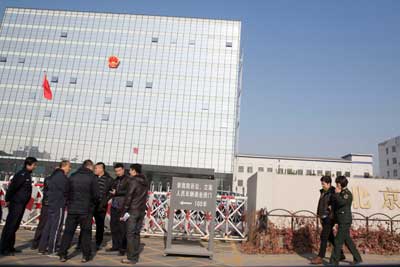
How China’s national security and cybersecurity laws will further curb press freedom
Convincing potential sources to share information and publishing independent journalism on social media or with the help of crowd-funding are a few of the practices that are likely to suffer under a pair of new Chinese laws–one passed, one still in draft form–local journalists tell CPJ.
Journalists and international humanitarian law
One of the most important protections that journalists operating in a conflict zone are afforded is their status as civilians. This means they cannot be deliberately targeted, and cannot be taken prisoner by the warring factions. Under the Geneva Conventions journalists are only entitled to this protection “provided that they take no action adversely affecting…
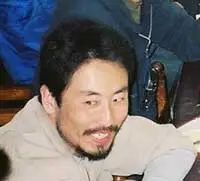
Gambian journalist abducted again, days after he was freed
New York, July 21, 2015–The Committee to Protect Journalists holds Gambian authorities responsible for the safety and well-being of radio journalist Alagie Abdoulie Ceesay. Ceesay was seen being forced into a car in Banjul, the capital, on July 17, four days after he was held for almost two weeks by individuals suspected of being government…
CPJ board urges Iran’s leaders to intervene in case of jailed Washington Post reporter
Letter marks one year behind bars for Jason Rezaian New York, July 20, 2015–Thirty-four members of the Committee to Protect Journalists’ board of directors today sent a letter urging the head of the Iranian judiciary, Ayatollah Sadeq Larijani, to intervene in the case of jailed Washington Post reporter Jason Rezaian. The letter comes on the…
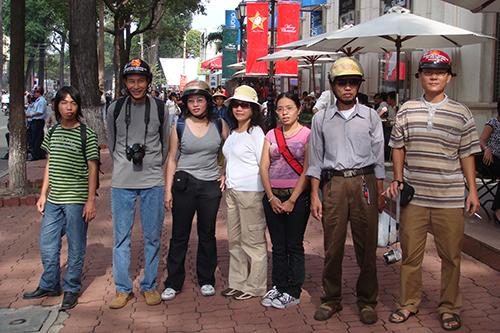
Q&A: Ta Phong Tan’s sister calls for release of ailing and jailed Vietnamese blogger
As an independent blogger, Ta Phong Tan often highlighted abuses in Vietnam’s justice system. Now as a prisoner of conscience serving a 10-year sentence for “propagandizing against the state,” an anti-state offense under Article 88 of Vietnam’s criminal code, she is suffering under the same abusive system she once critiqued and exposed.
CPJ board urges Iran’s leaders to intervene in case of Jason Rezaian
Dear Ayatollah Sadeq Larijani: On the one-year anniversary of the arrest of Washington Post reporter Jason Rezaian, members of the Committee to Protect Journalists’ board of directors today sent a letter urging the head of the Iranian judiciary, Ayatollah Sadeq Larijani, to intervene in the case of jailed Washington Post reporter Jason Rezaian.