IRAQ
APRIL 15, 2005 Updated September 29, 2005 Saman Abdullah Izzedine, Kirkuk TV KILLED—CONFIRMED Unidentified assailants gunned down Izzedine, a 33-year-old news anchor for the Patriotic Union of Kurdistan (PUK)-backed Kirkuk TV as he was driving on the main highway from Kirkuk to Baghdad. Kurdish journalists in Kirkuk said that Izzedine’s car was fired on by…
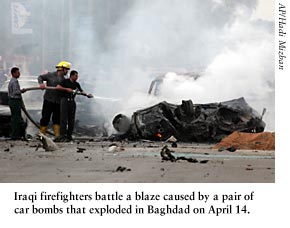
Two Iraqi journalists killed in Baghdad bombings
New York, April 15, 2005—The Committee to Protect Journalists mourns the deaths of two Al-Hurriya television journalists who were killed in suicide bombings while on their way to an assignment in Baghdad yesterday morning. The station’s Baghdad director, Nawrooz Mohamed, told CPJ today that producer Fadhil Hazem Fadhil and cameraman Ali Ibrahim Issa were killed…
British journalists acquitted, deported
New York, April 15, 2005—Two British journalists detained in Zimbabwe during parliamentary elections left the country today after being acquitted of the criminal charge of reporting without accreditation from the government-controlled Media and Information Commission. Toby Harnden, chief foreign correspondent for the London-based Sunday Telegraph, and photographer Julian Simmonds boarded a plane today and safely…
PAKISTAN
APRIL 14, 2005 Posted: April 27, 2005 Kamran Mumtaz, Daily Mashriq ATTACKED, THREATENED Daily MashriqTHREATENED A group of five armed men stormed into the office of the Daily Mashriq in the southwestern city of Quetta around 2:30 p.m. and assaulted Mumtaz, the editor, because of the newspaper’s allegedly biased reporting about a local political party.
IRAQ
APRIL 14, 2005 Posted: April 18, 2005 Fadhil Hazem Fadhil, Al-Hurriya Ali Ibrahim Issa, Al-Hurriya KILLED—CONFIRMED The two Al-Hurriya television journalists were killed in twin suicide bombings while on their way to an assignment. The station’s Baghdad director, Nawrooz Mohamed, told CPJ that producer Fadhil and cameraman Issa were en route to an event honoring…
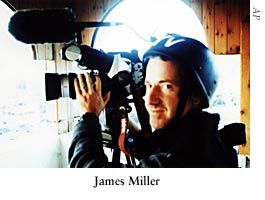
Army to take no action against officer in journalist’s death
New York, April 14, 2005—The Israel Defense Forces said today that it would not take disciplinary action against an officer thought responsible for the May 2003 shooting death of British freelance cameraman and film director James Miller in the Gaza Strip. The Committee to Protect Journalists is deeply disturbed by the decision, which comes one…
PHILIPPINES
APRIL 12, 2005 Posted: April 13, 2005 Alberto Martinez, Radyo Natin ATTACKED, UNCONFIRMED Police began searching for two suspects responsible for the attempted murder of radio broadcaster Alberto Martinez, who was shot in the back while on his way home on the southern island of Mindanao.