Police attack journalists at ousted politician’s news conference
New York, April 18, 2006—Police in Burundi attacked journalists on Monday who refused to hand over recordings of a news conference at the home of an ousted ruling party politician. Journalists said police surrounded the Bujumbura house of Mathias Basabose and prevented more than 30 reporters and human rights activists from leaving for more than…
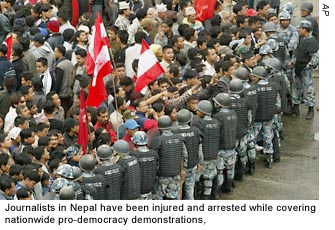
Journalists continue fight against detentions, repressive media law More than 200 Nepalese journalists arrested, dozens in custody
New York, April 18, 2006—More than 200 Nepalese journalists have been detained since April 4 while participating in pro-democracy protests to demand press freedom or while covering the nationwide demonstrations, according to information compiled by the Federation of Nepalese Journalists (FNJ). The Committee to Protect Journalists calls for the immediate release of the 31 journalists…
Rebels release radio journalist
Update: April 17, 2006 Original Alert: April 12, 2006 Eliakim Vanambyl, FM Liberté ABDUCTED Rebel fighters in central Chad released Vanambyl, editor at the N’Djamena-based radio station FM Liberté, near the town of Mongo, where he was captured. Journalists in the capital told CPJ that the reasons behind Vanambyl’s abduction remained unclear.
CPJ urges Bush to raise curbs on press freedom with visiting Chinese president
Dear President Bush: In advance of your April 20 meeting with Chinese President Hu Jintao, the Committee to Protect Journalists, an independent organization dedicated to defending our colleagues worldwide, urges you to ensure that the issue of press freedom is part of the bilateral discussions that will take place during the visit.
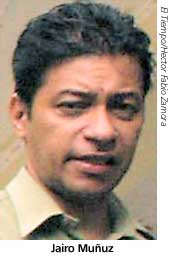
TV reporter killed covering mudslides
New York, April 17, 2006—The Committee to Protect Journalists mourns the death of television reporter Jairo Muñoz who was covering mudslides that killed nearly 30 people last week on Colombia’s southwest Pacific coast. Muñoz and cameraman Rodrigo Trejos were among many journalists reporting on rescue efforts on April 13 in the hard-hit town of Santa…
Journalist shot two weeks ago in Diyarbakir riots dies
New York, April 17, 2006—Journalist Ilyas Aktas died on April 14 in an Ankara hospital two weeks after he was shot in the head during protests in the predominantly Kurdish city of Diyarbakir, in southeast Turkey, local and international media reported. The Committee to Protect Journalists is deeply troubled by the shooting and is still…
Protests against Kremlin control of broadcast media
New York, April 17, 2006—The Committee to Protect Journalists expressed solidarity today with the more than 1000 Russian journalists and activists who protested the Kremlin’s control of television news reporting. The demonstrators rallied in downtown Moscow Sunday to mark the fifth anniversary of the hostile takeover by state gas monopoly Gazprom of the leading independent…
Security forces detain, assault radio correspondent
April 15, 2006 Posted: April 17, 2006 René Dillah Yombirim, BBC and Radiodiffusion Nationale Tchadienne (RNT) ATTACKED Security forces detained Yombirim, a correspondent for the BBC and state-owned radio, while he was interviewing residents in the capital, N’Djamena, following an attempt by rebels to overthrow the government of President Idriss Déby. Local journalists told CPJ…
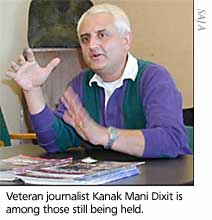
As strikes continue in Nepal, attacks on journalists reported
New York, April 14, 2006—Thirteen journalists were arrested today in Baglung, west of Kathmandu, while protesting against media restrictions during the seventh day of a nationwide strike, the Federation of Nepalese Journalists reported. Others detained during the past week, including veteran journalist Kanak Mani Dixit, remain in police custody.
Prosecutor files criminal libel charges against editor
New York, April 14, 2006—Prosecutors in the western city of Kaliningrad have filed criminal libel charges against Arseny Makhlov, publisher of the weekly Dvornik, the Moscow-based news agency Regnum reported today. The charges relate to three articles in Dvornik during 2004 and 2005 which criticized a local prosecutor for accepting money to close a fraud…