Newspaper director charged with insult, false news
APRIL 20, 2006Posted: May 1, 2006Fortune Bemba, ThalassaHARASSED, LEGAL ACTION Bemba, director of the private Brazzaville-based weekly Thalassa, was arrested and charged with defamation, insulting the head of state, and “propagating false news,” according to the press freedom organization Journaliste en Danger (JED), which is based in neighboring Democratic Republic of Congo. Those charges are not criminal…
Journalist beaten at opposition rally
New York, May 1, 2006—The publisher of Cameroon’s English-language tabloid The Chronicle was beaten unconscious by the bodyguard and the driver of an opposition leader, local journalists told the Committee to Protect Journalists today. Eric Motomu, who also edits the paper, told CPJ he was attacked on Friday at a rally in the opposition stronghold…
Radio director held incommunicado on eve of elections
New York, May 1, 2006—The Committee to Protect Journalists is alarmed at the arrest on Friday of Tchanguis Vatankah, founder of an independent radio station and president of the Chadian Union of Private Radios. Police took Vatankah from his home in the capital, N’Djamena, but did not show any arrest warrant, according to Evariste Toldé,…
Two journalists indicted for reporting on Iraq intelligence
New York, May 1, 2006—The Committee to Protect Journalists is concerned by the criminal charges brought against two Danish reporters accused of leaking state secrets by publishing intelligence reports that questioned the existence of Iraqi weapons of mass destruction. Danish journalists say it is the first time that reporters have been indicted in their country…
Two measures approved in Mexico City to protect journalists
New York, April 28, 2006—The Committee to Protect Journalists welcomes the approval of two measures by the Mexico City Legislative Assembly—one decriminalizing defamation, libel and slander, and the other enabling journalists to withhold the identity of confidential sources. “We’re gratified that the Mexico City assembly has adopted these measures, which represent important milestones in the…
Harassment, attacks continue in Yemen
New York, April 28, 2006—The Committee to Protect Journalists is deeply concerned that Yemeni journalists continue to be assaulted and harassed, while authorities have shown no sign that they are bringing the perpetrators to justice. Jamal Amer, editor of the weekly newspaper Al-Wasat, has been subjected to ongoing intimidation and harassment. On April 10, a…
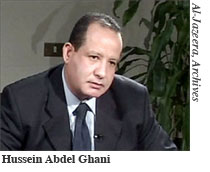
Al-Jazeera bureau chief, three print journalists held
New York, April 27, 2006—The Committee to Protect Journalists is alarmed by the arrest of Al-Jazeera TV’s Cairo bureau chief, and the separate detention of three print journalists, by Egypt’s state security prosecutor. Hussein Abdel Ghani, head of the Qatar-based satellite channel in Egypt, was arrested yesterday on charges of propagating false news while covering…
Police detain two journalists preparing to cover opposition rally
New York, April 27, 2006—The Committee to Protect Journalists condemns authorities in Belarus for preventing local and foreign journalists from covering an opposition rally in the capital Minsk on Wednesday to mark the 20th anniversary of the Chernobyl nuclear disaster. Police in the eastern city of Bobruisk detained journalists Nikita Bytsenko and Yuri Svetlakov of…
CPJ writes to Bush and Musharraf for word of abducted Pakistani journalist
Dear President Musharraf: We are greatly concerned about the disappearance of our colleague Hayatullah Khan, who has been missing since he was abducted by unknown gunmen in North Waziristan along Pakistan’s border with Afghanistan on December 5. Members of his family and his colleagues have repeatedly asked the Committee to Protect Journalists to find out where he is being held and seek his release.
CPJ writes to Bush and Musharraf for word of abducted Pakistani journalist
Dear President Bush: We are greatly concerned about the disappearance of our colleague Hayatullah Khan, who has been missing since he was abducted by unknown gunmen in North Waziristan along Pakistan’s border with Afghanistan on December 5. Members of his family and his colleagues have repeatedly asked the Committee to Protect Journalists to find out where he is being held and seek his release. With that in mind, we are writing to you and to Pakistani President Pervez Musharraf.