Attacks on the Press in 2008: Tunisia
The September abduction of writer Slim Boukhdhir was a chilling reminder of the insecurity that critical journalists face in this North African nation. President Zine El Abidine Ben Ali, in power since 1987, continued to operate a virtual police state, despite the moderate image his government vigorously promoted to the rest of the world.
Attacks on the Press in 2008: Turkmenistan
In the second year of his presidency, Gurbanguly Berdymukhammedov relaxed some cultural restrictions but took no significant steps to improve press conditions. The strange and repressive legacy of his predecessor, Saparmurat Niyazov, who died in late 2006, continued to dominate this gas-rich Central Asian nation. Despite Berdymukhammedov’s promises to open his long-isolated country to the…
Attacks on the Press in 2008: Uganda
Government security forces intimidated and harassed critical journalists, particularly political commentators on the country’s many popular radio talk shows. Criminal defamation and sedition laws were the main weapons in the government’s legal attacks on the press, although a case pending before the Supreme Court held some promise that the laws might be declared unconstitutional.
Attacks on the Press in 2008: United States
U.S. government actions against journalists abroad continued to sully the nation’s image. Authorities finally freed two long-detained journalists, one in Iraq and the other at Guantánamo Bay, Cuba, without ever charging them with a crime or producing any evidence to support the imprisonments. But the military continued its alarming practice of holding journalists in open-ended…
Attacks on the Press in 2008: Uzbekistan
Throughout the year, President Islam Karimov’s administration sought to persuade the European Union and Western nations that it was on a path of reform. It urged the EU to lift sanctions imposed in 2005 after Uzbek troops killed hundreds of citizens during antigovernment protests in the eastern city of Andijan. Lobbying efforts notwithstanding, the government…
Attacks on the Press in 2008: Venezuela
Official intolerance of criticism and unfounded government accusations promoted a climate of fear among Venezuelan journalists. Tensions reached new heights in September when, without providing evidence, President Hugo Chávez Frías and high-ranking administration officials accused private media outlets of plotting to overthrow the government and murder the president. With violent crime rates escalating, the murder…
Attacks on the Press in 2008: Vietnam
The government cracked down on journalists, bloggers, and pro-democracy activists, sending some to jail and harassing many others. The campaign of repression reversed a brief period of liberalization that accompanied the country’s 2007 accession to the World Trade Organization.
Attacks on the Press in 2008: Yemen
Journalists worked in precarious conditions in which they were subjected to politicized criminal charges and censorship from government officials. A harsh press law set restrictions on coverage of the presidency, state security, and religion. Authorities kept particularly tight control on coverage of an insurgency led by tribal and religious figures in the northwestern Saada region.
Attacks on the Press in 2008: Zimbabwe
President Robert Mugabe and his ZANU-PF party, startled by balloting that threatened their 28-year rule, unleashed a brutal crackdown on opposition supporters and the press. Veteran journalist Geoff Hill described the weeks between the first round of voting in March and a runoff in June as “the worst time for journalists in Zimbabwe’s history,” a…
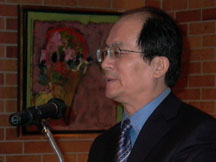
A twisting road to Canada for a Chinese journalist
From his prison cell, veteran Chinese journalist Jiang Weiping wrote a poem to his daughter, Jennifer, which included the lines: “Though the road home has many twists and turns / Your daddy believes that we will be reunited soon.” She was little more than 10 years old when he was imprisoned in 2000 for reporting…