
Just off Freedom Square in Yemen
Swathed in the traditional black face veil, or niqab, Yemeni women brandish banners with images of disappeared and imprisoned journalists. Every Tuesday, in Yemen’s capital city of Sana’a, Tawakul Karman, chairwoman of Women Journalists Without Chains (WJWC), leads these women into Freedom Square to demonstrate.
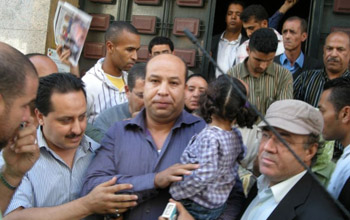

In Iran, a blogging insurgency challenges regime
I’m a cartoonist so even when writing a story or working as radio correspondent, I’m checking out the empty half of the glass. As blogger it’s no different; my inner cartoonist lurks in the dark. I’ve followed the Iranian “Bloggistan” since day one, and started my Persian blog after learning how to type. Funny? Not…

A Tunisian blogger speaks out: ‘The candles are lit’
My country’s government brags unabashedly that it has not passed any laws that require government authorization to establish an electronic publication or a Web site or a blog on the Internet. Those that cheerlead for this government rely on this point to propagate the lie they call “the freedom to publish electronically” in Tunisia.

Government, media can limit risk to journalists
The fighting along the border in Pakistan is a classic counter-insurgency: a large military force trying to oust an entrenched group from its base. Such armed conflict will always be risk-filled—especially for local journalists—but government leaders, military officials, and media executives can take basic steps to improve security.
Honduran decree lifted, but broadcasters still shuttered
Three days after the Honduran interim government led by Roberto Micheletti lifted a September 27 decree that allowed them to shut down Radio Globo and Canal 36, broadcasters loyal to ousted President Manuel Zelaya, the two stations were still prevented from resuming normal transmissions, according to local and international news reports.
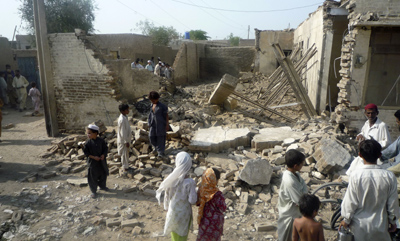
In Pakistan’s frontier, echoes of a 2006 murder
Local reporters like those in Federally Administered Tribal Areas, Swat, and Mingora are crucial to accurate, fully formed news coverage. Their importance was evident in August, when reports began to emerge that prominent Taliban leader Baitullah Mehsud had been killed by a U.S.-launched missile apparently fired from an unmanned drone over South Waziristan in the…
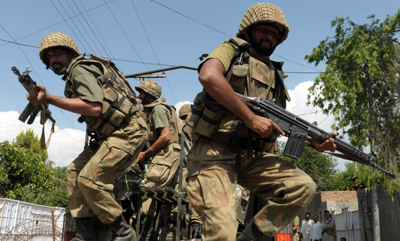
Value, ‘collateral damage’ as journalists embed
During the height of the Pakistani military’s assault on militants, hundreds of local journalists were forced to flee the Swat Valley and neighboring areas. Coverage of the fighting was left in large part to Pakistani reporters from outside the region who had embedded with the military. These journalists faced their own set of challenges.
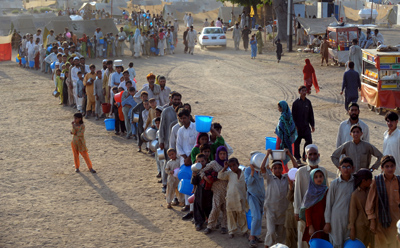
As combat raged, local reporting was stifled
Yesterday, I reported on the plight of Behroz Khan and Rahman Bunairee, two Pakistani journalists whose homes were destroyed by militants. Many other journalists in the North West Frontier Province, or NWFP, faced grave dangers and were forced to flee, undermining independent reporting in the region. The same early July night that Khan and Bunairee’s homes…