Afghan journalist among those dead in Kabul attack
New York, March 21, 2014–The Committee to Protect Journalists is deeply saddened by an attack on Thursday night in Afghanistan in which Sardar Ahmad, a senior reporter for Agence France-Presse’s Kabul bureau, was killed. Four gunmen stormed the Serena Hotel in Kabul during Nowruz celebrations, which marks the start of the Afghan and Persian new…
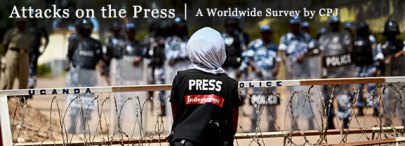
News from the Committee to Protect Journalists, February 2014
CPJ releases annual publication Attacks on the Press CPJ launched the 2014 edition of its flagship publication, Attacks on the Press, on February 12, which was widely covered by local and international media outlets, including The Guardian, Reuters, and the Turkish paper Today’s Zaman. The annual assessment of global press freedom found that digital surveillance,…
China slaps separatism charges on Uighur blogger
New York, February 26, 2014–Chinese authorities should immediately release a Uighur blogger and academic who has been charged with separatism after being held incommunicado and without charge since January 15, the Committee to Protect Journalists said today.
Attacks on the Press in 2013: Ethiopia
A year after the death of Meles Zenawi, Prime Minister Hailemariam Desalegn succeeded in preserving the repressive climate in Ethiopia. Several journalists faced interrogation or prosecution for writing about the late leader, his policies, and even his widow. One journalist, Temesghen Desalegn, former chief editor of the critical weekly Feteh, was charged in February with…
Attacks on the Press in 2013: Nigeria
The government of President Goodluck Jonathan used legal tools as well as brutal means to clamp down on media coverage deemed critical of the government. Sensitive and dangerous topics for the press included coverage of high-level public corruption, the government’s war against Boko Haram insurgents, and the political activities of the Jonathan administration. Regulatory agencies…
Attacks on the Press in 2013: Somalia
While the Somali government elected in 2012 attempted to gain more control and improve security, attacks on journalists continued. At least five reporters were attacked by militia groups loosely connected to the government, according to news reports. CPJ documented four journalists killed in direct relation to their work in Somalia, an improvement from 2012, which…