Thai government issues censorship decree
New York, April 14, 2009–As part of its declaration of a state of emergency on Sunday, the Thai government issued a decree that empowered officials to censor news considered a threat to national security, according to international and local news reports. The Committee to Protect Journalists calls on the government to immediately rescind this order…
CPJ calls for journalist security amid Thai protests
New York, April 10, 2009–Both sides in Thailand’s escalating political conflict should refrain from targeting the press and should guarantee the security of journalists covering the street protests that have paralyzed traffic in the capital, Bangkok, the Committee to Protect Journalists said today.
Russian newspaper founder arrested, criminally charged
New York, April 1, 2009–Police in the western city of Kaliningrad should drop trumped-up bribery charges against Arseny Makhlov, the founder of the independent weekly Dvornik, and allow him to work without fear of harassment, the Committee to Protect Journalists said today.
A legal victory for press freedom in Bility case
Testifying at the Special Court for Sierra Leone in The Hague, Liberian journalist Hassan Bility described a harrowing 1997 reporting trip to Sierra Leone in which he documented Liberian government support for the brutal RUF rebels. His testimony was undoubtedly damaging to defendant Charles Taylor, the former Liberian president on trial for war crimes and…
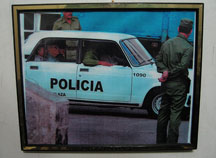
Black Spring of 2003: A former Cuban prisoner speaks
March 18, 19, and 20 will mark the sixth anniversary of the detention of 75 peaceful journalists and librarians, as well as human rights activists, convicted weeks later to up to 28 years in jail during summary trials. Fifty-four of these innocent people, who demanded a democratic society and respect for human rights, remain imprisoned…

Remarks from Cuban journalist Alejandro Gonzalez Raga
Exiled Cuban journalist Alejandro Gonzalez Raga spoke to reporters in Madrid on Monday as part of CPJ’s launch of our book, Attacks on the Press. He talked about the brutality of life in a Cuban prison, the torture he and other journalists who were jailed for their writing endured. Here are his remarks, in Spanish: