CPJ urges Kyrgyzstan to release Azimjon Askarov
Dear President Atambayev: The Committee to Protect Journalists is writing to bring to your attention a new report we have issued on Azimjon Askarov, an investigative journalist and human rights defender who was sentenced in September 2010 to life in prison. CPJ’s review of Askarov’s case, outlined in the attached report, has found that his probe and trial were marred by numerous procedural violations, including his torture in custody and the lack of any evidence implicating him in criminal activity.
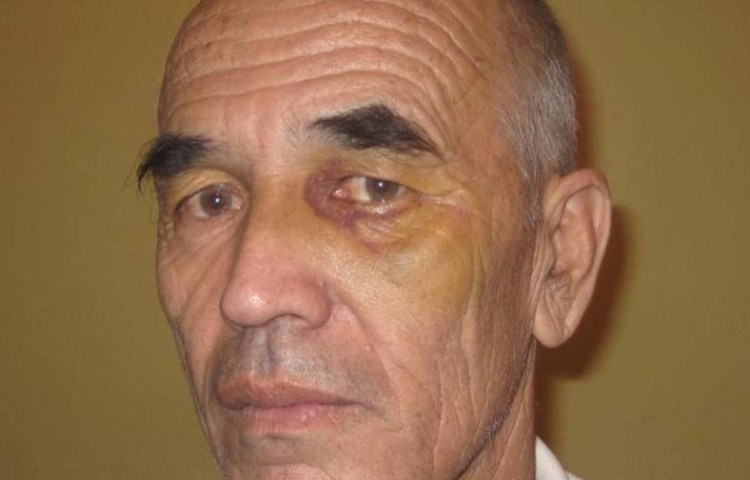
In Kyrgyzstan, injustice and torture in Askarov case
Azimjon Askarov, an investigative reporter and human rights defender, had ended careers and embarrassed officials time and again with his reporting on law enforcement abuses in southern Kyrgyzstan. When ethnic unrest broke out in June 2010, authorities struck back with a vengeance. A CPJ special report by Muzaffar Suleymanov
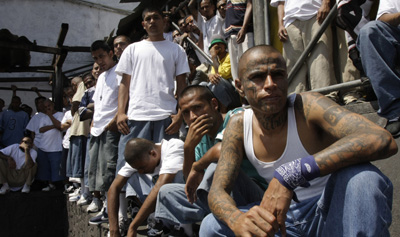
CPJ hails conviction in journalist murder in El Salvador
New York, June 7, 2012–The Committee to Protect Journalists welcomes the conviction in the 2011 murder of Salvadoran cameraman Alfredo Antonio Hurtado Núñez, but calls on authorities to ensure that the other gunman charged for the crime is brought to justice.
Defining role of the press in genocide prevention
Talking about genocide prevention in the shadow of the Auschwitz-Birkenau extermination camps brings an intense and unique gravity to the discussions. The academic presentations cannot extract themselves from the looming presence of the barbed wires and grim towers surrounding the Nazis’ most infamous death factory.
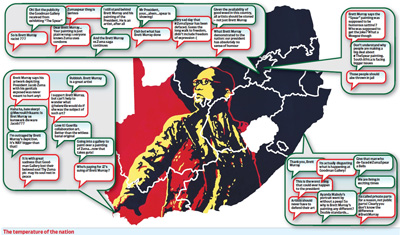
South Africans clash on Twitter over #Zumaspear
South African journalist and arts critic Charl Blignaut made what turned out to be an excellent prediction. “Of all the work on show, it’s this depiction of the president that will set the most tongues wagging and most likely generate some howls of disapproval,” he wrote on May 13 in a review of an art…
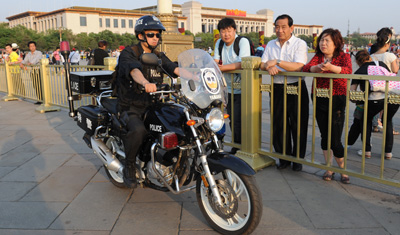
23 years after Tiananmen, China is still paying
The annual crackdown on commemorations of the June 4 anniversary of the brutal suppression of student-led demonstrations based in Tiananmen Square in 1989 Beijing is under way, according to Agence France-Presse. What’s concerning is the number of writers and activists for whom “crackdown” is the new normal.
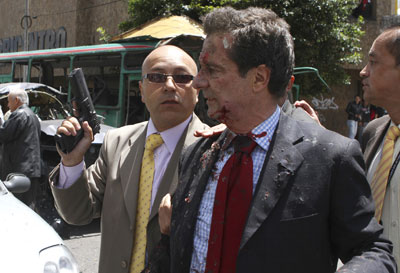
Murder attempted on Colombian ex-politician, radio host
New York, May 16, 2012– The Committee to Protect Journalists condemns Tuesday’s attack on Fernando Londoño, a radio talk show host and former high-ranking government official. Londoño was injured in a bombing in Bogotá that killed his driver and bodyguard.
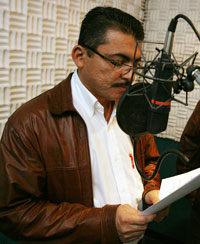
Kidnapped Honduran journalist found dead
New York, May 16, 2012–The body of Honduran radio journalist Ángel Alfredo Villatoro was found Tuesday in the capital city Tegucigalpa, according to news reports. Villatoro had been kidnapped from his car early on the morning of May 9.”We are saddened by the death of journalist Ángel Alfredo Villatoro and send our condolences to his friends,…

Nigeria journalists obstructed on World Press Freedom Day
On World Press Freedom Day last week, Nigeria’s Information Minister, Labaran Maku, publicly asserted that the country’s media “is one of the freest in the universe.” On paper, Nigeria’s 1999 Constitution guarantees the freedom of the press to “uphold…the responsibility and accountability of the government to the people.” But seven journalists who attempted to put…