Turkey’s Press Freedom Crisis
Sidebar: Letters From Prison Here are excerpts from letters written by four journalists who have been imprisoned in Turkey. They were first published by the independent online news portal Bianet in January and February 2012. As in dozens of other cases, prosecutors have charged these individuals with grave anti-state crimes. These first-person accounts provide a…
Turkey’s Press Freedom Crisis
5. Test of Political Will On March 25, 2012, the day before the Nuclear Security Summit got under way in Seoul, South Korea, U.S. President Barack Obama met with Turkish Prime Minister Recep Tayyip Erdoğan to discuss a world of troubles. On the agenda were efforts to compel Syrian President Bashar al-Assad to step aside,…
Turkey’s Press Freedom Crisis
Appendix I: Journalists in Prison CPJ research identified 76 journalists imprisoned in Turkey as of August 1, 2012. After examining the government’s evidence, reviewing other public records, and speaking with defense lawyers involved in the cases, CPJ concluded that at least 61 detainees were being held in direct relation to their journalism.

Judicial intimidation of editor and newspaper in Chad
Lagos, Nigeria, October 5, 2012–Chadian authorities are abusing the judicial and law enforcement systems to silence news coverage critical of the government’s performance, censoring publications and targeting one editor with an unjust criminal conviction. The Committee to Protect Journalists calls on the government to immediately halt its actions.

Spotlight on Giving
CPJ hosted its 2019 International Press Freedom Awards dinner in November, which raised more than $2.7 million for our work, a new record! During the dinner, host Shep Smith made a surprise announcement–he was personally donating $500,000 to CPJ! Smith spoke passionately about the need for a free press. “Journalists are sometimes wary of being…
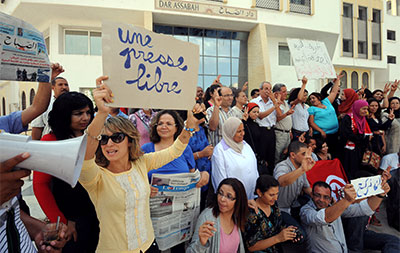
Receding hopes for press freedom in Tunisia
These days, press freedom in Tunisia feels ever more distant. Many journalists believed that media freedoms, which were virtually nonexistent under former President Zine el-Abidine Ben Ali, would grow after his ouster. During the aftermath of the December 2010 uprising, an independent press blossomed and special commissions were set up to reform the media sector.…
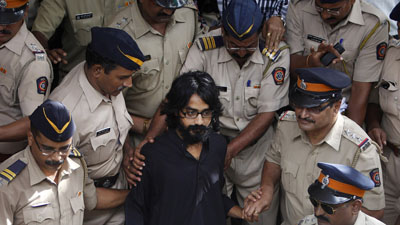
With new focus on sedition law, India poised at juncture
Although it is the world’s largest democracy, India has retained its colonial-era sedition law. But with a national debate ensuing after the arrest of 25-year-old political cartoonist Aseem Trivedi on the antiquated sedition charge and others, members of the Indian government have been forced to do some soul-searching.

Bewildering Odatv trial continues in Istanbul
In Istanbul, the trial of several suspects in the case of Odatv, an ultranationalist website harshly critical of the government, continues to great consternation. When the case began in early 2011, a dozen journalists were charged, 10 of whom were incarcerated. The prosecution said Odatv staffers, along with prominent investigative reporters Ahmet Şık and Nedim…