Indian television news anchor receives thousands of threatening phone calls
New York, March 2, 2016 – Indian authorities should investigate threats made against a television journalist in the state of Kerala and ensure her safety, the Committee to Protect Journalists said today. News anchor Sindhu Sooryakumar has received thousands of threatening phone calls following a broadcast she hosted last week, she told reporters.
Critics Are Not Criminals: Comparative Study of Criminal Defamation Laws in the Americas.
On March 2, 2016, CPJ will present a new special report on the status of criminal defamation laws in the Americas at a panel discussion in Lima on March 2, 2016. The Perú-based Instituto Prensa y Sociedad (IPYS) will co-sponsor the event. The report, prepared for CPJ by Debevoise & Plimpton LLP in collaboration with…
‘Prison is the equivalent of a death sentence for him,’ son of journalist jailed in Iran says
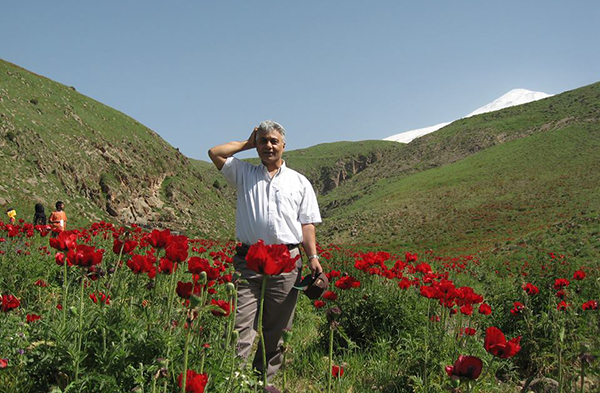
The son of imprisoned Iranian journalist Issa Saharkhiz says his father’s health has deteriorated and he has lost a worrying amount of weight since being sent to Evin prison last November. In an interview with CPJ, Mehdi Saharkhiz said his father, who is due in court this week, has been treated poorly.
Critics Are Not Criminals: Comparative Study of Criminal Defamation Laws in the Americas
Criminal defamation prosecutions are still widespread throughout the Americas. In a new special report, prepared by Debevoise & Plimpton LLP in collaboration with the Thomson Reuters Foundation, CPJ finds a total of 32 out of 33 countries in the hemisphere maintain criminal penalties for defamation.
Critics Not Criminals: Acknowledgements
Contents Critics Are Not Criminals: Comparative Study of Criminal Defamation Laws in the Americas The Thomson Reuters Foundation is grateful to Debevoise & Plimpton LLP who coordinated this research, together with Benedetti & Benedetti, Brigard Urrutia, Cariola Díez Pérez-Cotapos & Cía. Ltda, Díaz Durán & Asociados, Estudio Rodrigo, Elias & Medrano, Medina, Rosenthal & Asociados,…
Critics Not Criminals: Foreword
Despite a growing consensus that criminal defamation laws should be abolished, there has been an alarming resurgence of their use in the Americas. From North America to South America, over two-thirds of the governments in the region routinely use these laws to silence dissent and to deprive citizens of information on matters of public interest.…
Critics Not Criminals: Introduction
After three decades of democratization, the current state of freedom of expression in Latin America is undoubtedly more open than in the period of military rule. But the legislative and judicial reforms necessary to institutionalize freedom of expression are still widely lacking.
Critics Not Criminals: Regional Jurisprudence
Below is a summary of the key Inter-American Court of Human Rights (“IACtHR”) decisions rendered on issues of criminal defamation since 2001. Although holdings from the IACtHR are not controlling in all jurisdictions in the Americas, they provide useful guidance on this type of case and set important precedents for further application of the laws…
Criminal Defamation Laws in North America
Contents Critics Are Not Criminals: Comparative Study of Criminal Defamation Laws in the Americas I. Canada A. Criminal Laws Restricting Freedom of Expression Despite frequent criticism and infrequent application, Canada’s Criminal Code continues to contain provisions criminalizing both blasphemous libel15 and defamatory libel.16 Section 298(1) of the Code describes “defamatory libel” as a “matter published,…
Critics Not Criminals: Executive Summary
Laws that permit journalists to be prosecuted criminally for the content of their reporting are considered to present a hazard to freedom of the press and to the right of citizens to be informed. As the Inter-American Commission on Human Rights (“IACHR”) described in its 1994 Annual Report, such laws have an “inevitable chilling effect…