
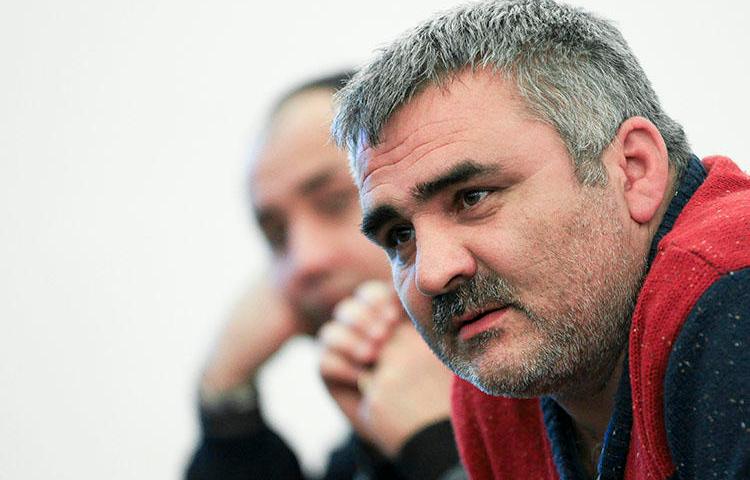
Journalist Afgan Mukhtarli: ‘Azerbaijani prisoners are facing death under coronavirus quarantine’
Azerbaijani journalist Afgan Mukhtarli was released from prison on March 17, 2020, after nearly three years in jail, and flown to Berlin, where he was reunited with his wife and daughter. He served half of his six-year sentence on charges that Azerbaijani authorities brought in retaliation for his investigative reporting, as CPJ research shows.
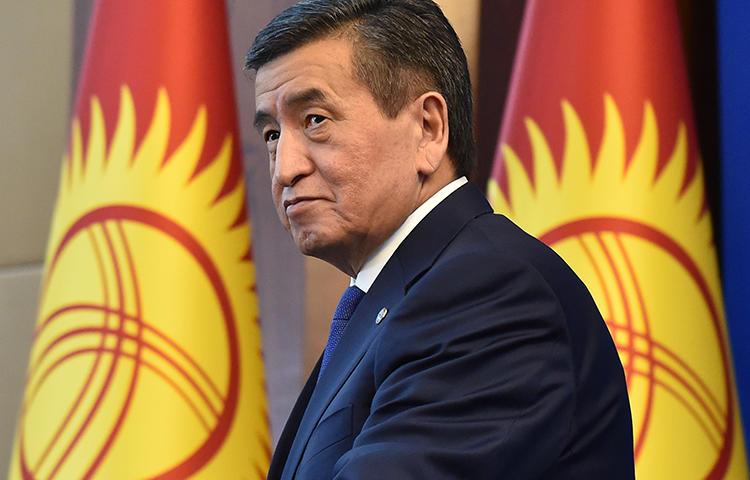
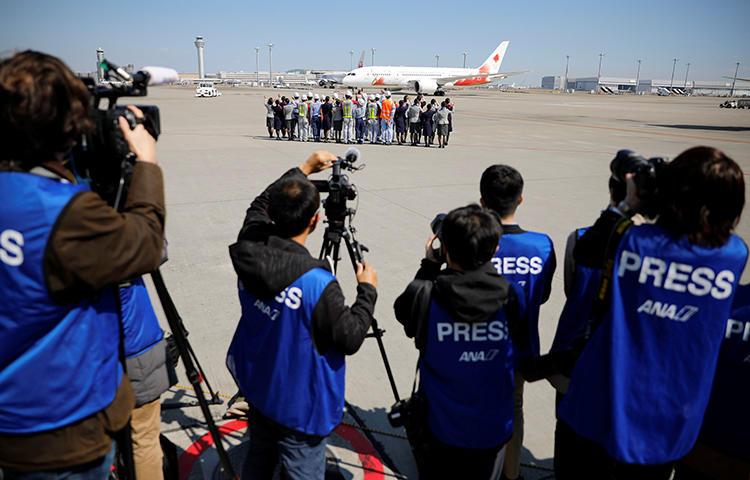
CPJ joins call for transparency in Olympics and other sport events amid COVID-19
The Sport and Rights Alliance, a coalition of non-governmental organizations co-founded by the Committee to Protect Journalists, issued a statement on March 20 calling on global sports organizations to maintain high standards of transparency and press accessibility amid the COVID-19 pandemic as assessments are made around sporting events, including the Tokyo 2020 Olympics.
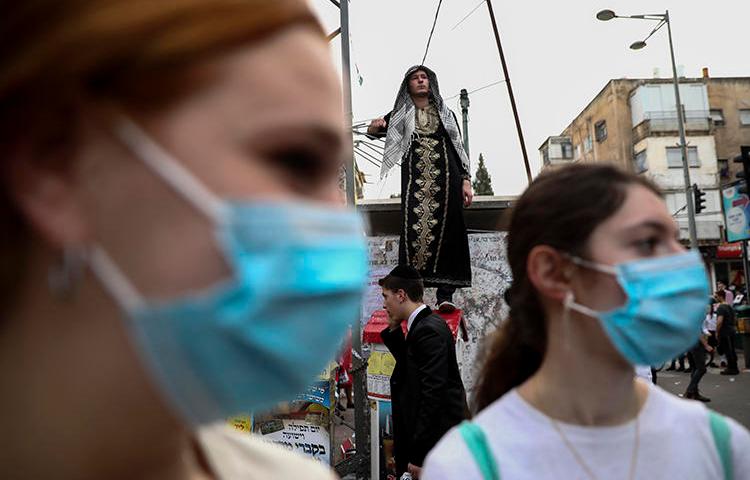
Q&A: Covering the coronavirus outbreak in the Orthodox Jewish community
Before the coronavirus outbreak, Laura E. Adkins edited opinion pieces for the Jewish Telegraphic Agency, a syndicated nonprofit wire service that runs articles in Jewish publications. But as the virus has taken root in a number of Jewish communities in the United States and around the world, Adkins, who is based in New York and…
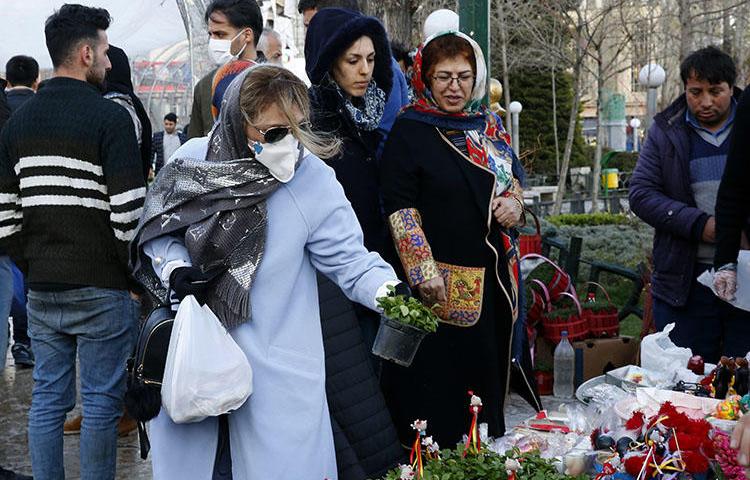
Amid coronavirus pandemic, Iran covers up crucial information and threatens journalists
In recent months, the stability of the Iranian government has been threatened by widespread protests in late 2019 and the shooting down of a Ukrainian civilian aircraft in January 2020 amid heightened tensions with the U.S. The latest threat is the coronavirus pandemic, which has hit Iran harder than any country except China or Italy.…
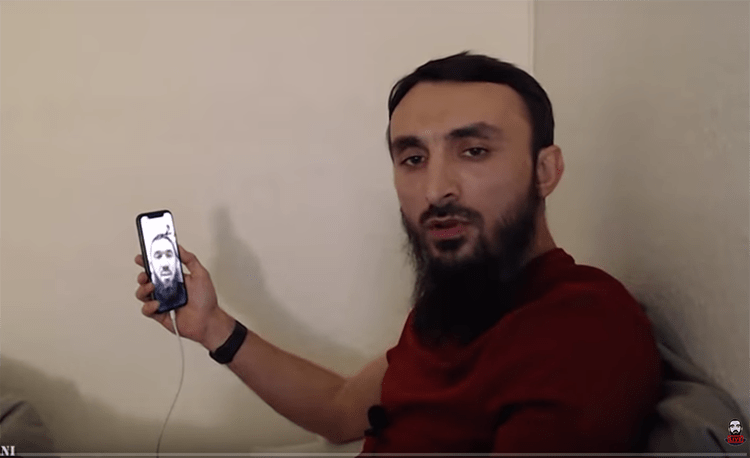
Chechen blogger and government critic Tumso Abdurakhmanov: ‘I am constantly at risk’
Tumso Abdurakhmanov, a prominent blogger critical of the Chechen authorities, survived a violent assault in his home in Swedish town of Gävle on February 26, 2020. Two Russian nationals have been arrested in connection with the attack, according to a report by Agence France-Presse. CPJ documented the incident and spoke to the blogger after his…
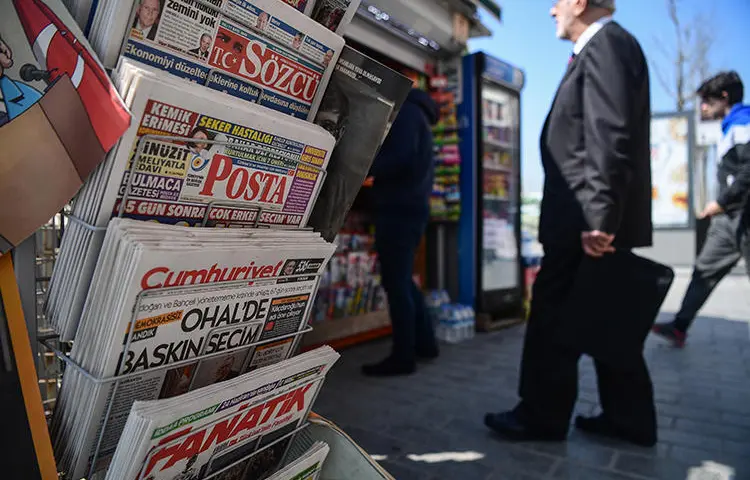
CPJ joins calls on Turkey to lift ad ban on Evrensel daily
CPJ joined the International Press Institute, Reporters Without Borders, the Journalists Union of Turkey, the European Federation of Journalists, and 20 other Turkish and international groups in a joint letter today calling for Turkey’s Press Ad Agency, the state regulator of government advertisements in print media, to lift its ban on advertising in critical leftist…
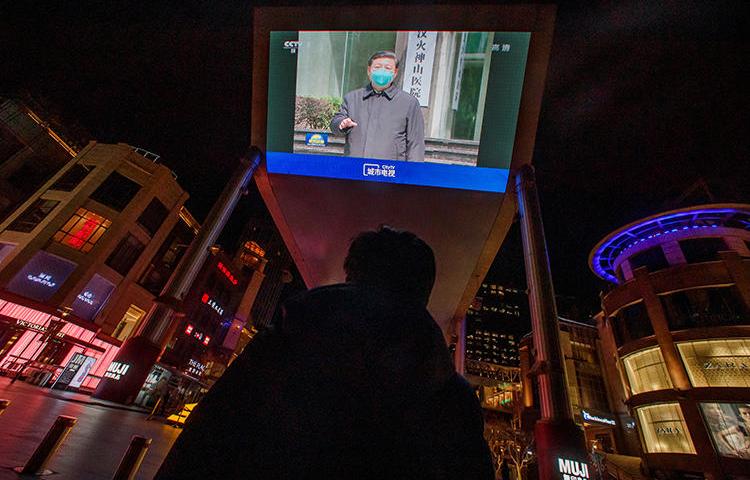

To cement internet control, Iran helps journalists get online
In early 2020, a journalist in Iran received a form from Iran’s National E-commerce Union, a nominally independent group that is close to the government, requesting their name, the news website they work for, and their IP address. “With all due respect,” it read, “provide the following information to prevent any potential problem during future…