UNESCO must reject Obiang prize bid
The Committee to Protect Journalists joined with eight other human rights organizations today in opposing the bid for a UNESCO life sciences prize named after Equatorial Guinea President Teodoro Obiang Nguema Mbasogo. CPJ and other groups have consistently voiced their opposition to this prize, saying that Equatorial Guinea’s human rights record undercuts the UNESCO mission.…

Correa lambastes press in Columbia speech
“Sir, you are lying and a liar.” With these words, uttered before an audience of around 150 people, Ecuadoran President Rafael Correa dispelled any doubt as to whether he might cool his explosive rhetoric in the face of criticism. His harsh words came in response to a critical question posed by CPJ’s senior coordinator for…
Eritrea: Let’s lift the shroud of 10 years of misery
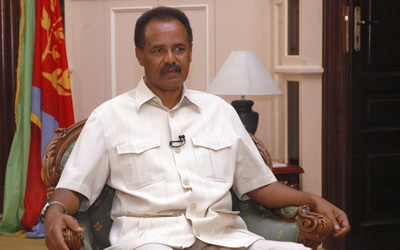
Since Zaid Tewelde’s husband, an Eritrean freedom fighter turned playwright and journalist, was arrested in September 2001, she has spent each passing day coping with the burning questions of her two young sons, age 9 and 10, “Where is my dad? When are we going to see him?” And she is not alone. Like Zaid, the…
State secrets claim withdrawn in UK hacking probe
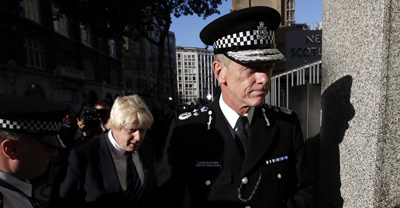
London’s Metropolitan Police this week dropped their attempt to leverage the Official Secrets Act to force The Guardian to reveal confidential sources for stories about the phone-hacking scandal that has gripped the UK’s political and media world. The Met’s reversal is welcome, but its unprecedented attempt to invoke espionage laws to force a newspaper to…
Gambia VP touts tourism, downplays human rights issues
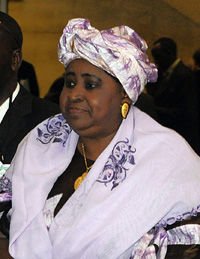
The Gambia has an image problem: Dubbed the “Smiling Coast of Africa,” it is a tourist destination, but its government has one of the region’s worst records of human rights abuses. On Tuesday, at an African tourism promotion event in New York City, Gambian Vice-President Isatou Njie-Saidy headed a delegation working toward improving the negative…
Motive unclear, but murders become rallying point
The brutal, September 1 murders of two women from the world of mass communications drew international headlines as the latest attack against the Mexican news media. But the sensational case–the two were found strangled in a park in the heart of Mexico City–illustrates the complexities of determining motives amid the pervasive violence afflicting Mexico. Since…
In Ethiopia case, a response to WikiLeaks
Last week, we learned that Ethiopian journalist Argaw Ashine was facing possible arrest and needed to flee the country. During a 10-day period in September, he had been summoned three times by Ethiopian authorities and questioned about a reference to him in a cable sent by the U.S. Embassy in October 2009 and made public…
When Eritrea shut down the independent press
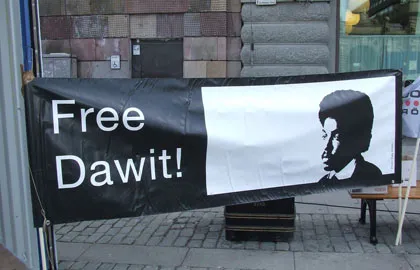
It was September 18, 2001. As usual, I had to do my shift as a news reader on Eritrea’s national government-controlled radio station Dimtsi Hafash. It was just minutes before 6:30 a.m. I was almost ready with all of the Tigrinya news material given to me for broadcasting and was waiting for the on-air sign…
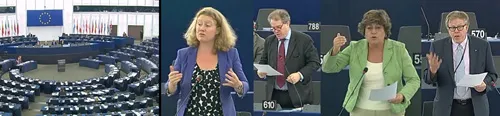
EU resolution urges Eritrea to free long-jailed journalists
Eritrea was on the hot seat Thursday in Strasbourg and Brussels. Ten years after a massive crackdown on dissent in Asmara that included the arrests of 11 independent journalists, European institutions have signalled that they are weary of President Isaias Afeworki’s repression.