Motive unclear, but murders become rallying point
The brutal, September 1 murders of two women from the world of mass communications drew international headlines as the latest attack against the Mexican news media. But the sensational case–the two were found strangled in a park in the heart of Mexico City–illustrates the complexities of determining motives amid the pervasive violence afflicting Mexico. Since…
In Ethiopia case, a response to WikiLeaks
Last week, we learned that Ethiopian journalist Argaw Ashine was facing possible arrest and needed to flee the country. During a 10-day period in September, he had been summoned three times by Ethiopian authorities and questioned about a reference to him in a cable sent by the U.S. Embassy in October 2009 and made public…
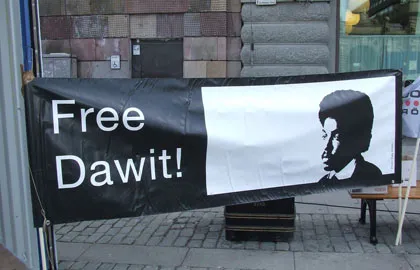
When Eritrea shut down the independent press
It was September 18, 2001. As usual, I had to do my shift as a news reader on Eritrea’s national government-controlled radio station Dimtsi Hafash. It was just minutes before 6:30 a.m. I was almost ready with all of the Tigrinya news material given to me for broadcasting and was waiting for the on-air sign…
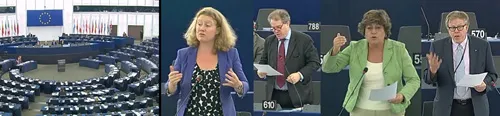
EU resolution urges Eritrea to free long-jailed journalists
Eritrea was on the hot seat Thursday in Strasbourg and Brussels. Ten years after a massive crackdown on dissent in Asmara that included the arrests of 11 independent journalists, European institutions have signalled that they are weary of President Isaias Afeworki’s repression.
Farsi guides to the surveillance attack in Iran
As we’ve reported before, there’s strong evidence that forces with widespread access to Iran’s internet infrastructure have been engaged in large-scale surveillance of https traffic in July and August, certainly of Google traffic, and perhaps many more websites, including Facebook and Yahoo! If you used the Internet in Iran during this period you should, at…
UN plan on journalist security could bring improvement
Representatives from U.N. agencies, member states, and nongovernmental organizations convened on Tuesday at the United Nations Inter-Agency Meeting on Safety of Journalists and the Issue of Impunity to plan how to address journalist security. Participants of the meeting, which was convened by UNESCO at its Paris headquarters, also discussed how the United Nations could promote…
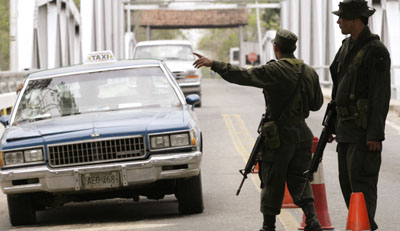
Colombian journalists in Arauca pressured from all sides
Although a long-running army offensive has improved security in much of Colombia, the oil-rich eastern province of Arauca remains a hot zone–for both combatants and journalists. This week, for example, the National Liberation Army (ELN), the smaller of the country’s two guerrilla groups, called a transportation strike, effectively shutting down traffic and commerce throughout the…

Press freedom heroes in Southeast Asia
Three Southeast Asian journalists–Cambodia’s Hang Chakra, Malaysia’s Zulkiflee Anwar Ul Haque, or Zunar, and Thailand’s Chiranuch Premchaiporn–were among the 48 awardees of the Hellman/Hammett grant, given to writers targeted with political persecution, who were recognized today by Human Rights Watch for their commitment to press freedom.
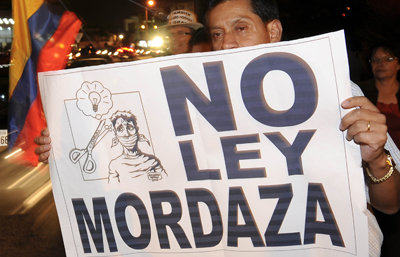
In response, Ecuadoran secretary misses the point
Back in April, before leaving on a research trip to Ecuador, I contacted Communications Secretary Fernando Alvarado by phone and email in hopes of meeting with him to discuss press freedom concerns that have emerged under President Rafael Correa. The secretary was among the high-ranking administration officials who did not respond to CPJ’s requests for…
NATO responds to CPJ, but questions remain unanswered
On August 4, CPJ wrote to NATO Secretary General Anders Fogh Rasmussen requesting information about the July 30 attacks on broadcast facilities in Libya in which NATO aircraft destroyed three broadcast dishes. As we noted in our letter, CPJ is concerned any time a media outlet faces a military attack. Such attacks can only be…