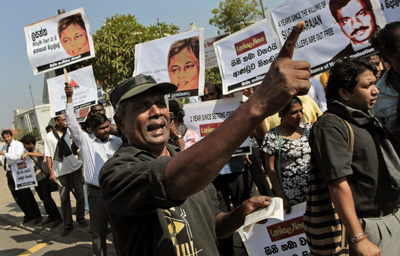
Black January? A foreign plot, says Sri Lankan government
On Monday, I wrote about two demonstrations scheduled for Sri Lanka this week. Both were meant to commemorate the ugly string of anti-press attacks in recent Januaries, which has included journalists killed and abducted, television stations bombed, websites attacked, and media offices torched. But Wednesday’s Black January effort, publicized by the Free Media Movement (FMM)…
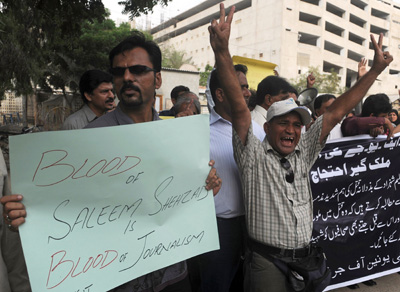
Mazhar Abbas: Shahzad was no Pearl
Yesterday marked the 10th anniversary of the disappearance of Wall Street Journal reporter Danny Pearl in Karachi on January 23, 2002. On February 21 of that year, a video of his beheading was released. In the wake of the judicial inquiry into the murder of journalist Saleem Shahzad, veteran Pakistani journalist Mazhar Abbas has taken…
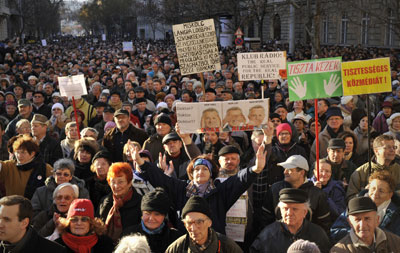
Criticism of Hungary’s media controls keeps growing
“Klubrádió solely wants to provide news and present different opinions and never meant to play any emblematic role. But, because of the decision of the Media Authority, it has became the symbol of free speech in Hungary,” stated the broadcaster’s CEO, András Arató, on Sunday when addressing thousands of demonstrators who gathered in central Budapest…
Tunisian media: One year after the revolution
The doses of freedom that the Tunisian revolution injected into national media have not been sufficient to revive it after decades of systematic destruction. It is not surprising that our evaluation of media one year after the tyrant fell reveals more negativity and pessimism.

Uganda’s radio closures uncover lack of independence
Ugandan police have shuttered 13 broadcasters since December, accusing them of misusing power supplies and equipment belonging to the state-run Uganda Broadcasting Corporation (UBC). The widespread allegations of corrupt deals between the state broadcaster and ostensibly private stations reveal more than illicit transactions–they expose a lack of independence within Uganda’s broadcast sector.
Minority media rights, terrorism laws at issue in Roj TV case
French satellite provider Eutelsat announced yesterday it is suspending Kurdish satellite station Roj TV after a Danish court last week levied a hefty fine against the satellite station for promoting terrorism. Eutelsat’s decision comes despite Roj TV’s appeal before the Danish High Court, which is pending. The case has implications for how media content is…
Online publishers, developers sentenced to death in Iran
Politically-related Iranian prosecutions often take place in near secrecy, with unclear charges morphing and changing over time. It doesn’t get any easier to work out the motivations of prosecutors when the charges are connected to technology.
Oprah’s guards not only ones to assail Indian journalists
Oprah Winfrey’s first visit to India brought delighted coverage by the Indian media. Her meetings and tweetings with Bollywood stars, her bright orange sari, and her trips to slums and to the Taj Mahal were lovingly detailed by newspapers and TV outlets in that country.
