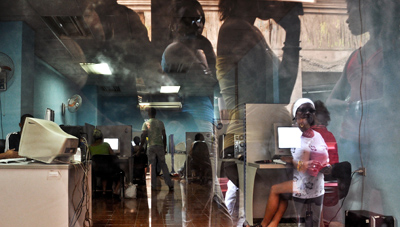
Eating a cable: Internet access still elusive in Cuba
There is a popular expression in Cuba that is synonymous with difficulty and crisis. When you want to indicate that someone is doing badly economically, it is sufficient to say that he is “eating a cable.” Street humor has identified the act of chewing and swallowing a bundle of wires with scarcity and material want.…
Red flags in the European Union press freedom debate
The European Union enjoys waving the banner of press freedom overseas. However, it is sometimes at a loss when it has to define its approach to press freedom among its own member states. Last year, the EU tried and failed to convince the Hungarian government to radically amend its highly controversial media law. The conservative…
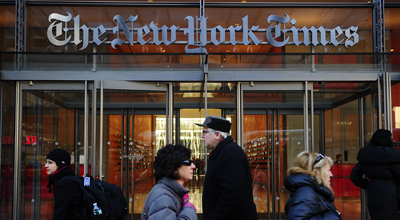
Drawing lessons from Chinese attacks on US media
Not every media company is as tempting a target for hackers as The New York Times, The Washington Post, or The Wall Street Journal. Not every company can afford high-priced computer security consultants, either. Is there anything that everyday reporters and their editors can learn about protecting themselves, based on the revelatory details the Times…
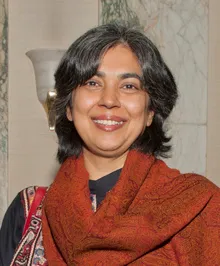
Remembering Ayesha Haroon, editor who embraced facts
The highly respected Pakistani editor Ayesha Haroon first came to CPJ’s New York office in July 2011, along with her husband, Faisal Bari, and Absar Alam, both of whom work for the Open Society Foundations. We talked about ways to confront the dangerous conditions facing Pakistani journalists. It was a bad year: Seven journalists would…

In Syria, the quandary of freelance news coverage
Forces on all sides of the Syrian conflict that have tried to censor news coverage through violence have won a round. By sharply increasing the risk for reporters covering the civil war they have forced news organizations to think twice before sending their staff to the battlefields. In a worrying development they even have led…
Video: Free imprisoned Iranian journalists
In late January, Iranian authorities waged the largest crackdown on the press since 2009, detaining a wave of journalists and issuing arrest warrants for numerous others. The Ministry of Intelligence accused the journalists of conspiring with foreign media to repeat the alleged “sedition” of 2009, referring to electoral fraud exposed by the media and the…
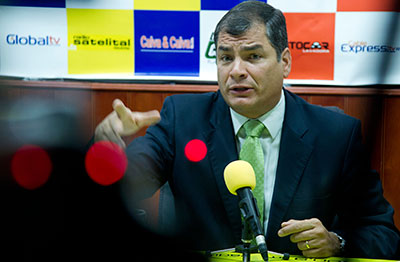
In Correa’s Ecuador, a bulletin on breakfast is routine
On September 11, 2012, the Ecuadoran government interrupted a morning newscast on the Teleamazonas TV station for an official bulletin. What could be so urgent? A coup d’etat? An earthquake? A cholera outbreak? It turned out the government sought to clarify what President Rafael Correa had for breakfast.
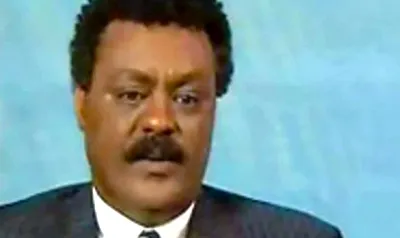
Eritrea: Ali Abdu pleads ignorance of Dawit Isaac’s fate
On Wednesday, the Swedish newspaper Expressen published what it described as an exclusive interview with Ali Abdu–Eritrea’s long-time information minister, government spokesman, and censor-in-chief–who vanished from public view in November. The piece confirmed that Ali had gone into exile, but it shed no light on the whereabouts and well-being of more than two dozen imprisoned…
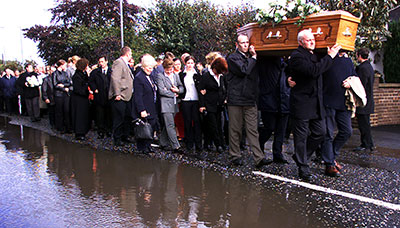
Setback in O’Hagan murder must not mean case closed
More than 11 years have passed since investigative journalist Martin O’Hagan was murdered near his home in Lurgan, Northern Ireland, and the case has not been solved. Last week Northern Ireland’s public prosecutor announced a major setback to the case that has colleagues worried it never will be.