Knowing how law and technology meet at US borders
Border crossings have long posed a risk for journalists. In many nations, reporters and photographers alike have been subjected to questioning and having their electronic devices searched, if not also copied. But more recently, protecting electronically stored data has become a greater concern for journalists, including those who are U.S. citizens, upon entering or leaving…

Who Shot Ahmed?
On the night he was shot, Ahmed Ismail Hassan al Samadi was working. Protestors had gathered along a highway near his home in a small Bahraini village. With his handheld camcorder, Ahmed filmed as they marched. He filmed as security forces arrived in marked and unmarked cars. The citizen journalist had tens of hours of…
Sakharov and the fight for a free press in Ethiopia
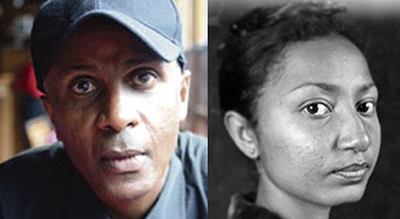
In 1968, Andrei Sakharov braved censorship and personal risk in the Soviet Union to give humanity an honest and timeless declaration of conscience. That same year, Ethiopia’s most prominent dissenter, Eskinder Nega, was born. In January 1981, a year into Sakharov’s exile in the closed city of Gorky, Reeyot Alemu, another fierce, Ethiopian free thinker,…
Covering Westgate
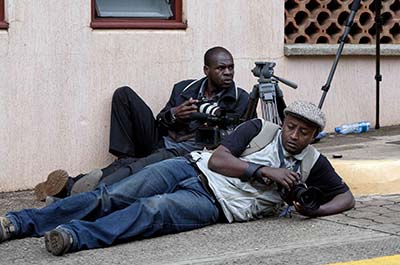
The jumpy, cell phone clips of journalists and security officers crouching outside the upscale Westgate Shopping Mall in the capital, Nairobi, permeated the TV screens across Kenya for four days. Edgy local and foreign reporters hid behind vehicles as gunfire shots, repeated explosions and smoke emanated from a supermarket inside.

Bulgarian journalists are under attack
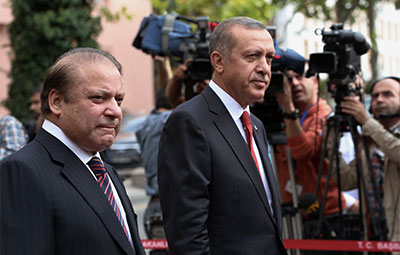
This summer, for good reason, the world’s attention was focused on Turkey. Anti-government protests over plans to destroy a park in downtown Istanbul attracted global attention. Ankara’s strategic importance in Syria and the Middle East, as well as being a member of NATO, makes what happens in Turkey important.
Mission Journal: Why Turkey matters
Turkey is hardly a press freedom paradise, but what makes the country so exciting for journalists is the amount of news it generates on any given day. The domestic story is huge, with near-daily street protests, the booming economy beginning to sag, and the prospect of regional conflict looming with Syria. And Istanbul is a…
Journalists and imperfect justice in Bangladesh
Bangladesh’s Supreme Court has hardened the sentence against Abdul Quader Molla, a top Islamist of a key opposition party, from a life term to death for his role in mass killings committed during the country’s war of independence from Pakistan in 1971. But what caught my eye in particular was that Molla was also convicted…
Endless surprises for Al-Jazeera
Mhamed Krichen/CPJ Board memberThere seems to be no end to American surprises when it comes to Al-Jazeera. The latest was revealed by Der Spiegel, the German weekly news magazine, which reported the U.S. National Security Agency hacked into our internal communications system, according to documents provided by Edward Snowden, the former NSA security analyst.
Is China silencing rumors, or the public?
China’s Internet has changed fundamentally since Shi Tao was given a 10-year prison sentence in 2005. Shi’s case was a marker of sorts— the first high profile sentencing in China for online activity. The government says 40 percent of the population is online as of December 2012. That’s 564 million people. In 2005, penetration was…
Bolivian government gangs up on Página Siete
Bolivia’s loss of territory along the Pacific coast during a 19th-century war with Chile remains an extremely sensitive issue in the landlocked nation. Every March 23, patriotic “Day of the Sea” ceremonies mark the calamity, which Bolivia hopes to reverse through a lawsuit filed this year against Chile at the International Court of Justice.