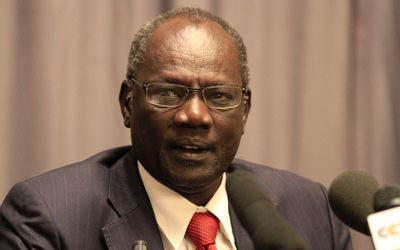
South Sudan government warning: Don’t interview rebels
Last week, South Sudanese Information Minister Michael Makuei warned reporters in the capital, Juba, not to interview the opposition or face possible arrest or expulsion from the country. According to the minister, a lawyer by profession, broadcast interviews with rebels by local media are considered “hostile propaganda” and “in conflict with the law.”
Rouhani has yet to deliver on press reforms in Iran
CPJ joined 26 other human rights and civil society groups on Wednesday in an open letter calling on the member states of the U.N. Human Rights Council to renew the mandate of Ahmed Shaheed, the special rapporteur on the situation of human rights in Iran. The public letter also urged the members to participate in…

UN reviews Kyrgyzstan’s human rights, free press record
Today, the U.N. Human Rights Committee begins its two-day review of Kyrgyzstan’s compliance with the International Covenant on Civil and Political Rights. By ratifying the treaty in October 1994, Kyrgyz authorities pledged to enforce internationally recognized provisions regarding the protection of human rights, and freedom of expression, in their country. But CPJ research shows that…
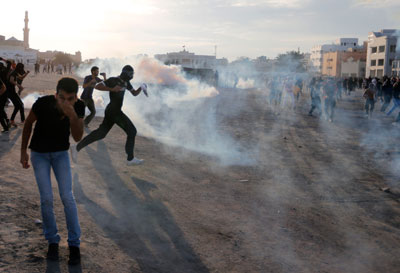
Bahrain racing in circles
Thursday, the official Bahrain News Agency announced the “final 30-day countdown [to] the Formula One extravaganza” to take place the first week of April. Every year the race acts as a lightning rod for criticism of the Bahraini government, which seeks to use high-profile international events like the F1 to gloss over human rights violations…
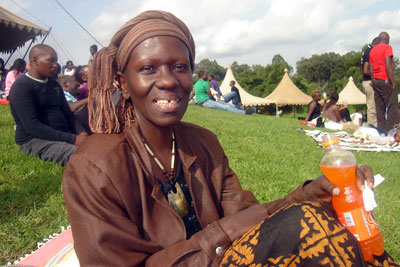
Forced to flee false perceptions, ICC, and Kenyan press
EDITOR’S NOTE: February 15, 2014 marked one year since Omwa Ombara arrived in the U.S. to seek political asylum after attempts on her life in Kenya between May and December 2012. She fled her native land after being contacted by International Criminal Court (ICC) investigators probing the violence that followed the Kenyan elections in 2007-2008,…
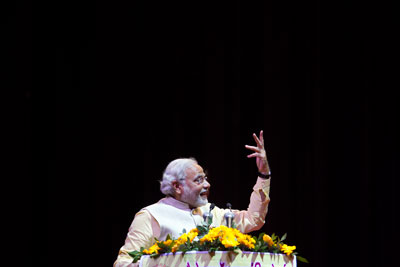
Modi’s rise does not bode well for Indian press freedom
As India is set to hold elections next month, journalists covering Narendra Modi, India’s right-wing prime ministerial candidate, are reportedly coming under increased pressure online and in the newsroom for shedding critical light on him. Given these developments, free and independent reporting of the campaign is in doubt–as is the future climate for press freedom…
Chinese journalist Liu Jianfeng crowdsources his funding
Last July, veteran Chinese journalist Liu Jianfeng posted an announcement on the Chinese microblog Weibo, confirming his intention to become an independent investigator and writer. In a country where all media remains state-owned, Liu’s plan was a bold one. He promised to produce four to six independent, investigative stories in the coming year, and to…
Kenya media, security forces soul search after Westgate
Should journalists expect support and protection from security agents when they risk their lives to report on security operations? What if their coverage could potentially expose military strategies? Why are journalists disparaged as unpatriotic when they show how security operations fail?
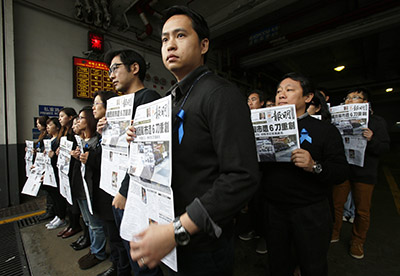
Journalists in Hong Kong and China: see our security guide
CPJ’s Journalist Security Guide is now available in Chinese (PDF). The guide has been available in other languages for more than a year but, frankly, we didn’t see a Chinese version as a priority. Last year, after a university professor in China asked if he could translate some sections for his class, we began working…