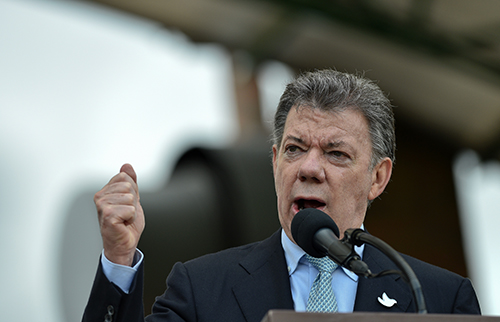
Are intelligence sector reforms enough to protect Colombia’s journalists?
When Colombia’s national intelligence agency, known as DAS, was disbanded in October 2011 after revelations of illegal surveillance and harassment of the press and public figures, many journalists breathed a sigh of relief. But recent claims of reporters being spied on and government agencies buying advanced surveillance technology without ensuring clear guidelines over its use,…

Uganda elections approach amid hostile environment for media
Demonstrations against the government are a routine affair in the Ugandan capital Kampala, and Andrew Lwanga thought it would be just another day at work when he was assigned to cover a protest march by a few dozen unemployed youth on January 12, 2015.
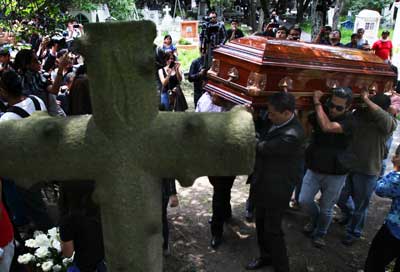
Why the governor of Veracruz should resign
EDITOR’S NOTE: This article was originally published, in Spanish, on Univision.com. The state of Veracruz has become one of the world’s most lethal regions for the press. According to research by the Committee to Protect Journalists, when you include the case of Anabel Flores Salazar, whose body was found on Tuesday, at least 12 journalists…
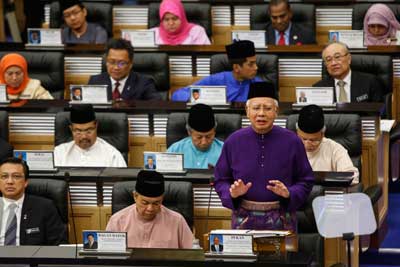
Amid financial scandal, Malaysia increases pressure on media
A financial scandal involving a state investment fund created and overseen by Malaysian Prime Minister Najib Razak, exposed in turns by investigative journalists, has put a parallel spotlight on the country’s deteriorating press freedom situation. A suggestion by the government’s top lawyer to strengthen the 1972 Official Secrets Act to penalize journalists who decline to…
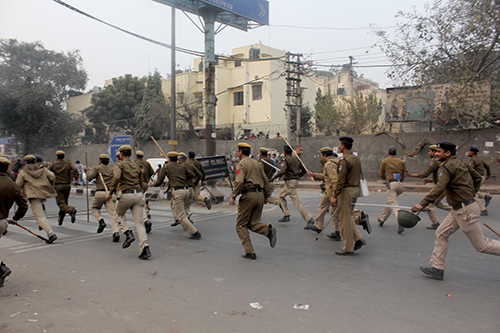
‘I kept telling them I’m a journalist but they kept beating me’: Photographer beaten at Delhi protest
As police cracked down on protesters in Delhi during recent protests over the treatment of Dalits, who occupy the lowest rungs of India’s caste ladder, journalists were caught in the fray. The protests were sparked by the suicide of Rohith Vemula, a student who had been barred from halls of residence and parts of campus,…
Claims police spied on two journalists revive surveillance fears of Colombia’s press
When Claudia Morales’s six-year-old daughter asks about her mother’s bodyguards, the Colombian journalist tells her they are colleagues. “She’s too young to understand,” Morales, who works for the Bogotá-based Caracol Radio in the city of Armenia, told CPJ in a telephone interview. Vicky Dávila, the news director of LA Fm Radio who also has private…
CPJ raises concerns over UN agenda on preventing violent extremism
Preventing and countering violent extremism has been a major issue on the international agenda in the past year, prompting the United Nations Secretary-General to launch a Plan of Action to Prevent Violent Extremism in December and the UN Human Rights Council to adopt a resolution last fall.
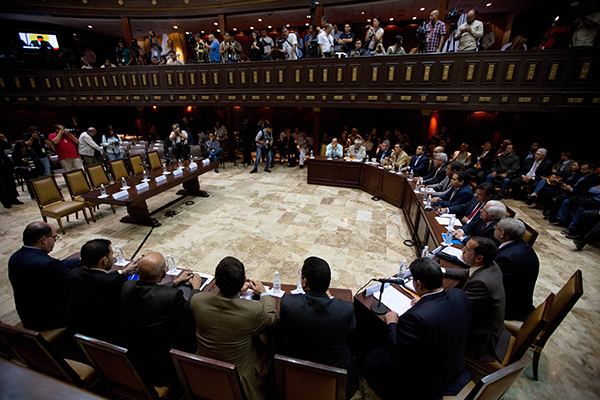
Venezuela’s national assembly reopens to the press after five-year ban
When security guards opened the doors to Venezuela’s colonial-era National Assembly building last Wednesday, I was among the dozens of reporters who swarmed inside. Even though the day’s legislative session would not be called to order for another three hours, every seat in the press galley, located on the second-floor balcony overlooking the chamber, was…

As editor-informant Li Xin disappears, journalists share their experiences with China’s security services
The case of Li Xin, a journalist who disappeared in Thailand in January after telling the international press in November he had fled China after being forced to work for years as a government informant, has shed light on the pressures some journalists face to provide information to the authorities.