Suspect says he was hired to silence broadcaster
Police in the southern Philippine province of Palawan have an unusual head start in their investigation of Monday’s murder of radio broadcaster Gerardo Ortega. They apprehended the assassin at the scene, with the help of local firefighters and bystanders, and an unusual amount of information about the killing is already in the public domain.
South Africa resumes debate on secrecy bill
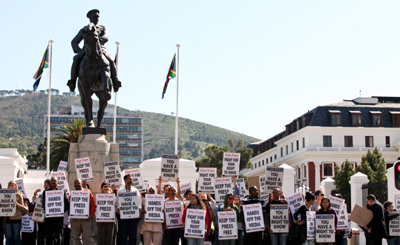
Parliamentary hearings on South Africa’s Protection of Information Bill resumed last week with heated debate over provisions threatening to restrict press freedom and access to information. For journalists, much uncertainty remains over the final product and when it will be completed.
Tunisian TV station’s suspension reflects tenuous freedom
On Sunday, the privately owned broadcaster Hannibal TV was forced off the air for more than three hours. The state-owned news agency Agence Tunis Afrique Presse (TAP) issued a statement stating that an arrest warrant had been issued for the station’s owner on charges of “high treason” for an alleged “plot to destabilize national security.”…
In China, Kristof’s blogs are shut down
Nicholas Kristof’s Sunday column in The New York Times documents the latest in a series of tests the journalist has performed in Chinese cyberspace. The conflicting results he achieved while setting up a Chinese-language blog and micro-blog demonstrate how difficult it is to judge what censors will permit in an online space.
Cambodia suppresses question on ’97 grenade attack
Bangkok, January 24, 2011–The Committee to Protect Journalists is alarmed by reports that Cambodian officials deleted digital recordings and confiscated recording equipment from a number of journalists who covered a January 21 government press conference in Phnom Penh.
EU has contradictory message on Karimov, Lukashenko
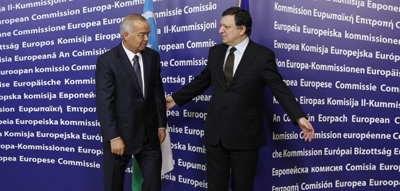
Unless European Union officials mean to expose the inconsistency of their own policymaking, they should stand firm by their declared commitment to defend press freedom and human rights in the former Soviet countries. For now, their drastically different approaches to authoritarian leaders in Belarus and Uzbekistan leave one questioning the EU’s strategy.