Zimbabwe: Journalists covering elections subjected to intimidation
Your Excellency: The Committee to Protect Journalists (CPJ) is deeply concerned by the climate of intimidation in which journalists covering the upcoming parliamentary elections in Zimbabwe are being forced to work. In recent weeks, local and foreign correspondents have been subjected to harassment and even violence by politicians and other individuals associated with your government and the ruling Zimbabwe African National Union-Patriotic Front (ZANU-PF).
President Mugabe asked to guarantee safety
Click here to read more about press freedom conditions in ZIMBABWE. New York, June 21, 2000 –As Zimbabwe’s June 24-25 parliamentary elections approach, the Committee to Protect Journalists (CPJ) is calling on President Robert Mugabe to publicly guarantee that journalists will be free to cover them without fear of reprisal.
Morocco: Censorship, criminal prosecution of journalists on the rise
Your Excellency: The Committee to Protect Journalists (CPJ) is gravely concerned about government restrictions on press freedom in Morocco this year. During the past four months, Moroccan authorities have taken several punitive measures against the press, including the censorship of newspapers and the criminal prosecution of journalists.
State cracks down on Western Sahara coverage
Your Excellency: The Committee to Protect Journalists (CPJ) is writing to express its deep concern about the censorship of the French-language weekly newspaper Le Journal and its sister publication the Arabic weekly Al-Sahiffa, as well as the dismissal of three employees from television station 2M.
Reporter’s body dumped over Texas border
Click here to read more about press freedom conditions in MEXICO. New York, April 13, 2000 — CPJ is investigating the recent killing of Pablo Pineda, a reporter and photographer with the Mexican newspaper La Opinión in the border city of Matamoros. On April 9 at approximately 2:45 a.m., agents from the U.S. Border Patrol…
Bomb explodes at journalist’s home
Click here to read more about press freedom conditions in SRI LANKA. New York, April 4, 2000 — Shortly before midnight on April 3, an explosive device was detonated at the home of Nellai G. Nadesan, a columnist for Veerakesari, the country’s leading Tamil-language newspaper. Nadesan was not injured in the blast, though the explosion…
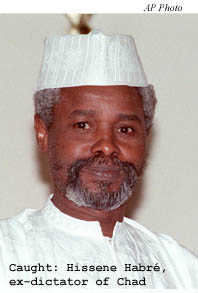
Hunting the Dictator
On February 3, Senegalese authorities indicted former Chadian leader Hissene Habré for torture and other crimes perpetrated by his government in Chad between 1982 and 1990. That same day, the “African Pinochet” was placed under house arrest in the upscale Dakar neighborhood where he has lived for the past decade. It was the first time…