As Turkey broadens media crackdown, CPJ expands coverage
“Turkey Crackdown Chronicle” to increase documentation of press freedom violations New York, March 21, 2016–In response to the recent spike in media freedom violations in Turkey, the Committee to Protect Journalists has launched the “Turkey Crackdown Chronicle,” a real-time diary of attacks on journalists and other press freedom abuses.
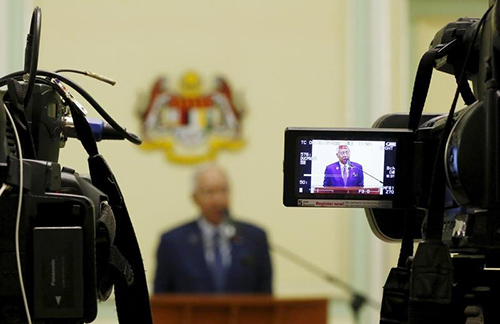
Closure of news site underscores Malaysia’s press freedom crisis amid 1MDB scandal
On March 14, The Malaysian Insider abruptly closed its editorial operations less than a month after the state media regulator, the Malaysian Communications and Multimedia Commission, blocked local access to its news site.
Sudanese authorities confiscate newspaper edition
Sudanese authorities confiscated all 20,000 copies of the March 15, 2016, edition of the daily newspaper Al-Sudani, according to press reports. Agents of the National Intelligence and Security Services (NISS) appeared at the newspaper’s printers in Khartoum on the evening of March 14 and seized all copies of the daily, which had just been printed…
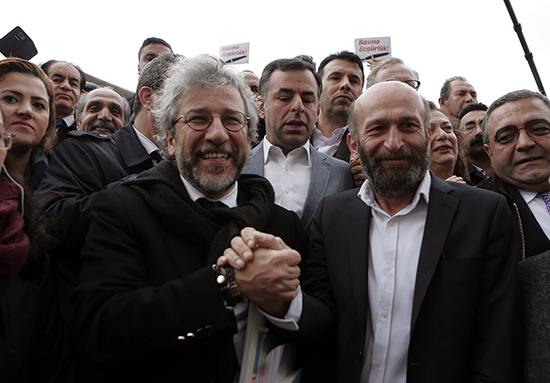
Turkey Crackdown Chronicle: Week of March 20
Istanbul court rules trial for journalists facing life sentences to be closed to public The Committee to Protect Journalists today condemned an Istanbul court’s decision today to bar the public from the trial of Can Dündar and Erdem Gül, journalists for the daily newspaper Cumhuriyet. Representatives from CPJ and other free-speech groups attended the first…
In Colombia, second attacker sentenced in Jineth Bedoya case
New York, March 18, 2016–The Committee to Protect Journalists welcomes the sentencing today of former paramilitary fighter Mario Jaimes Mejía who, according to reports, was handed a 28-year prison term for the kidnap, rape, and torture of Colombian journalist Jineth Bedoya Lima in 2000. Last month, Alejandro Cárdenas Orozco, a former paramilitary fighter, was sentenced…
Authorities close Al-Baghdadia TV in Iraq, force staff out of channel’s offices
New York, March 18, 2016–The Committee to Protect Journalists calls on Iraqi authorities to restore the broadcasting license of the pro-Sunni satellite channel Al-Baghdadia TV, and to allow the channel to operate freely in Iraq.
Venezuelan government newsprint squeeze forces newspaper to stop printing
Bogotá, March 18, 2016 – Blaming the refusal of the government to sell it newsprint, the independent Venezuelan daily El Carabobeño printed its final edition on Thursday, according to news reports. The newspaper has published for 82 years and was one of the few independent media outlets in Valencia, the capital of Carabobo state.

A missed opportunity at the Special Tribunal for Lebanon
On March 8, the Appeals Panel of the Special Tribunal for Lebanon reversed the September 18 conviction of Karma Khayat, a journalist who had been ordered to pay a €10,000 (USD$11,064) fine because her channel broadcast interviews with confidential witnesses.
Honduran journalist sentenced to 10 years in prison for defamation
New York, March 17, 2016 — Honduran authorities should drop all criminal charges against journalist David Romero Ellner, the Committee to Protect Journalists said today. A court in the Honduran capital Tegucigalpa on Monday sentenced Romero, who is free pending appeal, to 10 years in prison on charges he defamed a former prosecutor. CPJ called…