Sri Lanka on State Department’s radar
The dire situation for journalists in Sri Lanka who have fallen out of favor with the government has not gone unnoticed at the U.S. State Department. On March 23, Secretary of State Hillary Clinton sent a letter to Senator Robert Casey, who chaired the Senate Foreign Affairs subcommittee hearing on Sri Lanka on February 24.…
Corrupt Russian police are a ‘dark force’ against press
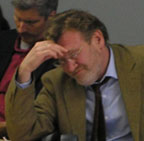
Leonid Nikitinsky has a dry sense of humor. “Unless you are killed in a very interesting way, don’t come and see me,” he told an audience at CPJ’s offices on Thursday. There are, after all, too many murders for him to cover, said Nikitinsky, right, a court reporter for Russia’s Novaya Gazeta.
Mission Journal: Lost in Managua
There are few street names and no addresses in Managua, a famously disorganized city whose downtown was destroyed in a 1972 earthquake and never rebuilt. To find a house, office, or government building you need directions which are only intelligible to locals. Here are couple of examples:
Joel Simon on environmental journalism
Environmental reporting around the world is under siege. Newsrooms in the United States are slashing budgets for the beat, and repressive countries are taking action to stifle reporting. Journalists are facing threats to their work–and sometimes, their lives. In the current issue of World Policy Journal, CPJ Executive Director Joel Simon calls on environmental and press…
Newseum honors fallen colleagues
After each name was read aloud, the ring of a bell resonated through the studio auditorium that included many relatives, friends, and colleagues of the journalists whose names were being added to the Newseum Journalists Memorial. Some, like Tom Borrelli of The Buffalo News, died unexpectedly; Borrelli fell while climbing steep stairs on his way…
Saberi’s parents go to Iran; State Department intervenes
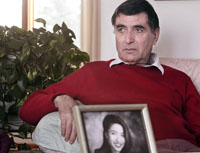
On Monday, the parents of detained Iranian-American journalist Roxana Saberi left their home in Fargo, North Dakota, to go see their daughter in Iran. Saberi has been held in Tehran’s Evin prison since January 31. Reza and Akiko Saberi are scheduled to arrive in Iran on Wednesday. Since Saberi was picked up at the end…
After CPJ letter, Tunis grants journalist freedom to travel
Nearly a week after CPJ sent a letter to Tunisian President Zine El Abidine Ben Ali urging him to end the “ongoing cycle of repression of critical journalists and media outlets,” Tunisia’s Ministry of Justice and Human Rights told Mohamed Abbou, a prominent human rights lawyer and writer, in a phone call on Saturday that…
A legal victory for press freedom in Bility case
Testifying at the Special Court for Sierra Leone in The Hague, Liberian journalist Hassan Bility described a harrowing 1997 reporting trip to Sierra Leone in which he documented Liberian government support for the brutal RUF rebels. His testimony was undoubtedly damaging to defendant Charles Taylor, the former Liberian president on trial for war crimes and…
Uribe, courts hold critical journalists in contempt
Daniel Coronell’s name didn’t come up in a hearing this week on Capitol Hill, even though CPJ had just learned that a Colombian court had ordered the arrest of the respected Canal Uno TV reporter and Semana magazine columnist over his work. Coronell is one of many journalists and human rights monitors who’ve lately been…