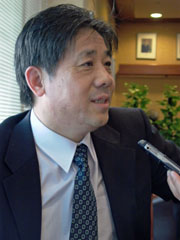
Chinese writer ends Japanese exile after 90 days in airport
A Chinese dissident who writes about rights abuses is ending an involuntary exile in Japan on Friday. Or so he hopes. Feng Zhenghu has booked a flight departing Japan’s Narita Airport for Shanghai at 9:45 a.m. on February 12. That was the topic of an impromptu press conference held Monday afternoon in the brightly lit…

Internews provides critical news to use in Haiti
Every evening, between 9 and 10 p.m., people in areas affected by the January 12 earthquake listen to the program “Nouvel pou nou Konnen” (News to Know). Huddled in tents or sitting in the open air, men and women cling to their transistor radios to get news on the latest decisions of the Haitian government…
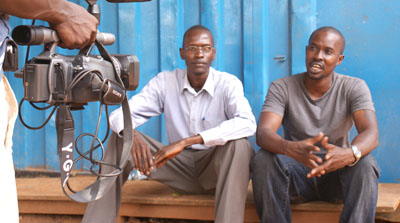
Freedom of information laws struggle to take hold in Africa
In Uganda, a ruling this week in a landmark case of two journalists seeking to compel their government’s disclosure of multinationals oil deals highlighted the challenges to public transparency just before media leaders, press freedom advocates, officials, and former U.S. President Jimmy Carter gather in Ghana next week at the African Regional Conference on the Right…
Is Sri Lanka done assaulting the media?
It was good to hear Sri Lankan President Mahinda Rajapaksa point out in his Independence Day speech on Thursday that the country “cannot be developed with harassment, gross punishments or by the gun.” But the sentence that followed that—“Discipline is not revenge”—gives cause for concern. Rajapaksa’s speech marked the 62nd anniversary of the country’s independence…

Google-China debate keeps Internet security in spotlight
Google has gone quiet since its announcement last month that it was unwilling to continue censoring search results on Google.cn in China. The Washington Post reported Thursday that the company is seeking help from the U.S. government to trace hackers behind security breaches, which it said targeted its own intellectual property and individual human rights…
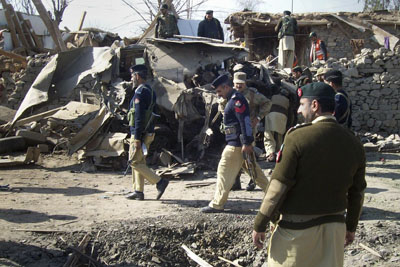
Time to step up protection for media in Pakistan
Three vicious bomb blasts in Pakistan in the last two days—one in Lower Dir that wounded three reporters on Thursday, and Friday’s double attack in Karachi that we’re still investigating—highlight just how dangerous it has become for journalists, particularly TV camera crews and photographers, but certainly any journalist assigned to cover a public event or…

Tomás Eloy Martínez, passionate press freedom advocate
Argentine writer and journalist Tomás Eloy Martínez, who died on Monday after a long battle with cancer, was ranked among Latin America’s most prominent intellectuals. Best known for his novels about former President Juan Domingo Perón and his wife Eva, Martínez cared deeply about press freedom and was a passionate advocate who helped scores of Argentine…

Radio Metropole: A station in Haiti running out of steam
Radio Metropole’s journalists, coping in a tent set up in the garden of the radio station’s office in Port-au-Prince, have not still resumed their normal pace of work because of the trauma caused by the January 12 earthquake. The station resumed its normal programming on February 1, after broadcasting news via the Internet for two…

Journalist Marcus Garcia pushes onward in Haiti’s chaos
Amid Haiti’s chaos, Marcus Garcia struggles every day to fulfill his duty as journalist. He said he routinely goes up and down the streets of Port-au-Prince in search of fuel for his car. When talking on the phone, the tone of his voice indicates the difficulties he encounters as a journalist willing to keep doing…
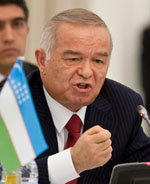
Karimov chastises Uzbekistan’s ‘toothless’ reporters
Addressing the joint session of Uzbekistan’s parliament on Wednesday, President Islam Karimov urged his lawmakers to be more active in their work, saying that laws should address public needs, and blaming the local press corps for being “toothless” in its reporting, regional news Web site Ferghana reported. In his speech, available on the parliament’s Web site, Karimov, at…