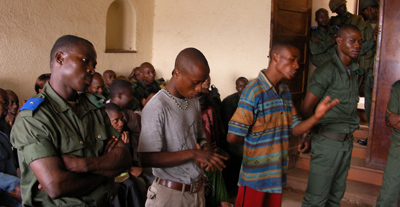
In Bukavu courtroom, Namujimbo murder trial unfolds
Didace Namujimbo, a journalist for Radio Okapi, was shot dead on the night of November 21, 2008. Now, after repeated delays, a military court in Bukavu, capital of the province of South Kivu in eastern Democratic Republic of Congo, is putting on trial a dozen people charged in connection with the murder.
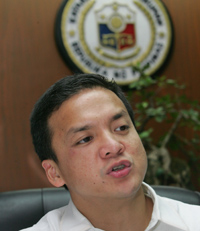
Philippine high court spokesman: Death threats ‘funny’
Midas Marquez, spokesman for the Philippine Supreme Court, has told local reporters that he considers death threats sent anonymously by text message to journalist Marites Dañguilan Vitug to be “funny” and “ridiculous.” Marquez was asked to comment in his official role because the threats began shortly after the release of Vitug’s new book, Shadow of…
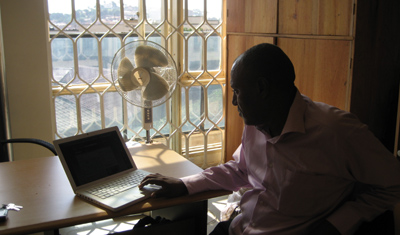
Somali editor, family make a new life in exile
KAMPALA, Uganda As Ahmed Omar Hashi strode toward me, his figure silhouetted in the bright morning light, it was hard to believe this was the same man who left Mogadishu on a stretcher just six months earlier after suffering a near-fatal gunshot wound. As I reached to shake his hand, he pulled me into a…

In Garcia-Esperat murder, a twisting path to justice
Five years ago today, a gunman strode into the home of muckraking Philippine journalist Marlene Garcia-Esperat, pulled out a .45-caliber pistol, and shot her once in the head. A columnist and radio host on the southern island of Mindanao, Garcia-Esperat had made plenty of enemies while exposing government corruption.

Google’s Chinese wake-up call
On Monday, Google made good on its promise to stop censorship of its Chinese search engine, Google.cn, by rerouting viewers to its unfettered Hong Kong site. According to the company’s chief legal officer, David Drummond, the move was “a sensible solution to the challenges we’ve faced—it’s entirely legal and will meaningfully increase access to information…

Media in Leogane devastated
Of the 12 radio stations in the city Leogane, south of Haiti’s capital, Port-au-Prince, only five are back on the air more than two months after the earthquake. Most stations were seriously damaged and several broadcasters are struggling to restore transmission, the head of the Leogane Press Association (APL), Julmane Saint Fort, told CPJ. Saint…

Circumventing India’s radio news ban
Violence against provincial journalists, self-censorship, and the rise of paid news were the leading press freedom concerns cited by editors and journalists that I met with during my recent visit to India. But for Shubhranshu Choudhary, known as Shu, it’s the ban on radio news that most concerns him. He believes the ban is fueling India’s long-simmering Maoist insurgency,…
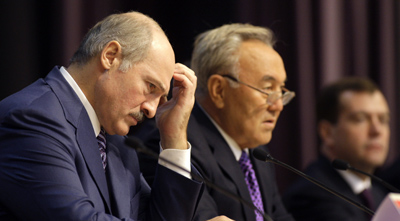
In bad company: Kazakhstan takes page from Belarus
Belarus has been termed Europe’s last dictatorship because of its long intolerance of dissent and press freedom. So accustomed is the world to the clampdowns of President Aleksandr Lukashenko’s regime that neither a recently issued decree on Internet access, which requires that providers record users’ personal data, nor last week’s police raids at a number…

In India, news for sale
I just returned from India, where I spent a week meeting journalists and discussing press freedom concerns. One issue that emerged during my visit is what is known euphemistically as “paid news.” Many media outlets routinely sell political advertising dressed up as a news article.
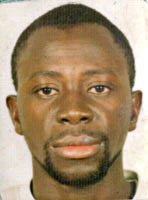
Durbin, Senate colleagues press for Manneh’s release
For more than two years, U.S. Sen. Richard J. Durbin and a group of Senate colleagues have been pressing for the release of Gambian journalist “Chief” Ebrima Manneh, left. In July 2006, security agents arrested Manneh at his workplace at the Daily Observer and have since held him incommunicado and without charge. On Thursday, Durbin…