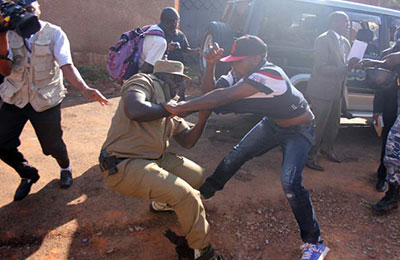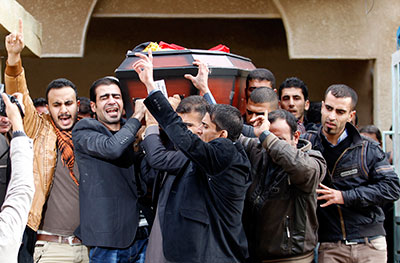
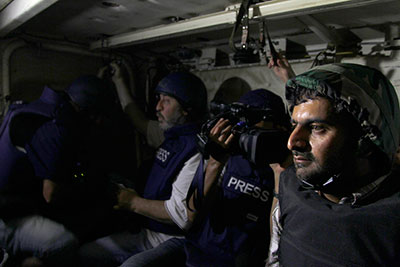
Arab journalists need training for civil unrest and wars
In recent years, Arab journalists have been taking great risks to report important stories in a region where war and civil unrest remain an ever-present threat. Many are operating without proper equipment or safety training in how to recognize and mitigate the various risks they face.
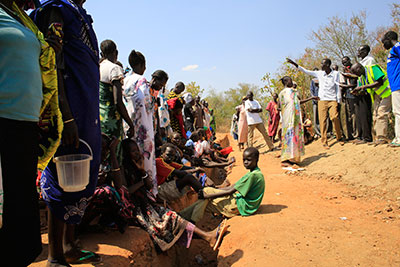
Reporting on South Sudan crisis difficult, dangerous
“They even started shooting through my house–I had to lie on the floor with my wife and kids,” Angelo Wello, a freelance journalist for faith-based news sites and a pastor, told me. Like many residents of the capital of Juba, South Sudan, Angelo has found it incredibly hard to get accurate information and report on…
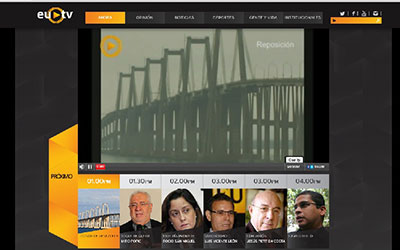
Web-based TV opens space for critical voices in Venezuela
With its low budget décor and grainy images, EUTV has the look and feel of small-town community television. But the Web-based TV station that went live on November 18 has much larger ambitions: It intends to be the primary source for Venezuelans who covet independent television news.
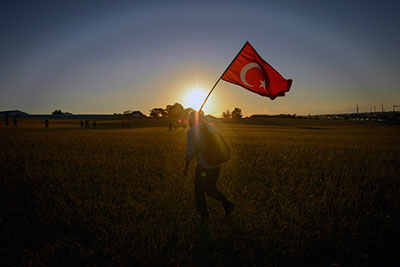
Turkey–world’s top press jailer once more
For the second year in a row, our prison census shows, Turkey jailed more journalists than any other country. The number of journalists behind bars is 40; down from the 61 reporters in October 2012, and less than the 49 we recorded on December 1, 2012. Still, Turkey holds more journalists in custody than Iran,…
Defining success in the fight against impunity
For the second time this year, the U.N. Security Council took up the issue of protection of journalists. In a discussion today sponsored by the French and Guatemalan delegations, and open to NGOs, speaker after speaker and country after country hammered home the same essential facts: The vast majority of journalists murdered around the world…
While tech companies call for spying reform, telcos silent
On Monday, eight of the world’s leading technology companies set aside their rivalries to issue a direct challenge to U.S. lawmakers: lead the world by example and fix America’s broken surveillance state. Although the tech companies’ statement sends a powerful message, notably absent from the letter’s signatories is the appearance of a single telecommunications company,…
Venezuela forces ISPs to police Internet
The concept of network neutrality holds that all Internet traffic should be treated equal and that Internet Service Providers, or ISPs, should serve as free-flowing gateways for information rather than as filters. But in politically polarized Venezuela, neutrality is an increasingly rare commodity and now ISPs are feeling the heat.
Covering China goes far beyond the current visa woes
Everyone agreed at the panel discussion I took part in yesterday in Washington that the fate of about two dozen journalists working for The New York Times and Bloomberg News in China is unresolved. No one knows what will happen by the ostensible deadline of midnight, December 31, 2013, for their expulsion. I say ostensible,…