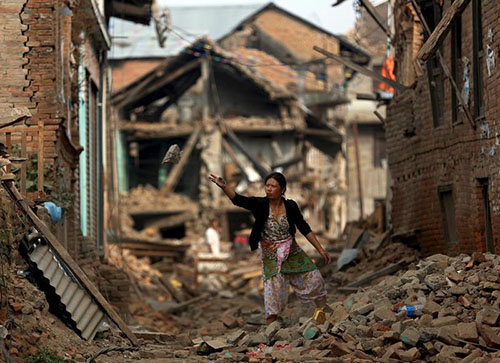
Mission Journal: In Nepal, finding solutions to better protect press
The devastation caused by the earthquakes in Nepal is a reminder of the indispensable role played by relief workers, medical teams, and other key actors on the front lines. Among them are many journalists who, on the most basic level, serve as witness to those affected and share their stories with the world.
Fabricated attacks by Colombian journalists mask real dangers
Although Colombian journalists are frequently threatened by Marxist guerrillas, criminal gangs, and corrupt politicians trying to silence them, two recent cases that created widespread concern–including alerts from CPJ–were fabricated by the very reporters who claimed to have been targeted.

CPJ joins call urging White House to protect encryption for journalists
Journalists are safest when their devices are secure by default. That is why the Committee to Protect Journalists today joined a coalition of nearly 150 civil society organizations, companies, trade associations, security experts, and policy specialists in sending a joint letter to U.S. President Barack Obama. The letter urges the president to support the broad…
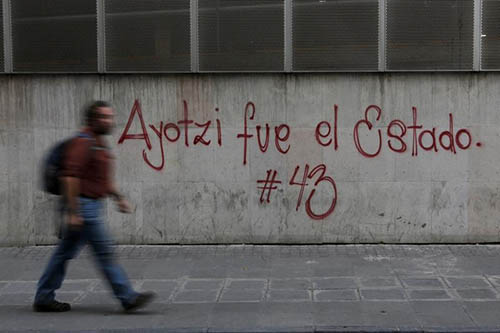
In Mexico, reporters struggle to cover unrest over missing students
Veteran reporter Sergio Ocampo was having a late dinner on September 26 when his editor called about a shooting in the city of Iguala in Guerrero state. Students from the Ayotzinapa teacher training college were apparently among the victims. But when Ocampo, a correspondent for the newspaper La Jornada, called the then-mayor of Iguala, José…
Widodo’s lifting of ban on foreign media in Papua is step in right direction
Indonesian President Joko Widodo announced over the weekend that his government would allow foreign journalists to report unrestricted from the country’s eastern Papuan provinces, breaking a virtual 50-year blackout of international news coverage of the restive region. The announcement raises the prospect of an independent media check on one of Asia’s most under-reported civil conflicts…
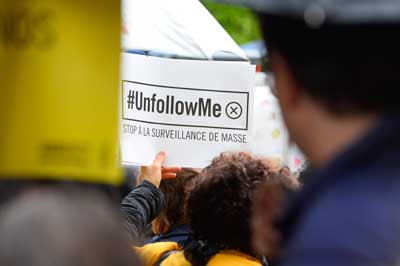
French surveillance law passes National Assembly, but it’s not the last word
Until the last moment the opponents of a very controversial French intelligence bill tried to be heard. On Monday May 4 on the eve of the vote, activists kept calling deputies to convince them to reject the bill. They had no chance however, since the Socialist government could count on a solid majority from both…
Pakistani journalist Muhammud Rasool Dawar under threat
We get a fairly steady stream of journalists in Asia asking for assistance. The majority of the requests come from journalists who have been threatened, and the threats can come from just about anywhere: militant groups, the military, government officials, powerful local politicians, arms runners, and drug dealers.
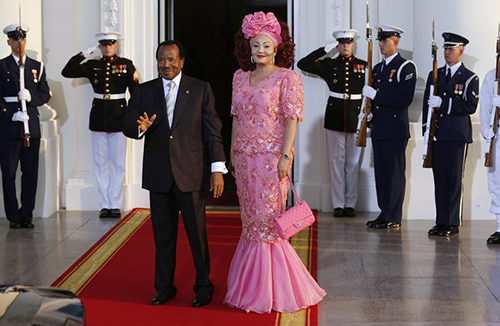
In Cameroon, press struggles with financial and official constraints
On March 16, Cameroon’s Minister of Communication, Issa Tchiroma Bakari, denounced French online news outlet Le Monde as unprofessional at a press conference after it reported on allegations that President Paul Biya was in hospital in Geneva. The incident is symbolic of the growing problem in Cameroon, which has a growing but poorly funded independent…
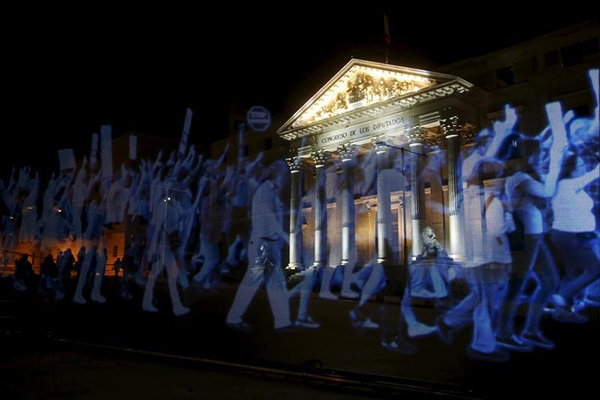
Why Spain’s new gag law is threat to free flow of information
On July 1 a public security law is due to come into force in Spain amid an increasingly vocal chorus of concern among the media and press freedom groups. The bill–dubbed the “ley mordaza,” or “gag law,” by opposition groups–would define protests in front of parliament and other government buildings as a “disturbance of public…
On World Press Freedom Day and journalists’ safety
Last week, I met a Cameroonian journalist who worked in the Congo until he fled following a series of threats and an attack on his home by armed men who assaulted his sister. Elie Smith, a TV host who documented alleged abuses by police and was outspoken in his criticism of the government, said he…