2009
Thai media owner, editor handed prison sentences
New York, September 14, 2009—The Committee to Protect Journalists condemns a Thai criminal court decision on Thursday to sentence media owner, television commentator, and political activist Sondhi Limthongkul to two years in prison in connection with criminal libel charges filed by a former government minister.
Ugandan radio stations shut; debate programs banned
New York, September 11, 2009–The government-run Uganda Broadcasting Council effectively shut down four radio stations today and Thursday, and ordered all radio stations to halt political debate programming in the wake of violent clashes in the capital, Kampala.
CPJ seeks comprehensive inquiry in Clarín tax raid
New York, September 11, 2009—Two hundred tax agents raided the offices of Argentina’s largest daily, Clarín, on Wednesday after the paper ran a cover story alleging that a government agency improperly granted a farm subsidy, the local press said. The action, which Clarín decried as government intimidation, has intensified a fierce debate between President Cristina…
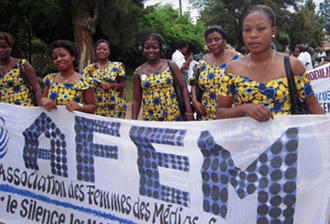
In DRC, three journalists report death threats
New York, September 11, 2009—Authorities in the Democratic Republic of Congo must aggressively investigate threats made against three radio reporters in the eastern city of Bukavu in the Democratic Republic of Congo, the Committee to Protect Journalists said today.
Six face murder charges in French filmmaker’s slaying
Six men—five members of a Salvadoran street gang and a police agent—face murder charges in the death of French filmmaker Christian Gregorio Poveda Ruiz, El Salvador’s attorney general’s office said. Poveda, whose new documentary on a violent Salvadoran gang was scheduled for wide release at the end of this month, was gunned down on September…
Iran: CPJ calls for humanitarian release as Ramadan ends
New York, September 10, 2009—As the end of Muslim holy month of Ramadan approaches, Maziar Bahari, a Canadian-Iranian national, continues to be held in an Iranian jail under deplorable conditions. The Newsweek correspondent has been detained for 80 days since he was arrested on June 21 as part of a post-election crackdown. The Committee to…
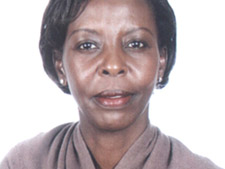
Rwandan minister: ‘It’s OK to be anti-government’
CPJ sat down recently with the Rwandan minister of information, Louise Mushikiwabo, who spoke of several media developments, including a new press law. “I am convinced the new legislation will help professionalize our media—there were many holes in the former law,” she told CPJ. Some, however, do not share her enthusiasm.
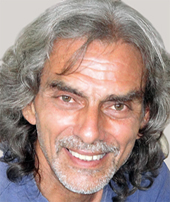
To blog in Cuba: defying hazards, enjoying freedom
I share with my fellow Cuban independent journalists the drunkenness of writing freely under a totalitarian dictatorship; of experiencing the catharsis of denouncing the regime’s violations; of feeling useful to my people knowing that, in the long run, what I write will contribute to a better future.
The alternative Cuban blogosphere
At the end of the 1990s, Cuban dissidents sought out different media to disseminate the reality of the island. Reports on violations by a government that proclaims itself a human rights’ defender begin to circulate around the world, damaging the image that the socialist state wants to project to the rest of the world. This…