Haitian state media running, but limited in scope as always
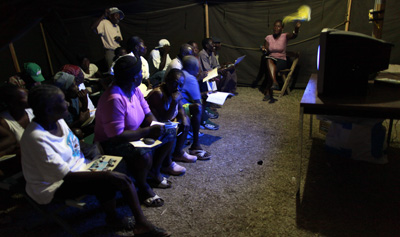
As part of three days of mourning in Haiti to remember the one-month anniversary of the January 12 earthquake, songs and prayers with melancholic voices echoing and images of a crowd mostly dressed in white were broadcast live on the state-owned National Radio and Television stations (RTNH).
Doing the numbers on press freedom
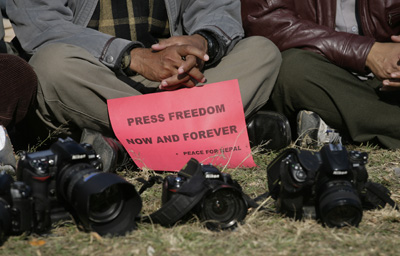
On Tuesday, CPJ released its annual report, Attacks on the Press, with a global launch in six cities—Tokyo, New York, Brussels, Bogotá, Cairo, and Nairobi. We’ve noticed that different media reports, using our data, have cited slightly different numbers in regards to two key statics, the number of journalists killed and the number imprisoned in…
Columbia J-students learn the price of reporting in Iran
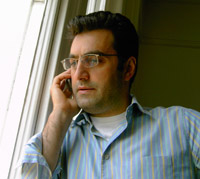
The two venues for the launch of Attacks on the Press in New York couldn’t have been more different. On Tuesday morning I was joined by Newsweek’s Maziar Bahari, and CPJ Asia Program Coordinator Bob Dietz in the hushed auditorium of the Dag Hammarskjöld Library at United Nations headquarters. The event was so well attended…
Clarín on Attacks on the Press
The February 16 edition of Argentina’s Clarín newspaper has Spanish-language coverage of CPJ’s Bogota launch of Attacks on the Press in 2009 . The article entitled, “Fuerte crítica del Comité de Protección de Periodistas por los ataques a Clarín”, by Miguel Wiñazki, highlights CPJ’s regional essay and also deals with CPJ’s coverage of raids on…
Uribe to CPJ, FLIP: ‘Illegal spies are enemies of Colombia’
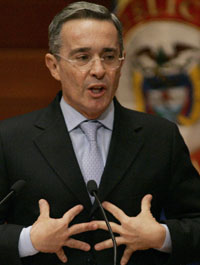
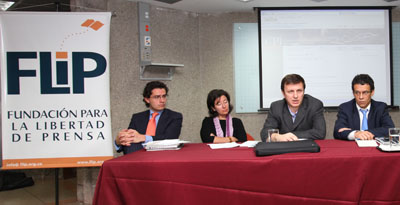
Bogotá, February 17, 2010—Colombian President Alvaro Uribe Vélez said on Tuesday that those who illegally spy on the press are “enemies of his government” during a meeting with a delegation from the Committee to Protect Journalists and the Foundation for Freedom of the Press (FLIP). Uribe issued the statement at the urging of the CPJ and…
Colombian government tells CPJ it ‘rejects’ illegal spying
Shortly after arriving in Bogotá to launch Attacks on the Press, I realized the Colombian government was well aware of our concerns about illegal espionage against the media. Top government officials, including President Alvaro Uribe Vélez, had confirmed meetings with a delegation from CPJ and the local press freedom group Foundation for Freedom of the…
African journalists face increasing risk for foreign outlets
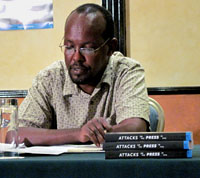
“I didn’t wear the bulletproof jacket and helmet that Reuters gave me,” explained veteran Somali journalist Sahal Abdulle to a packed crowd at Nairobi’s Serena Hotel for CPJ’s launch of Attacks on the Press. “It didn’t seem right when my colleagues, local journalists, were risking their lives trying to cover the same event.” Abdulle, like…