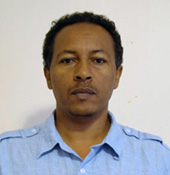
In exile in the U.S., Ethiopian journalist struggles forward
After almost a year in exile in America, an icy ocean away from his home in Ethiopia, journalist Samson Mekonnen, left, only recently received his work permit in Washington. In the interim, like most journalists undergoing the emotionally and financially grueling resettlement process, he has relied on friends, family, and international organizations like CPJ to…
Chinese hackers targeting human rights news sites
Nart Villeneuve has published a detailed summary of recent malware attacks on media and human rights groups who work on Chinese issues. He highlights a disturbing new trend. On Wednesday, Amnesty Hong Kong’s website was repurposed by hackers to infect visitors with a wide variety of nasty malware. The Nobel Prize’s website was also defaced earlier…
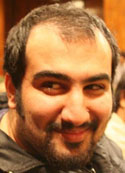
Press Club honors jailed Iranian Kouhyar Goudarzi
The National Press Club next week will honor an Iranian journalist who is languishing in prison. Kouhyar Goudarzi, an online reporter and human rights activist, was pursuing an aerospace degree at Sharif Industrial University when security agents put him behind bars, according to the International Campaign for Human Rights in Iran. Goudarzi, left, was an…
Russia reopens investigation into Beketov attack
New York, November 11, 2010–Russia’s top investigator, Aleksandr Bastrykin, today ordered the reopening of a probe into a near-lethal November 2008 attack on Mikhail Beketov, editor of the independent newspaper Khimkinskaya Pravda. Bastrykin’s order comes a day after a court in the Moscow suburb of Khimki convicted Beketov of criminally slandering local mayor Vladimir Strelchenko.…
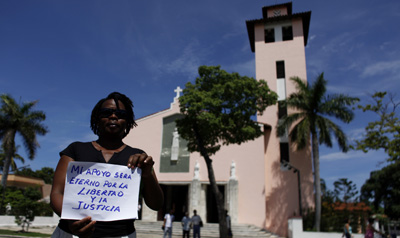
Cuban deadline passes for dissident releases: What next?
Sunday marked the end of the four-month deadline Cuban President Raúl Castro had agreed to with representatives of the Cuban Catholic Church and the Spanish government to free 52 prisoners of conscience who remained in jail since the March 2003 crackdown against dissidents, known as the “Black Spring.” The Spanish foreign minister at the time,…
Alfredo Corchado: ‘Trust No One’
On Monday, the Woodrow Wilson Center in Washington hosted a panel discussion on the press freedom crisis in Mexico. Carlos Lauría and I spoke about CPJ report “Silence or Death in the Mexican Press” and the results of our meeting in September with President Felipe Calderón. Dolía Estevez described the event in a blog she…
Internet Blotter
Microsoft allows users to turn on https by default in Hotmail, but it’s still couched in warnings. Meanwhile, Access starts its own global campaign for https to be turned on for the most visited websites. Thai censorship, originally aimed at a few hundred domains, now covers over 250,000 websites. China “unpublishes” previously approved online articles…
Mexico no different than Iraq, reporters tell Wilson Center
On Monday, before a large audience of government officials, representatives of NGOs, reporters, and students, CPJ’s senior program coordinator for the Americas, Carlos Lauría, said that the level of crime violence, and corruption facing the press in Mexico, where more than 30 journalists have been murdered or have gone missing since Felipe Calderón took office…
Mayor Strelchenko, drop your cruel complaint
Dear Mayor Strelchenko: While leading a delegation to Moscow from the Committee to Protect Journalists in late September, I had the opportunity to meet with Mikhail Beketov in the Moscow hospital where he was being treated. Today, I was outraged to learn Beketov is now a convicted criminal because you have pursued a cruel complaint.