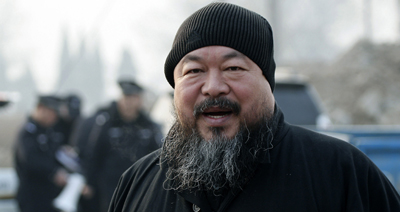
Online news agency cautiously thrives in Russia
Russian journalists know that garnering the attention of authorities can be dangerous. When writing about topics like crime and corruption, it can also be easy. However, Gregory Shvedov, editor of online news agency Kavkazsky Uzel, (Caucasian Knot), isn’t worried about the Kremlin knocking on his door.
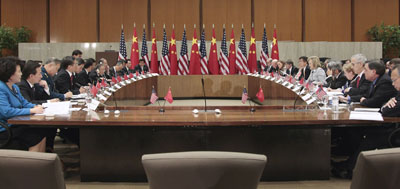
U.S.-China dialogue must keep focus on human rights
China’s powerful State Councilor Dai Bingguo told U.S. officials today that his country was “making progress” on human rights issues, according to Agence France-Presse. The remarks, made at the start of the two-day Strategic and Economic Dialogue, do not bode well for U.S. efforts to keep human rights on the table after last month’s exchange on human…
Syrian Facebook: Low-tech threats and high-tech scrutiny
Journalists and online news-gatherers have been struggling to collect and distribute high-quality information about recent events in Syria. Foreign journalists have been turned away at the border; local online reporters have been detained. The quality of Internet and mobile phone connectivity has been extremely variable, with reports of Net and phone connections being cut off…
Mission Journal: CPJ tackles impunity in Pakistan
After months of planning and preparation, our CPJ team had assembled in Islamabad with an ambitious plan. On May 3, we had a meeting scheduled with President Asif Ali Zardari to discuss the country’s failure to investigate the killings of journalists. We also had positive indications that our delegation would be able to meet with…
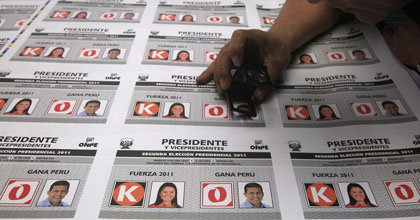
Peru candidates pledge to respect press freedom–will they?
Keiko Fujimori and Ollanta Humala, the two candidates for the June 5 presidential runoff in Peru, barely raised freedom of expression issues during the political campaign. So Friday’s event organized by the regional press group Instituto Prensa y Sociedad (IPYS) in Lima provided a great opportunity to measure their commitment on press freedom, especially important…
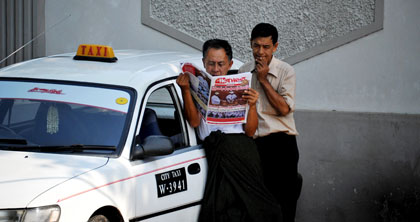
Press freedom requires action, not talk, in Burma
Burma’s newly installed democratic government has sent tentative signals that it intends to allow for more media openness as the country transitions from military to civilian rule. The continued detention of more than 2,100 political prisoners, including as many as 25 journalists, however, belies President Thein Sein’s recent press-promoting pronouncements.

Only some Chinese writers allowed to attend PEN Festival
The stage was full of empty chairs on Thursday at “China in Two Acts,” part of the five-day PEN World Voices Festival of International Literature in New York, which ended on Sunday. A two-part program featured writer Zha Jianying speaking for the first part followed by a panel discussion in the second. The chairs, a…
Burmese exile news site endures hacking, DDoS attacks
Like other Burmese exile-run media, the Irrawaddy has been plagued by numerous denial-of-service (DDoS) attacks in recent years that have forced its website to be shut down. Now, Aung Zaw, the publication’s founder and editor, believes Burma’s military-backed regime has adopted a new cyber-attack strategy that aims to undermine the exile media’s credibility among readers.

Blogging in Egypt: Virtual network, virtual oppression
I have been blogging in various platforms since 2006, focusing on human rights conditions and police abuses in Egypt. During this time, the Egyptian regime was widely described as one of the most “liberal-moderate” and sometimes “semi-democratic” regimes in the region, but meanwhile, hundreds of young people were hijacked, jailed, fined, and intimidated. Egypt has…