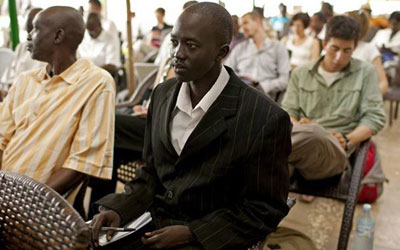
Attack on South Sudan reporter sparks critical debate
February is the hottest month in Juba, the capital of South Sudan, and Mading Ngor, a reporter and presenter for the Catholic-owned Bakhita FM, trudged his way through the heat to cover parliament proceedings last week–only to be thrown unceremoniously out of the assembly. “Before I had time to argue, four security guards pinned me…
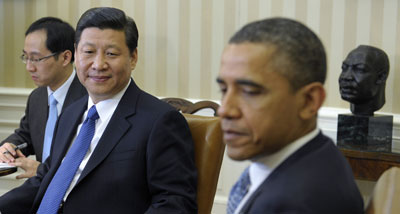
Archaic media policies make China a poor partner
President Obama has promised to raise issues of human rights when he and his administration meet with Chinese Vice President Xi Jinping in the next day. After that, Xi, billed as China’s next leader, is expected to make some speeches, visit a few factories, stop at the Pentagon, sign some contracts that will strengthen economic…

For Gambia’s press, positive developments?
Good news for Gambia’s beleaguered independent press has been rare during President Yahya Jammeh’s 17-year rule, but last week brought three potentially positive developments. It’s unclear whether they mark a real change in the status quo, but they may at least increase the resolve of advocacy groups to seek improvements.
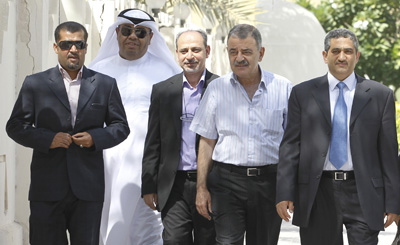
A year of repression: Bahrain continues crackdown on press
In the year since peaceful protests began in Bahrain on February 14, 2011, the government has targeted the press corps with assault, detention, harassment, and torture to obstruct their coverage. My organization, the Gulf Centre for Human Rights, has documented a systematic campaign by authorities to silence coverage of our country’s unrest. Here are just…
Old issues, new debates on Internet freedom in India
Just how free should the Internet be in India? And whose job is it to police the Web? Two recent court cases turn on these questions and, more specifically, whether Internet companies have a responsibility to filter content. In a country where Internet usage is growing exponentially, but where the scars of communal violence, terrorism,…

India: Let us in!
In 2005, we deliberately violated the immigration laws of India. We broke the law by producing a documentary film even though we had entered the country on a tourist visa. We broke the law because we wanted to show that Scandinavian companies were in violation of many other laws in India.

In high-tech China, low-tech media control works too
China’s investment in high-tech Internet surveillance technology is well known, and the byzantine rules of its Central Propaganda Department have inspired books and academic treatises. But among the many tools in the box for media control, there’s one that’s very simple and low-tech: Keep journalists away.

Rousseff quiet as Cuban blogger denied travel to Brazil
The response from Cuban officials did not take anyone by surprise. Prominent Cuban blogger Yoani Sánchez had been, once again, denied permission to leave her country after she was granted a visa by the Brazilian Embassy in January to attend a film festival. “I feel like a hostage kidnapped by someone who doesn’t listen nor…
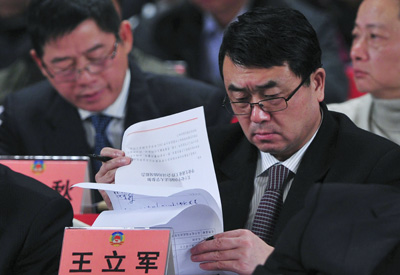
Chinese media little help with Chongqing mystery
The website of Xinhua News, China’s state media flagship, leads today with EU’s threats of sanctions against Syria. Elsewhere on their Chinese-language site, one can read about Wen Jiabao’s remarks to the visiting Canadian prime minister, or look at photos of pretty white ladies lounging around, if that’s your style.